

Empowering women, strengthening communities against climate shocks
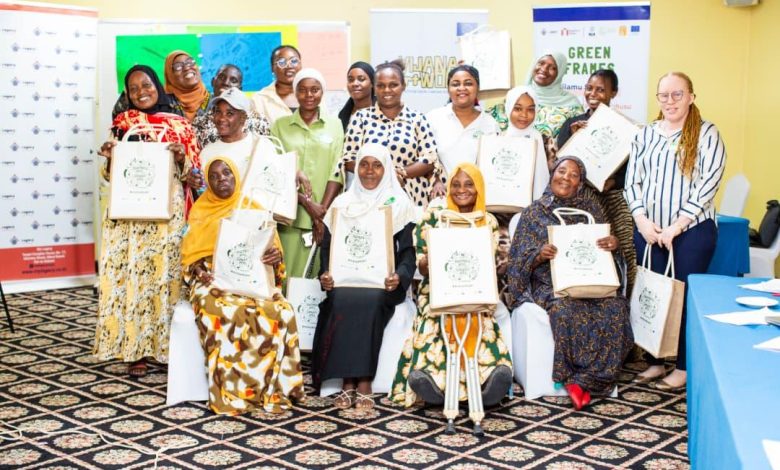
TANZANIA: For many people, climate change is often discussed through statistics, rising temperatures, droughts, floods, and environmental reports. But for millions of women and girls across Tanzania, climate change is not an abstract concept. It is a daily reality that determines whether there is water to fetch, food to prepare, income to earn, and children to care for.
That reality is at the heart of the work being championed by MyLEGACY, a Tanzanian organization that is helping communities understand that climate change is far more than an environmental issue. It is also a development challenge that affects livelihoods, education, health, gender equality, and social inclusion.
“Climate change does not operate in isolation,” says MyLEGACY Programme Coordinator Amina Mtengeti. “It intersects with gender inequality, disability inclusion, education and health systems. Women, girls and persons with disabilities face compounded vulnerabilities that must be addressed deliberately.”
Her observation reflects a growing global understanding that the climate crisis affects different groups in different ways. While everyone feels the impact of extreme weather events, rising temperatures, and environmental degradation, women and girls often bear the heaviest burden because of their traditional responsibilities within households and communities.
Yet, as Amina points out, awareness alone is not enough. Communities need practical solutions that strengthen resilience, create economic opportunities, and empower people to become active participants in climate action rather than passive victims of climate impacts.
That is precisely the approach adopted by MyLEGACY.
According to Amina, the organization recognises that climate change is closely linked to poverty, gender inequality, and limited economic opportunities, particularly for women and girls. Rather than addressing these challenges separately, MyLEGACY uses a community-centered model that combines climate action, economic empowerment, education, and gender-responsive leadership to build stronger and more resilient communities.
At the core of the organization’s strategy is the belief that poverty and climate vulnerability are deeply interconnected. Families living in poverty often have fewer resources to recover from floods, droughts, crop failures, or other climate- related shocks. A failed harvest, for example, can quickly translate into food insecurity, loss of income, and increased hardship.
To address this challenge, MyLEGACY equips women and young people with entrepreneurship skills, financial literacy, mentorship, and access to livelihood opportunities. The objective is simple but powerful: economically empowered individuals are better prepared to withstand climate-related disruptions.
By helping women diversify their sources of income, establish businesses, and strengthen financial independence, the organization is enabling communities to adapt to changing environmental conditions while improving household welfare.
Environmental sustainability is another key pillar of MyLEGACY’s work. Through climate education programs, conservation initiatives, and community awareness campaigns, the organization seeks to nurture a generation that understands both the causes and consequences of climate change.
One of its flagship initiatives, the Kesho Njema Project, has trained students and teachers in energy conservation, climate action, and gender-responsive environmental leadership. The project not only increases awareness but also encourages young people to become environmental stewards capable of driving change within their schools and communities.
MyLEGACY’s commitment to sustainability extends beyond classrooms. Through Water, Sanitation and Hygiene (WASH) programs, improved hygiene infrastructure, and the promotion of reusable sanitary pads, the organization is introducing practical solutions that support both environmental conservation and community wellbeing.
These interventions reduce waste, improve health outcomes, and provide sustainable alternatives that benefit schools and households alike.
While policy discussions often dominate conversations around climate change, some of the most innovative solutions are emerging directly from local communities.
One such example comes from Kivule Ward in Dar es Salaam, where community members are translating climate knowledge into practical action.
Veronica Julius, a participant in MyLEGACY’s environmental training program, understands firsthand how climate change affects everyday life.
A farmer and casual agricultural worker, Veronica has witnessed the devastating impact of extreme weather patterns on livelihoods in her community.
“Sometimes the rains are extremely heavy, while at other times there is intense heat and drought,” she explains.
In Kivule, heavy rainfall often floods farming areas, leaving fields waterlogged and unusable. During dry seasons, sandy soils lose moisture rapidly, making cultivation nearly impossible. The result is reduced agricultural production and diminished income for families that depend on farming.
These challenges are becoming increasingly familiar in many communities across Tanzania.
However, Veronica says training and awareness programs have helped residents identify practical ways to adapt.
One of the most successful initiatives has been the establishment of gender clubs that combine environmental conservation with economic activities.
The clubs encourage members to explore innovative ways of protecting the environment while generating income.
A central component of their work is the promotion of a zero-waste approach.
Rather than viewing waste as a problem, participants are encouraged to see it as a resource and an opportunity.
This philosophy inspired the creation of a community project known as the Green Village.
Developed as part of environmental competitions involving schoolchildren, the Green Village was constructed using recycled cardboard materials and designed to demonstrate practical environmental solutions.
Within the model village, participants showcased a community biogas system powered by animal waste. The project illustrated how livestock waste, which is readily available in many households, can be transformed into clean and environmentally friendly energy.
The village also featured a Climate School, where visitors learned about environmental conservation and climate adaptation.
Fruit trees and other environmentally beneficial species were incorporated into the project to demonstrate how tree planting can support climate resilience while providing economic and nutritional benefits.
Equally important was the focus on waste management.
Participants learned how to separate organic and dry waste and discovered that discarded materials could be transformed into valuable products rather than ending up in dumpsites.
Used plastic water bottles were converted into decorative flower holders, while fibers collected from local plants were transformed into handicrafts.
The initiative delivered a simple but powerful message: waste is not merely rubbish, it can be a source of income, creativity, and environmental protection.
While community innovation is essential, experts stress that meaningful climate action must also address gender dimensions.
According to participatory facilitator Neema Abeid, women must be actively involved in climate-related projects because they are often the individuals most affected by environmental challenges.
Women frequently shoulder primary responsibility for household tasks, including water collection, caregiving, food preparation, and family welfare.
When drought reduces access to water, women walk longer distances to fetch it. When disease outbreaks occur, women are often the caregivers tending to sick family members. When food shortages arise, women are usually the first to confront the consequences within households.
Because they experience these impacts directly, Neema argues that women must play a central role in designing and implementing climate solutions.
Her work focuses not only on teaching but also on creating spaces where women from different communities can exchange experiences, identify common challenges, and learn from one another.
Although climate impacts vary from one region to another, participants often discover striking similarities in the burdens they face.
Through dialogue and collaboration, they explore strategies that have helped communities become more resilient and better prepared for future climate challenges.
These exchanges foster practical learning while strengthening solidarity among women confronting similar realities.
MyLEGACY’s approach recognizes that empowering women is not simply a matter of social justice, it is also a climate strategy.
Women and girls are placed at the center of programming because their leadership, participation, and resilience are essential to building sustainable communities.
ALSO READ: Women gain wider access to capital, skills
The organization supports girls through school-based initiatives, girl-friendly WASH facilities, menstrual health programs, and Sexual and Reproductive Health and Rights education. These interventions help girls remain in school while reducing vulnerabilities that climate-related disruptions can exacerbate.
At the same time, MyLEGACY continues to highlight the connections between climate change, gender inequality, gender-based violence, health outcomes, and economic opportunities.
By promoting gender-responsive climate action, the organization ensures that policies and interventions reflect the realities experienced by women and girls. The message emerging from communities such as Kivule is both urgent and hopeful.
Climate change presents serious challenges, but communities are not standing still. Women are leading environmental initiatives, transforming waste into wealth, planting trees, creating sustainable livelihoods, and developing innovative solutions that strengthen resilience.
As Tanzania works toward its long-term development goals, these grassroots efforts demonstrate that climate action is most effective when it is inclusive, community-driven, and rooted in local realities.
The future of climate resilience may not be found solely in conference halls or policy documents. It may also be found in village meetings, school projects, women’s groups, and community gardens where ordinary citizens are taking extraordinary steps to protect the environment and improve lives.
In that journey, women are not merely participants. They are leaders, innovators, and catalysts of change.
I am not very excellent with English but I come up this very easy to understand.
Regards for this wondrous post, I am glad I discovered this website on yahoo.
An impressive share, I just given this onto a colleague who was doing a little analysis on this. And he in fact bought me breakfast because I found it for him.. smile. So let me reword that: Thnx for the treat! But yeah Thnkx for spending the time to discuss this, I feel strongly about it and love reading more on this topic. If possible, as you become expertise, would you mind updating your blog with more details? It is highly helpful for me. Big thumb up for this blog post!
hello!,I really like your writing so a lot! proportion we be in contact extra about your article on AOL? I need a specialist on this house to solve my problem. Maybe that’s you! Having a look ahead to peer you.
I am not really fantastic with English but I find this really easy to interpret.
시알리스의 성분인 타다라필과 효과, 지속시간, 5mg·10mg·20mg 차이를 알아보세요. 복용 방식, 부작용, 함께 복용하면 안 되는 약, 처방과 가격 확인 방법을 정리했습니다.
팔팔정의 성분과 효과, 50mg·100mg 차이, 복용 시간과 부작용을 확인하세요. 처방 및 가격 확인 방법, 함께 복용하면 안 되는 약, 자주 묻는 질문까지 안내합니다.
I have not checked in here for some time because I thought it was getting boring, but the last few posts are great quality so I guess I will add you back to my everyday bloglist. You deserve it my friend 🙂
I’ll immediately take hold of your rss as I can not find your email subscription link or newsletter service. Do you’ve any? Please allow me understand so that I could subscribe. Thanks.
Somebody necessarily help to make seriously posts I’d state. This is the first time I frequented your web page and thus far? I surprised with the research you made to create this particular publish incredible. Fantastic job!
It’s arduous to seek out educated folks on this topic, but you sound like you know what you’re speaking about! Thanks
You got a very fantastic website, Gladiola I found it through yahoo.
I appreciate, cause I found just what I was looking for. You have ended my 4 day long hunt! God Bless you man. Have a great day. Bye
Just wanna input that you have a very nice website , I enjoy the design it actually stands out.
Good day I am so glad I found your blog page, I really found you by accident, while I was looking on Google for something else, Regardless I am here now and would just like to say cheers for a fantastic post and a all round enjoyable blog (I also love the theme/design), I don’t have time to browse it all at the minute but I have saved it and also included your RSS feeds, so when I have time I will be back to read more, Please do keep up the awesome work.
Really fantastic information can be found on web blog.
Whats up! I simply would like to give an enormous thumbs up for the great information you have here on this post. I will likely be coming again to your weblog for extra soon.
Wow! This blog looks just like my old one! It’s on a entirely different topic but it has pretty much the same layout and design. Great choice of colors!
hey there and thanks on your info – I’ve definitely picked up something new from right here. I did alternatively expertise several technical issues the use of this site, as I skilled to reload the web site many instances previous to I may just get it to load properly. I were pondering if your web host is OK? Now not that I’m complaining, however slow loading circumstances occasions will sometimes affect your placement in google and can damage your high-quality rating if ads and ***********|advertising|advertising|advertising and *********** with Adwords. Anyway I’m including this RSS to my email and can look out for a lot more of your respective interesting content. Ensure that you replace this once more soon..
Very nice article and right to the point. I don’t know if this is actually the best place to ask but do you guys have any thoughts on where to employ some professional writers? Thx 🙂
What i don’t understood is actually how you are not really much more well-liked than you may be now. You are very intelligent. You realize therefore considerably relating to this subject, produced me personally consider it from so many varied angles. Its like women and men aren’t fascinated unless it’s one thing to accomplish with Lady gaga! Your own stuffs outstanding. Always maintain it up!
Some really nice stuff on this site, I love it.
It’s really a great and helpful piece of information. I am glad that you just shared this helpful information with us. Please keep us up to date like this. Thank you for sharing.
Have you ever thought about including a little bit more than just your articles? I mean, what you say is important and all. However just imagine if you added some great pictures or videos to give your posts more, “pop”! Your content is excellent but with images and video clips, this blog could definitely be one of the most beneficial in its niche. Fantastic blog!
Hey There. I found your blog using msn. This is a very well written article. I’ll make sure to bookmark it and come back to read more of your useful info. Thanks for the post. I’ll certainly return.
Incredible! This blog looks just like my old one! It’s on a entirely different topic but it has pretty much the same layout and design. Excellent choice of colors!
This blog is definitely rather handy since I’m at the moment creating an internet floral website – although I am only starting out therefore it’s really fairly small, nothing like this site. Can link to a few of the posts here as they are quite. Thanks much. Zoey Olsen
We’re a group of volunteers and starting a new scheme in our community. Your site offered us with valuable info to work on. You’ve done an impressive job and our entire community will be thankful to you.
This actually answered my problem, thank you!
excellent points altogether, you just gained a brand new reader. What would you suggest in regards to your post that you made a few days ago? Any positive?
I’m not sure exactly why but this web site is loading incredibly slow for me. Is anyone else having this issue or is it a problem on my end? I’ll check back later and see if the problem still exists.
As a Newbie, I am continuously searching online for articles that can help me. Thank you
magnificent points altogether, you just gained a new reader. What would you recommend in regards to your post that you made a few days ago? Any positive?
I just like the helpful information you supply to your articles. I’ll bookmark your blog and check again here frequently. I’m fairly certain I’ll learn a lot of new stuff right here! Best of luck for the next!
Great, I should definitely pronounce, impressed with your website. I had no trouble navigating through all the tabs as well as related info ended up being truly easy to do to access. I recently found what I hoped for before you know it at all. Reasonably unusual. Is likely to appreciate it for those who add forums or something, web site theme . a tones way for your client to communicate. Excellent task.
You are a very intelligent individual!
This is a very good tips especially to those new to blogosphere, brief and accurate information… Thanks for sharing this one. A must read article.
Hiya, I’m really glad I have found this info. Nowadays bloggers publish only about gossips and internet and this is actually irritating. A good website with interesting content, this is what I need. Thank you for keeping this website, I will be visiting it. Do you do newsletters? Cant find it.
Good day! I could have sworn I’ve been to this site before but after browsing through some of the post I realized it’s new to me. Anyhow, I’m definitely happy I found it and I’ll be bookmarking and checking back often!
You made some decent points there. I looked on the internet for the topic and found most guys will agree with your blog.
I used to be recommended this blog by way of my cousin. I am now not certain whether this post is written by him as nobody else recognise such distinct approximately my problem. You are amazing! Thank you!
Hmm is anyone else having problems with the images on this blog loading? I’m trying to find out if its a problem on my end or if it’s the blog. Any suggestions would be greatly appreciated.
Hi, i think that i saw you visited my weblog so i came to “return the favor”.I am trying to find things to improve my web site!I suppose its ok to use some of your ideas!!
Magnificent beat ! I wish to apprentice while you amend your website, how could i subscribe for a blog site? The account aided me a acceptable deal. I were a little bit familiar of this your broadcast offered vivid clear idea
Wow, amazing blog layout! How long have you been blogging for? you make blogging look easy. The overall look of your site is great, as well as the content!
Some really nice and utilitarian info on this web site, likewise I think the design and style has superb features.
I saw a lot of website but I believe this one has got something extra in it in it
Artikel yang sangat baik. Ini benar-benar ditulis dengan baik dan mudah dimengerti. Terima kasih telah berbagi pengetahuan ini.
Absolutely composed content material, Really enjoyed looking at.
구미오피를 검색하며 구미 지역 일반 마사지·스파를 알아보는 분들을 위한 안내입니다. 프로그램 선택, 관리 시간과 비용, 시설·위생, 주차, 예약 전 확인사항과 자주 묻는 질문을 정리했습니다.
밤토끼가 어떤 사이트였는지, 과거 이력과 현재 검색 정보를 구분하는 방법을 정리했습니다. 예전에 보던 웹툰 찾기, 공식 연재처 확인, 무료 회차와 대여·소장 차이, 자주 묻는 질문까지 한 번에 확인하세요.