UK Prime Minister resigns as Britain enters fresh leadership battle
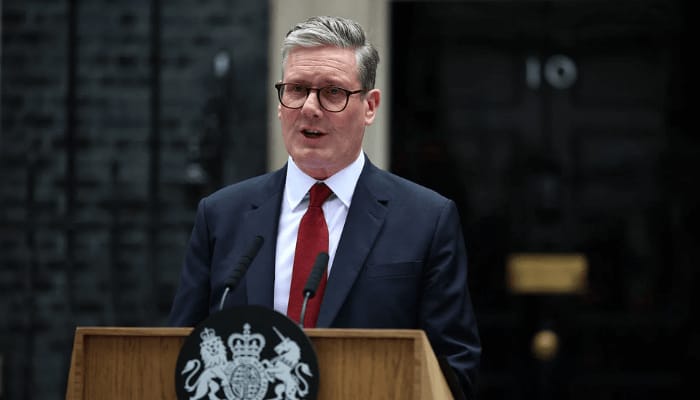
LONDON: BRITAIN’S political centre of gravity shifted sharply on Monday after Prime Minister Sir Keir Starmer announced his resignation, bringing to an end a premiership that began with historic promise but gradually weakened under mounting political pressure, internal revolt within his party, and a steady erosion of public confidence.
Starmer confirmed that he would step aside and oversee a smooth transfer of power, telling the country that Britain needed fresh leadership to restore stability at a moment of rising political strain inside the Labour Party. His decision follows months of intensifying scrutiny and growing concern among senior party figures about the direction of his government and its electoral standing.
His departure comes less than two years after Labour secured a sweeping victory in 2024 that ended more than a decade of Conservative rule and raised expectations of a lasting political reset. Instead of consolidation, the government soon found itself struggling to maintain momentum as economic frustrations deepened and disagreements over policy direction widened within its own ranks.
What began as a confident administration gradually became defined by internal disagreement, shifting alliances, and a series of political setbacks that weakened authority at the centre of government. Local election results added further pressure, reinforcing doubts about Labour’s national appeal and intensifying debate within the party about future leadership.
By the time of his resignation, Starmer was facing sustained criticism from within Labour, with lawmakers increasingly vocal about the need for change. Discussions that once took place privately among senior figures became more open, signalling that confidence in his leadership had sharply declined.
Reports from within the party indicate that the final phase of his leadership was shaped by quiet but decisive manoeuvring among potential successors, as preparations for a transition gathered pace behind the scenes. Andy Burnham has emerged as a leading figure expected to play a central role in the next stage of Labour leadership, as the party begins the process of choosing a new prime minister.
ALSO READ: THE ROAD TO ELECTIONS: Fresh impetus for women leadership role
Despite the political shock, financial markets reacted with relative calm. The pound remained broadly stable as investors assessed the resignation as an expected development rather than an abrupt disruption. Attention instead shifted to the question of future economic policy and whether a new leader could restore confidence in government direction.
Economists warn that the more significant challenge lies ahead, with Britain now entering a period where political uncertainty could complicate efforts to manage growth, public spending, and strained public services. The resignation has therefore become not only a leadership issue but also a wider test of institutional stability.
Starmer’s exit also highlights a broader pattern of political volatility that has defined British politics in recent years, marked by frequent changes in leadership and shifting party fortunes. His resignation adds another chapter to a period in which political continuity has become increasingly difficult to sustain.
As Labour prepares for a leadership contest and the country awaits the appointment of a new prime minister, attention is now focused on whether the next occupant of Downing Street can restore cohesion within the party and confidence in government at a time of persistent uncertainty about Britain’s political direction.