More taxpayers, not higher taxes: The fiscal logic behind Tanzania’s 2026-2027 national budget
DODOMA: WHENEVER a new national budget is announced, the first question from citizens and businesses is simple: ‘How much more in taxes will we have to pay?’ In my economic analysis, the 2026/27 national budget estimates presents a notable approach.
Instead of mainly raising tax rates, it focuses on expanding the tax base, digitissing transactions, formalising businesses and minimising tax leakages.
It also implements targeted increases in fees, levies and excise duties, while providing tax relief in essential sectors crucial for industrial development, youth employment and investment.
Hence, the real question is not whether Tanzanians will pay higher taxes, but rather who will pay more, who will pay less, and how the government plans to enhance the efficiency of revenue collection.
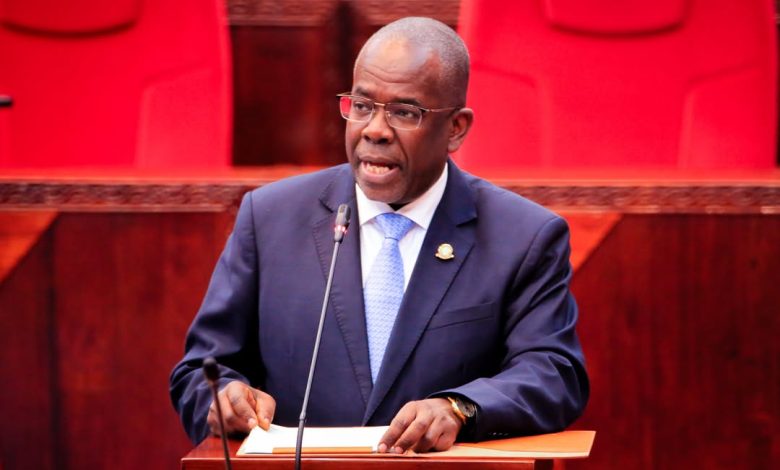
The budget estimates tabled by the Minister for Finance Ambassador Khamis Mussa Omari’s budget, when critically examined and everything placed into context, is more than just an annual spending plan; it serves as a blueprint for economic transformation.
While members of parliament will have time to discuss it further in the house, my analysis indicates that the budget estimates that the proposed tax and non-tax measures will generate significant additional revenue while also supporting economic growth, private-sector development and domestic resource mobilisation.
The budget is primarily focused on expanding the tax net rather than increasing taxes on current taxpayers.
A key theme throughout is broadening the tax base, emphasising growth over rate hikes.
Reading the budget document, one notices that the government states that advancements in tax administration, digital technology and voluntary compliance have already enhanced tax collection performance.
It credits recent improvements to better revenue collection systems, taxpayer education and increased interaction between tax authorities and taxpayers.
The implication is significant. Instead of burdening the same taxpayers further, the government in the presented budget aims to engage more businesses and individuals in the formal tax system.
This is why the budget includes measures that promote the formalisation of informal businesses, digital payments, and business registration. This is positive news for start-ups and small businesses.
The most significant tax relief in the budget is likely the proposal to give new businesses a one-year income tax holiday.
As proposed, taxpayers under the presumptive tax regime will benefit from a 12-month exemption starting from the issuance of their Taxpayer Identification Number (TIN).
The goal is to lower compliance costs and ease operational challenges during the initial phases of business growth. This marks a significant change in Tanzania’s fiscal budget history.
Usually, new businesses are required to pay taxes before they have stable operations. The new approach, as presented by Amb Omar’s speech, acknowledges that startups need time to grow before they become regular taxpayers.
The government also plans to raise the presumptive tax threshold from 100m/- to 200m/- in annual turnover. For many small businesses, this change simplifies tax procedures and reduces compliance expenses.
As a result, numerous entrepreneurs might face a lower tax burden than before. For the motorcycle sector, one notices the biggest new costs. While some businesses receive relief, others will face higher charges.
One of the most discussed measures in the budget concerns the motorcycle transport sector. The government plans to raise the registration fee for two-wheeled motorcycles from 95,000/- to 150,000/-, aiming to generate around 17.75bn/- in extra revenue.
This increase demonstrates the government’s effort to secure income from a sector that has historically been challenging to incorporate into the presumptive tax system. Undoubtedly, for boda boda operators, this is among the most evident direct cost increases in their budget.
Nevertheless, one notices that the sector is exempt from the complexities of presumptive taxation, allowing it to maintain administrative simplicity.
Petroleum users might experience indirect impacts. While fuel taxes remain relatively unchanged, the budget includes measures that could indirectly raise petroleum prices.
The government intends to increase the petroleum verification fee from 0.15 per litre to 1 per litre, expected to generate approximately 21.96bn/-. Although the increase seems minor on a personal level, petroleum products affect transportation expenses throughout the economy.
As a result, consumers may eventually notice indirect effects via higher transport and logistics costs. Smokers and sugar consumers will pay more. The red budget introduces new revenue sources to fund universal health coverage.
Key measures include raising the excise duty on cigarettes by 20 per milliliter and increasing the sugar levy by 10 per kilogramme for both imported and local sugar. These measures are projected to produce around 7.5bn/-.
From a policy standpoint, this aligns with the global trend of implementing health-related taxes to bolster healthcare financing.
The government is effectively encouraging consumers of products linked to health risks to contribute more to public health funding. From the budget speech, it is clear that NIDA Services will no longer be entirely free.
Additionally, a direct impact on citizens is the implementation of fees for accessing personal information from the National Identification Authority (NIDA). Citizens requesting information from the NIDA database will pay 500/-, with printed extracts costing 1,000/-.
While modest, these fees reflect a larger trend toward recovering costs for public services. The government anticipates this measure will generate about 734.4m/- each year.
ALSO READ: Samia to grace top taxpayers at TRA 30th anniversary
The budget speech indicates that consumers will benefit from VAT exemptions. Although there are some measures to increase revenue, the budget also includes notable tax relief provisions.
Further to the speech, the government plans to maintain VAT relief on edible oil and to implement a VAT exemption for clothing and garments made from locally grown cotton.
These initiatives aim to bolster domestic production, promote industrialisation, lower consumer prices and enhance agricultural value chains. The budget also suggests VAT exemptions for electric vehicles, natural gas infrastructure, and clean energy technologies.
This shows that the government is leveraging the tax system not just for revenue, but also to steer economic behaviour. Based on the FY 2026-2027 speech, importers will encounter a varied tax landscape.
Certain items will attract increased duties due to updated tariff structures. The budget suggests modifications impacting lubricants, yeast, and specific paper products by establishing minimum specific duty rates.
These initiatives aim to produce roughly 408.97bn/- in extra revenue. Importers in key sectors such as electric vehicles, natural gas, industrial manufacturing, and clean energy tech will benefit from exemptions and duty relief measures.
This aligns with Tanzania’s industrial policy goal of promoting investment in productive industries and reducing reliance on imported finished products.
Online content creators are unexpectedly among the winners in this year’s fiscal budget. A major reform in the business environment, according to the budget speech, involves lowering fees for online content services.
The budget proposes reducing these fees under the Electronic and Postal Communications (Online Content) Regulations, as part of broader efforts to improve the business climate.
For digital entrepreneurs, YouTubers, influencers, bloggers, and online media operators, this change reflects a reduction in regulatory costs rather than an increase.
It recognises the growing importance of the digital economy and creative industries as vital drivers of employment and economic growth.
How much extra revenue is the government aiming for? Overall, the tax and fee measures show it is pursuing significant additional domestic income. Yet, their approach varies from conventional budgets that rely heavily on taxes.
Several measures are implemented to increase revenue, including raising motorcycle registration fees, petroleum verification charges, NIDA service fees, tobacco excise duties, sugar levies, and selected import duties and reducing tax leakages through digitalisation.
The FY 2026-2027 budget includes several tax reduction measures such as a one-year tax holiday for startups, an increased presumptive tax threshold, VAT exemptions on strategic products, lower fees for online content, and incentives for clean energy investments.
Importantly, this balanced approach indicates a fiscal strategy aimed at stimulating economic growth while broadening revenue sources.
The bigger picture from the FY 2026- 2027 budget is to tax more people, not necessarily higher rates. The most important conclusion from the 2026/27 budget is that Tanzania is gradually moving away from a narrow tax base toward a broader and more formalised economy.
It is clear that the Government’s approach depends significantly on formalising informal businesses, promoting digital payments, increasing taxpayer registration, enhancing compliance systems, and notably reducing revenue leakages.
In effect, Tanzania is seeking to collect taxes on more economic activity rather than dramatically increasing tax rates on existing taxpayers.
Just as members of parliament might reach their own conclusions when debating the 2026-27 budget proposals, my honest opinion is that Tanzanians may pay more wisely rather than simply pay more.
The FY2026/27 budget does not represent a dramatic tax increase for the average Tanzanian. Instead, it embodies a more refined fiscal approach.
Some groups, such as motorcycle operators, tobacco users, sugar consumers, and those utilising certain government services will face higher payments.
Conversely, start-ups, small businesses, online content creators, investors and key industries will receive various incentives and exemptions.
Amb Omara’s budget speech: The main goal seems clear: to develop a wider, more transparent, and digitally integrated tax system that can fund Tanzania’s development goals without overburdening productive sectors.
For most Tanzanians, the true shift might not be higher tax rates, as previously assumed.
Instead, it could be an economy where increased transactions, more businesses, and a greater number of economic participants become visible within the formal system, thereby supporting national development.
For me, it is the Great Tax Shift that will make Tanzania focus on more taxpayers rather than higher rates.