JNHPP SUSTAINABILITY: ‘Matter of life and death’
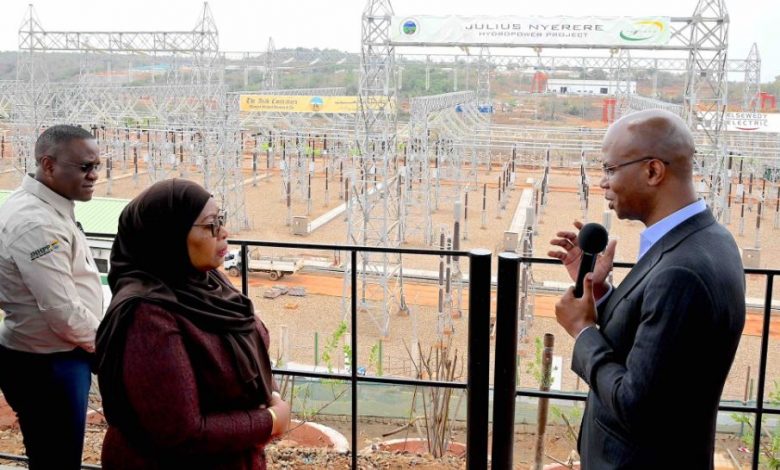
PRESIDENT Samia Suluhu Hassan on Thursday stressed the need for conserving the environment to ensure the long-term viability of the Julius Nyerere Hydropower Project (JNHPP) and the dam.
She said that the government has invested a lot of money in the project, thus, if everyone in the community protects the environment, especially those in the source and tributaries of the rivers that feed the dam, its benefits would be realized on all fronts.
“We are implementing this project at a very high cost, it will be an absolute disgrace if we fail to meet its objectives due to negligence and selfishness; thus, conserving the environment for the sake of this project is now a matter of life and death,” she said.
Speaking during the impounding and first fill ceremony of JNHPP in Coast Region yesterday, the Head of State reiterated her previous directives to relevant ministers and Regional Commissioners to fully manage and conserve river sources.
Ms Samia stated that the dam will be filled with water from various tributaries, with the Great Ruaha River contributing 15 per cent of the water to the dam, and she encouraged residents of Iringa and Mbeya regions to refrain from contaminating the water in order to prevent restricting its flow in the dam.
Residents of the Morogoro Region should do the same since the Kilombero River will contribute 65 per cent and the Luwega River will contribute 19 per cent, said the president.
She insisted since the dam will collect water from other streams along the route, environmental protection is critical for everyone.
She endorsed the directive issued by Vice-President Dr Philip Mpango in Iringa in December, this year that livestock grazing around the Rufiji River be evacuated.
“When it comes to relocating herders, authorities must observe the rules and maintain professionalism while also considering human rights,” she said.
She added: “There is an issue of conflicts between farmers and herders; it is vital to recognize that in protecting this project, no one is above the law, thus Regional and Districts Commissioners should manage such circumstances.”
President Samia further stated that all businesses and institutions that divert water in various locations, particularly from the Rufiji River, should be stopped so that all water is returned to its natural course.
She indicated that water from the Rufiji River is also required for other economic uses and development; however, the rules of water distribution should be followed by issuing water use permits in which authorities should not allocate people in the river’s upstream area but should be directed downstream to protect the project.
President Samia said it was important to establish village and ward environment committees in every section of the project area, as well as train and empower them to preserve river sources.
Ms Samia cited Tanesco’s motto, ‘Bwawa Langu, Bwawa Lako, Bwawa Letu,’ which translates to ‘Your Dam, My Dam, Our Dam,’ and said it unites the nation, thus, Tanzanians should unite and protect the crucial project for long-term development.
“I remind you that this project is the pride of our country, and we are implementing it at a great cost and with the sweat of every Tanzanian for the benefit of present and future generations,” President Samia stated.
The event marked the closure of the diversion tunnel, which returned the Rufiji River back to its main channel following impoundment via the lower gates of the main dam.
This milestone marks the Rufiji River delta saying goodbye to the floods that claimed lives in previous years, as well as the seasonal wetlands that bred malaria and other ailments in the area, said President Samia.
“As of now, the project’s managed water flow will ensure sustainable agriculture and fishing activities downstream the project,” she added.
The impounding celebration was attended by former presidents; Ali Hassan Mwinyi and Dr Jakaya Kikwete, Energy Minister January Makamba, the Minister for Foreign Affairs and East African Cooperation, Dr Stergomena Tax, and ordinary citizens, in addition to millions of Tanzanians who followed the event in a live broadcast.
Egypt sent a high-level governmental delegation led by the Minister for Foreign Affairs, Sameh Shokry, and the Minister for Housing, Utilities and Urban Development, Dr Assem El-Gazzar.
Completion of the installation and testing of the nine hydro-turbines is scheduled to gradually start during 2023 to connect the project to the Tanzanian 400-kilovolt national grid, which will double the grid capacity allowing electrification for millions of Tanzanian families, and achievement of an industrial revival sufficient to launch the country’s efforts towards new, sustainable development.