Govt seeks to ease fuel price pressure

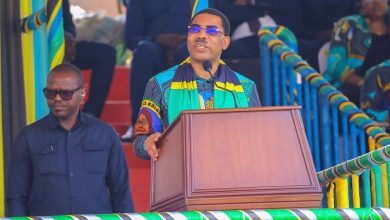
DAR ES SALAAM: THE government is taking measures to ensure that fuel prices do not continue rising at an alarming rate and heavily burden citizens and the overall economy. Minister of State in the President’s Office for Planning and Investment, Prof Kitila Mkumbo made the remarks in Dar es Salaam yesterday, during a consultative meeting held to assess the economic impact of the Gulf crisis on Tanzania.
“The government and other stakeholders are continuing to take measures to ensure that fuel prices do not keep rising at an alarming rate. We are taking measures to ensure that rising fuel prices do not heavily burden citizens,” said Prof Mkumbo.
Prof Mkumbo said the meeting brought together stakeholders, including the United Nations Development Programme (UNDP) and the United Nations (UN), to review and launch an assessment prepared by the National Planning Commission (NPC) on the economic effects of the ongoing conflict linked to Iran, with particular focus on disruptions in global oil markets.
He said the assessment outlines both negative and potential positive impacts of the crisis across key sectors of the economy, including rising prices of food, fertiliser and transport, as well as broader implications for citizens’ livelihoods. Prof Mkumbo further noted that the report highlights Tanzania’s preparedness to withstand the shocks through short- and long-term measures aimed at strengthening economic resilience.
He pointed to emerging opportunities for Africa to enhance oil exploration, processing and value addition within the continent, noting that several African countries have the capacity to produce oil but still export crude oil for processing abroad. He stressed the importance of increasing investment in oil refining within Africa to retain more value from the continent’s natural resources.
On trade and supply diversification, Prof Mkumbo said Tanzania continues to rely heavily on oil imports from Saudi Arabia and the United Arab Emirates, alongside other African suppliers, underscoring the need to broaden sourcing options. He added that the global crisis is also reshaping investment patterns, with investors increasingly seeking alternative destinations beyond traditional Middle Eastern markets.
“This crisis is creating a shift in investment perspectives and research indicates that Tanzania is among the suitable destinations for oil processing investments in Africa,” he said.
Prof Mkumbo further said projections show the country is unlikely to experience significant economic disruptions in 2026. He added that the consultative meeting would provide crucial inputs for preparation of two key national planning documents.
Meanwhile, Permanent Secretary in the President’s Office-Planning and Investment and Executive Secretary of the National Planning Commission, Dr Tausi Kida, said external shocks continue to pose significant risks to Tanzania’s economic stability and development ambitions. She said external shocks affect production costs, fiscal space, investment decisions and the pace of implementation of national priorities.
According to Dr Kida, the consultative meeting forms part of broader efforts to strengthen anticipatory planning, risk analysis and policy coordination in response to growing global uncertainty.
ALSO READ: State tightens grip on reserved local business space
She said the meeting brought together representatives from government institutions, the private sector, financial institutions, academia, researchers, civil society organisations, students and development partners to jointly assess the implications of the Gulf crisis on Tanzania’s economy.
“No single institution has all the information, tools or resources required to respond effectively to complex external shocks. The quality of our response will depend on the quality of coordination among all stakeholders,” she said.
UNDP Resident Representative, Mr Shigeki Komatsubara, said ongoing geopolitical tensions and global polarisation are already affecting economies worldwide through rising fuel prices, food insecurity, fertiliser shortages and disruptions in global supply chains.
He said the crisis is increasing pressure on macroeconomic and fiscal stability, foreign exchange systems, investment flows and the business environment, while disproportionately affecting low-income households, informal workers and small and medium enterprises.
“These pressures threaten to reverse hard-won human development gains, particularly among vulnerable groups,” he said. Furthermore, UN Resident Coordinator in Tanzania, Ms Susan Namondo, said current geopolitical tensions have once again exposed the fragility and interconnectedness of the global economy.
She noted that following the war in Ukraine and the Covid-19 pandemic, ongoing conflicts continue to demonstrate how volatile the global environment has become. Ms Namondo said countries across the world are already facing higher energy costs, shipping disruptions, inflationary pressures and fertiliser insecurity, all of which continue to affect aid flows and domestic economies.