Bunge urges reforms in inclusive education
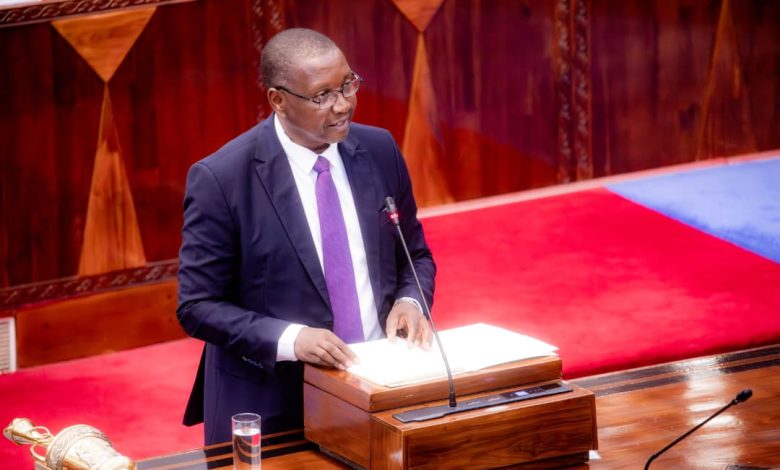
DODOMA: MEMBERS of Parliament have called for sweeping reforms to strengthen inclusive education in the country, urging expanded investment to address existing gaps.
These include infrastructure, teacher training, data availability and learning support systems that continue to hinder students with disabilities. The MPs warned that existing resources are insufficient to meet the needs of learners with disabilities, noting that failure to take decisive action could jeopardise their future.
The legislators made the remarks yesterday while contributing to the 2026/27 budget estimates for the Ministry of Education, Science and Technology in the National Assembly.
Recently, Minister for Education, Science and Technology, Prof Adolf Mkenda, requested the august House for approval of a total budget of 2.394tri/- for the 2026/27 financial year, to implement five key priorities aligned with ongoing reforms in the education sector. MPs urged the government to treat inclusive education as a priority and not a peripheral issue.
Special Seats MP Nasriya Ally, (CCM), called on the government to construct at least one inclusive school in every region and district. She said this would significantly reduce the burden on parents of children with disabilities, who often face high costs and long travel distances to access suitable education.
Drawing from her own experience, Ms Ally highlighted the challenges of studying far from home, asserting that such circumstances can delay students’ progress and increase dropout risks.
“Building inclusive schools closer to communities will not only cut costs but also save time and improve learning outcomes,” she said.
She also proposed that sign language be formally introduced as a compulsory subject across all levels of education from pre-primary to universities.
According to her, this would enhance communication, promote inclusion and ensure that teachers are better equipped to support students with special needs. Ms Ally further stressed the need for stronger collaboration between the Ministry of Education’s Special Needs Directorate and organisations representing people with disabilities. She argued that inclusive policies cannot succeed without direct input from those affected.
“We must be involved because we understand where the challenges lie,” she said.
On curriculum reforms, the Ms Ally acknowledged recent improvements but noted that they do not fully address the diverse needs of students with disabilities. She said that deaf students, for example, often require more time to complete their education due to unique learning needs.
She called for adjustments not only in curriculum design but also in assessment methods, particularly to accommodate linguistic differences in Kiswahili among deaf learners. Ms Ally raised concerns about inadequate infrastructure in some inclusive schools, citing Katumba Primary School in Tukuyu, Mbeya, as an example where conditions remain poor and insufficient for learners with disabilities. She urged the government to invest more in improving facilities and learning environments.
The MP also stressed the importance of collecting accurate and comprehensive data on people with disabilities across the country. Special Seats MP (CCM), Stella Alex, called on the government to introduce mandatory special needs education training for all teachers.
ALSO READ: ‘Protect peace, reject violence’
She said equipping every teacher with skills in special needs education will help bridge the current shortage of trained personnel and ensure that children with disabilities can study within their local communities. She said that while inclusive and special schools exist, many children are unable to attend due to long distances and financial constraints faced by their families.
“If all teachers are trained, every school can support learners with disabilities, allowing them to study in their own environments,” she said. The MP also stressed the urgent need to recruit support assistants in boarding schools that accommodate students with disabilities.
On higher education, Ms Alex raised concerns about limited access to student loans for persons with disabilities. She proposed that such loans be converted into grants, citing the high cost of living associated with different types of disabilities, including transport needs and assistive services such as interpreters.
Special Seats MP (CCM), Yumna Omar, urged the government to prioritise early identification of children with disabilities and adopt data-driven planning to improve the delivery of inclusive education.
Ms Omar stressed that detecting disabilities at early stages is critical in ensuring children receive the right support and learning environment. She said early identification enables timely intervention, making it easier to nurture each child’s potential. Ms Omar argued that investment in inclusive education should be seen not as a cost, but as an opportunity for national development.
Special Seats MP (CCM), Nyamizi Mhoja, called for clearer categorisation and recognition of people with disabilities in policy frameworks, cautioning against grouping them under broad labels such as “special groups,” which may dilute attention to their specific needs