

Inside Mzee Msuya’s quiet legacy of power
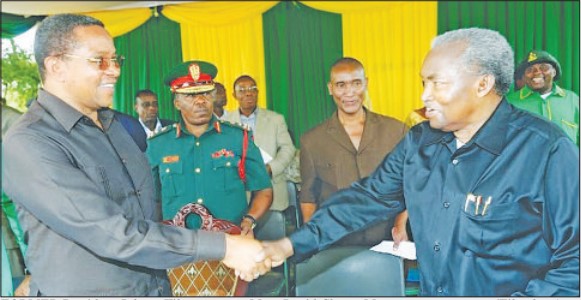
DAR ES SALAAM: INSIDE Cleopa David Msuya’s quiet legacy of power lies a story that begins far from the centres of authority he would later help shape.
From a small village in Pare, where his birth name Ch aangaja Mhako Msuya carried the meaning of “brightness” or “shining,” he rose steadily through the ranks of public service to occupy some of the highest offices in the land, closing his journey in 2025 at the age of 94 after decades of influence in the country’s political and economic development. He went on to serve in key positions including Prime Minister and later First Vice President, becoming one of the country’s most experienced technocrats in economic management and public administration.
His career placed him at the centre of major state decisions during the periods of structural change, industrial policy reforms, and shifting regional dynamics within East Africa. Though widely respected within ruling-party circles, he did not become a presidential candidate in the 2005 succession contest.
That moment instead produced a new generation of leadership, with Jakaya Kikwete emerging as the Chama Cha Mapinduzi (CCM) presidential flagbearer and eventually winning the presidency. Seen in hindsight, Mzee Msuya’s life traces a different kind of political arc less about electoral ambition and more about institutional stewardship across decades of state-building.
According to his son, Dr John C.D Msuya, his father’s name evolved from Chaangaja to Cleopa, reflecting a journey from village naming traditions to national office, yet always returning to the same truth: that names and beginnings often carry symbolic weight.
“His life reminds me that names and beginnings often carry symbolic weight, and sometimes they quietly shape the path a person walks in public life,” Dr John told Daily News. Mzee Msuya was the fifth-born in a family of modest beginnings. His father, Mhako, owned almost nothing except a manual saw used to cut timber from logs, a tool of hard labour rather than comfort, and worked as a domestic helper for German missionaries at Shighatini.
Mwanga. It was there he met his wife, Maria Ndigo, who was also a house worker. Mzee Msuya’s own education journey was not straightforward. Despite passing his Standard Four exams under the church system, he lost his place due to lack of his family influence at the church. His father insisted on seeing the results, he told him not to do so. Instead, he repeated through the Native Authority government school system.
He succeeded, progressed to Old Moshi and later Tabora School, and eventually joined the second group of Tanganyikans to study Community Development at Makerere University between 1952 and 1955. He studied Geography, Political Science and History and graduated with a Bachelor of Arts degree.
Upon his return to the country in 1956, Msuya joined the government’s Community Development Department, acting as a field officer until 1960 when he was transferred to Dar es Salaam and promoted to the position of Community Development Commissioner in 1962.
ALSO READ: Nyanzaga investment signals economic upside
At one point in life, Msuya got posted in Same District as a community development officer, a move that the area District Commissioner by then, John Chant was not happy about. “He was a white DC and he probably thought that my presence there would rattle his feathers being a local,” chuckles the former Prime Minister told Daily News two years before his death.
He says the DC was worried since the District Commanding Officer (OCD) Elangwa Shaidi and an Administrative Officer were also Pare, they could conspire against the colonial rulers. Despite having to devote the majority of his time to his job as the Ministry of Community Development’s Permanent Secretary (1964- 1965), the Principal Secretary for Water Development and Lands Settlement (1965–1967), and in Development and Economic Planning (1967–1970).
In 1970, Cleopa Msuya became part of the Treasury under Amir Jamil, an impeccable Asian Minister, where he was exposed to the challenges of managing Tanzania’s limited financial resources and maintaining the country’s strong financial position during a period when the rampant investment was putting the country’s reserves under strain. Mzee Msuya would later become known for his integrity.
In the 1970s, when a directive required every public servant to own only one house, he made a striking decision.
“But he chose to return this one, and it became a government house where some ministers later lived,” Dr John says. The house in question was in Upanga, near Muhimbili Hospital, built through a bank loan of 100,000/-. Yet Mzee Msuya opted to return it to the government and retain a far more modest home in Usangi. “We moved into the single-storey house with six bedrooms in 1966 when I was six years old.
The average salary for a worker then was 1,000/- a month,” recalls Dr John, adding that “he did not want to take advantage of the government.” True to the meaning of his early name, ‘Chaangaja’—one associated with brightness, Msuya’s public service left a wide imprint.
He was instrumental in establishing the Tanzania Investment Bank (TIB), becoming its founding chairman, and played a key role in shaping import substitution policies and early industrial reforms that later gave rise to many state-owned industries when he was the Minister for Industry.
As Finance Minister, he served during one of the country’s most difficult periods, the aftermath of the war that removed Idi Amin and the global oil crisis of the 1970s. At the grassroots level, after Mwanga District was established, Mzee Msuya became its first Member of Parliament and helped design its development blueprint with support from George Kahama—head of Capital Development Authority (CDA) in Dodoma.
He also championed education by encouraging institutions, such as the Evangelical Lutheran Church in Tanzania to invest in private education, including Shighatini Secondary School and Minja Technical Secondary School in Ugweno before the government introduced ward secondary schools in 1990s.
“My father deeply valued education for all,” Dr John says. He also played a key role in the establishment of Mwanga Community Bank in 2000s today Mwanga Hakika Bank (MHB). “In all the years we worked with him, what we saw was a leader committed to people’s development, particularly in education, agriculture and small enterprise,” said Projest Massawe, MHB’s Head of Commercial last year during the Mzee Msuya burial service. Mzee Msuya’s house was later returned to him in the 1990s by President Ali Hassan Mwinyi.
His patience, Dr John notes, eventually paid off in a way he never sought to force. “His patience paid because other ministers (Apiyo and Mulokozi), who had houses near ours, decided to sell them instead of surrendering them to the government,” Dr John says. Mzee Msuya retired as First Vice President and Prime Minister following the reintroduction of multi-party politics in 1995.
However, he continued to serve as Mwanga Member of Parliament until 2000, when he finally retired from active politics. Msuya, Baba wa Mwanga, as he is fondly referred to by his fellow residents, was laid to rest at his beloved village Chomvu May 7th 2025.
References:
Legiano Casino Tischspiele board-en.skyrama.com
References:
Legiano Casino iPhone https://akmrko.ru/bitrix/redirect.php?goto=https://bybio.co/maximoburc
References:
KingMaker Casino Mindesteinzahlung 20 Euro https://www.mydaradstools.com/jannaschil
References:
KingMaker Casino Anmeldung Bonus https://jam2.me/cora98y229
References:
KingMaker Casino Einzahlung mit Neukundenbonus https://hubu.ru
References:
Kingmaker Casino 10 Euro Bonus https://mssq.me/eloycostel
References:
KingMaker login http://www.google.com.ni
References:
Legiano Casino Kontakt lardi-trans.by
References:
Legiano Casino legal http://www.google.co.th/url?sa=t&url=http://www.annunciogratis.net/author/penpike00
References:
Legiano Online Casino https://ca.do4a.pro/proxy.php?link=https://dancewiki.site/wiki/Legiano_Casino_Casino_Legiano_Offizielle_Seite_Deutschland
References:
Legiano Casino Umsatzbedingungen https://dompoeta.ru/avtorskie-anonsy?url=https://telegra.ph/Legiano-Casino-Erfahrungen-2026-Brandneu-06-07
References:
Legiano Casino Tischspiele http://www.michael-smirnov.ru
References:
Legiano Casino Live Chat maps.google.com.mm
References:
Hitnspin casino app android http://www.nashi-progulki.ru
References:
Hitnspin casino gewinne http://oluchi.yn.lt/load_file/index?url=campus.tdea.edu.co/cas/logout?url=https://de.trustpilot.com/review/der-wikinger-shop.de
References:
Hitnspin willkommensbonus https://masteram.us
References:
Hitnspin bonus ohne einzahlung http://electrik.org
References:
Hitnspin casino erfahrungen https://www.musicalion.com/
References:
Hitnspin casino anmeldung https://forums-archive.eveonline.com/warning/?l=https://warblog.hys.cz/user/treewoman78/&domain=nyikunyit.com
References:
Lollybet Casino Auszahlungsdauer http://scandwap.xtgem.com
İstanbul seyahatlerinizde en seçkin VIP model kataloglarını, otel karşılama ve gece hayatı rehberlerini incelemek için ilçe portallarımızı ziyaret edebilirsiniz:
Fatih VIP Escort |
Bostancı Escort |
Levent VIP Escort |
Pendik Escort |
Kartal Escort |
Zeytinburnu Escort |
Bahçelievler Escort |
Bağcılar Escort |
Kağıthane Escort |
Beyoğlu Taksim Escort |
Florya Escort |
Nişantaşı VIP Escort |
Beşiktaş Escort |
Kadıköy Escort |
Şişli Escort |
Bakırköy Escort |
Ataşehir Escort |
Beylikdüzü Escort |
Maltepe Escort |
Ümraniye Escort |
Üsküdar Escort |
Mecidiyeköy Escort |
Sarıyer Escort |
Göktürk Escort |
İstanbul VIP Escort |
Taksim Gece Hayatı
Faydalı paylaşım için teşekkür ederiz! [rvtqolbikklrvavkna]
İstanbul genelinde konaklama, VIP partner, otel karşılama ve lüks gece hayatı seçenekleri hakkında son derece kapsamlı ve faydalı bir paylaşım olmuş. Özellikle İstanbul escort bayan, VIP eskort ve otel transfer hizmeti arayanlar için bölge bölge hazırlanan güncel portföy ilanlarını aşağıdan detaylıca inceleyebilirsiniz:
– Mecidiyeköy Escort İlanları: Mecidiyeköy Escort VIP Partner
– Beylikdüzü Escort İlanları: Beylikdüzü Escort Bayan
– Ümraniye Eskort İlanları: Ümraniye Eskort Bayanlar
– Fatih Escort İlanları: Fatih Escort Tarihi Yarımada
– Beşiktaş Escort İlanları: Beşiktaş Escort VIP Partner
– Ataşehir Escort İlanları: Ataşehir Escort Bayanlar
– Bakırköy Eskort İlanları: Bakırköy Eskort VIP Transfer
– Sarıyer Escort İlanları: Sarıyer Escort VIP Partner
– Üsküdar Escort İlanları: Üsküdar Escort Bayan
– Kadıköy Eskort İlanları: Kadıköy Eskort VIP Partner
– Maltepe Escort İlanları: Maltepe Escort Bayanlar
– Bostancı Escort İlanları: Bostancı Escort VIP Partner
– Şişli Escort İlanları: Şişli Escort Bayan
– Kadıköy Moda Eskort: Kadıköy Moda Eskort
– Üsküdar Sahil Escort: Üsküdar Sahil Escort
– Mecidiyeköy Eskort: Mecidiyeköy Eskort Bayan
– İstanbul Escort Genel: İstanbul Escort VIP Partner
– Maltepe Eskort Rehberi: Maltepe Eskort İlanları
– Fatih Eskort Rehberi: Fatih Eskort Bayanlar
– Ümraniye Escort Rehberi: Ümraniye Escort VIP Partner
– Beşiktaş Eskort Rehberi: Beşiktaş Eskort İlanları
– Ataşehir Eskort Rehberi: Ataşehir Eskort Bayan
– Beylikdüzü Escort Rehberi: Beylikdüzü Escort VIP Partner
7/24 otel karşılama, bağımsız modeller ve VIP seyahat rehberi arayanlar güncel kataloğu yukarıdaki bağlantılardan doğrudan inceleyebilirler. Paylaşım için teşekkürler! [kniugymbzmnnjjvmad]
References:
%random_anchor_text% https://code.a100-cn.com/
References:
Candy96 Casino withdrawal shiftlycrew.com
References:
Stake Casino Auszahlung http://m.landing.siap-online.com/?goto=http://brandhelix.click/muoixiy896391&layanan=ppdb
References:
Candy96 Casino iOS https://gladjobs.com
References:
Winningz Casino App sexstories.app