Morality key to achieving Dira 2050 goals

DODOMA: As Tanzania aspires to become a one-trillion-dollar economy within the next 25 years under the ambitious Vision 2050, morality has been identified as a key pillar in achieving that goal.
The vision underscores that peace, security and stability form the bedrock of a prosperous and unified nation, safeguarding state integrity, driving economic growth and enabling social cohesion.
“A peaceful society begins with the family, the primary institution that fosters a culture of peace and instils essential values such as morality, respect, wisdom, conflict avoidance and cooperation,” the Vision 2050 document states.
It further notes that when these values are nurtured within families, they extend to the wider community, strengthening cohesion and resilience. Communities rooted in such principles are better equipped to manage conflicts peacefully, preventing violence and unrest.
Tanzania has long recognised the importance of peace, security and stability, both in fostering national unity and promoting regional and global cooperation. Domestically, the country has upheld inclusive governance, respect for human rights and adherence to the rule of law, creating an environment conducive to peace and progress.
Regionally, Tanzania has played a key role in mediation efforts, peacekeeping missions and promoting dialogue in the East African and Great Lakes regions, while globally contributing to international peacekeeping initiatives.
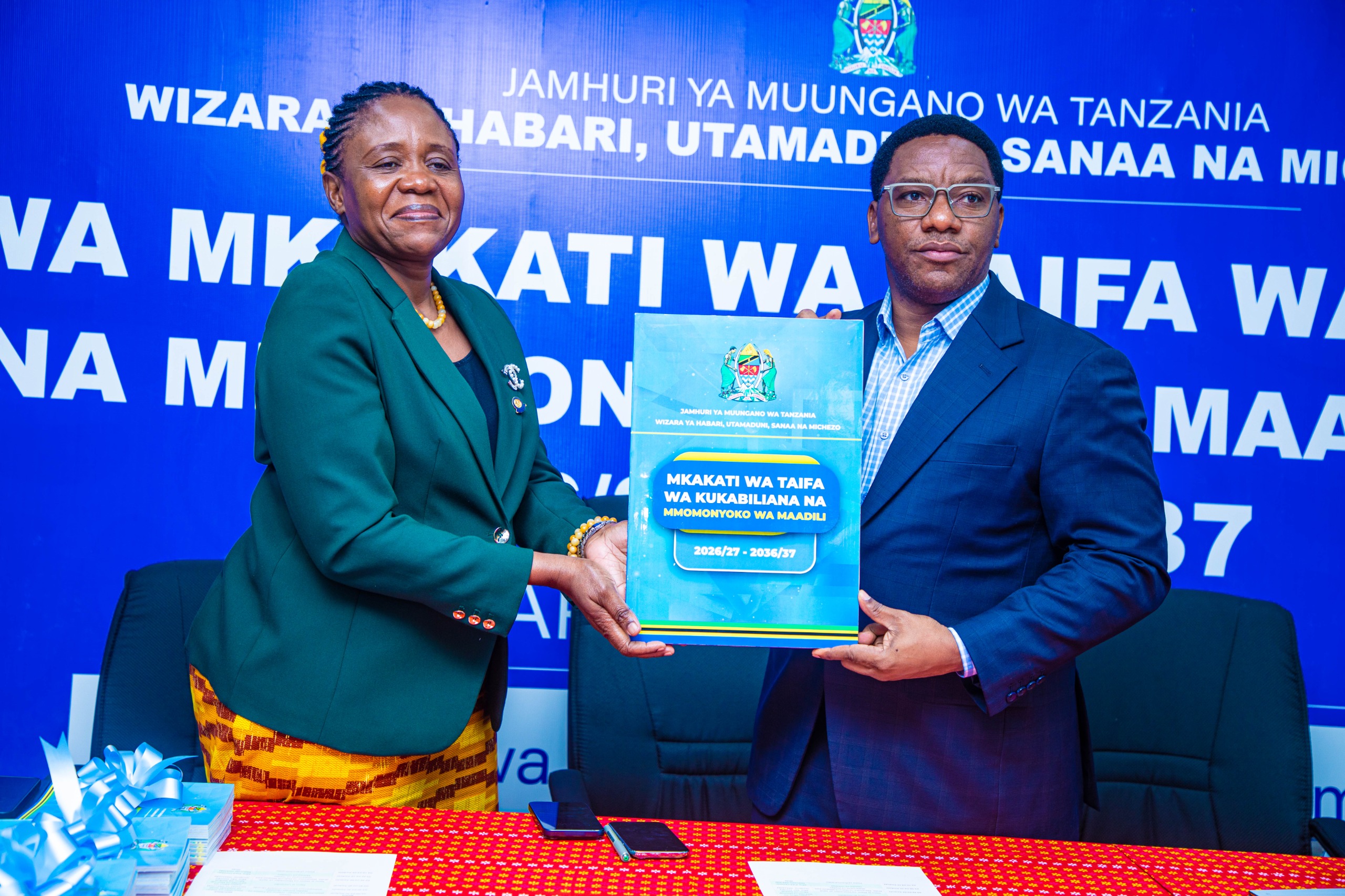
This is why the government launched a 10-year National Strategy to Address Moral Decay (2026/27–2036/37) in Dodoma aimed at strengthening ethical values across society and supporting the goals of the National Development Vision 2050.
The strategy was unveiled in the Capita recently by the Minister for Information, Culture, Arts and Sports, Paul Makonda, alongside the Minister for Community Development, Gender, Women and Special Groups, Dorothy Gwajima, with both leaders pledging close cooperation to ensure effective implementation.
Strategy comes at a critical time
Speaking during the launch, Minister Paul Makonda said addressing moral decay is not easy, noting that some individuals contributing to the problem hold significant influence in society.
“Today is a very important day for the future of our nation. This strategy implements directives from President Samia Suluhu Hassan aimed at addressing and preventing moral decline,” he said.
He acknowledged that Tanzania, like many other nations, is facing moral challenges driven by technological change, which has contributed to issues such as drug abuse, violence, abusive language, family breakdown and indecent dressing.
Makonda stressed that morals are fundamental in safeguarding national interests, as they shape identity and guide societal direction.
“Although moral decay may appear minor, the situation within families is alarming. This inclusive strategy aims to build a society grounded in dignity, patriotism, unity and accountability,” he said.
ALSO READ: Samia urges pre-primary schools to bolster national morality
He explained that the strategy places strong emphasis on families as the foundation for nurturing moral values, noting that many have neglected early upbringing and character development in favour of formal education and material success.
“We cannot effectively fight corruption, drug abuse or build good leadership without strong family foundations. Parents must take responsibility for raising their children and play an active role in addressing moral decline,” he emphasised.
Shared responsibility
Makonda urged parents to instil strong values in their children to secure their future and promote integrity.
He also called for a review of social media use through dedicated strategies to eliminate harmful content and protect children.
“We are developing locally made digital platforms to curb behaviours that undermine our values. At the same time, we are strengthening enforcement of laws. Rising cases of gender-based violence require collective action from all stakeholders,” he said.
He further urged religious, cultural and community leaders to continue condemning harmful practices and promoting integrity, while calling on the media to play a responsible role in shaping positive societal values.
Optimism high
Minister Dorothy Gwajima said the strategy marks a long-awaited breakthrough.
“Young people need this strategy, which cuts across all sectors and complements efforts to combat gender-based violence affecting all groups in society,” she said.
She assured Tanzanians that the strategy will be implemented with full commitment in collaboration with development partners.
The launch, she added, aligns with Vision 2050, which seeks to build a morally upright, dignified and accountable society.
Dr Gwajima pledged continued collaboration, emphasising that success will depend on collective efforts rather than a single institution.
“This strategy cannot be implemented by one ministry alone. It requires the participation of all stakeholders, including development partners,” she said.
She added that her ministry will focus on coordinating and documenting progress, particularly in areas of child upbringing, development and family welfare as implementation advances.
Implementation focus
On his part, the Permanent Secretary in the Ministry of Culture, Arts and Sports and Government Chief Spokesperson, Gerson Msigwa, described the launch as a historic milestone.
“The goal is to build a morally upright society that protects the country’s image and instils good values among the youth,” he said.
Msigwa assured that the government is committed to ensuring the strategy is effectively implemented at all levels and does not remain on paper, with the aim of building a morally grounded generation in Tanzania.
At the well-attended event, the Permanent Secretary in the Ministry of Information, Culture, Arts and Sports, Gerson Msigwa, said the document was developed in line with directives issued by President Samia Suluhu Hassan, as well as the National Development Vision 2050 and the Cultural Policy of 1997, which is currently under review.
He said the strategy seeks to bring together the efforts, knowledge and resources of various stakeholders to build a society anchored in strong moral values, with particular focus on children and youth.
“The process has gone through all stages of validation, including consultations with traditional and religious leaders as well as representatives from different groups in society,” he said.
Mr Msigwa assured that implementation will be prioritised to ensure the strategy delivers tangible results at all levels, starting from the family level.