Voices on Frontlines: How youth are shaping climate action from Norway to Tanzania
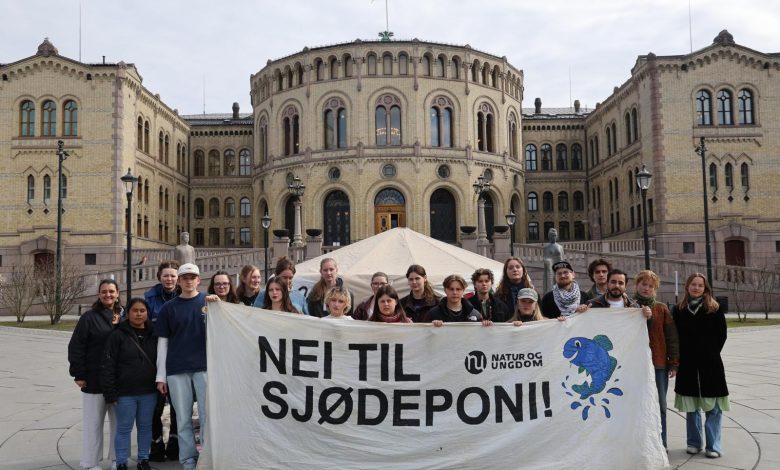
OSLO, NORWAY: On a cold morning in northern Norway, young protesters gathered to oppose mining projects they say threaten their future.
“They felt they were going to live on this planet longer than older people and they don’t have much of a say on what to do, and they have to live with the consequences.” says Professor Andreas Ytterstad a climate expert.
Across continents, young people have emerged as some of the most visible voices in the climate movement. From the school strikes that swept through Europe in 2018 and 2019 to today’s local protests in northern Norway, youth activism continues to shape how the climate crisis is understood and contested.
In northern Norway, that frustration has taken a new form. Isak Eriksen, a youth activist with Young Friends of the Earth Norway, says the movement today feels different from the school strikes.
“It’s not so cool to engage in the environment like before,” he explains, pointing to the surge of activism during the Fridays for Future movement. “We had a peak and now we are going a little bit down because the climate is not such a popular debate topic in Norway.”
That shift has made mobilizing for young people more difficult. While climate protests once drew large crowds, activists today face declining participation and reduced public attention. To counter this, organizations like Young Friends of the Earth have turned to local organizing giving smaller youth groups across the country more autonomy and resources, while also visiting schools to educate and recruit new members.
Across Norway, activists are adapting. Eriksen, describes how youth organizers travel to high schools, teaching students about the climate crisis and its unequal global impacts. “We try to give local teams freedom to conduct climate actions so they can grow year after year,” he says. The goal is not only to inform, but to rebuild a movement that has lost momentum since its peak.
But despite continued efforts, many young activists feel their voices are not translating into political change. “A lot of people say it’s good that you engage,” Eriksen says. “But they don’t do anything with it in politics afterwards, in cases like the proposed mining project in Repparfjord, he points out that public opposition remains high, yet government decisions often move in a different direction.
That frustration reflects a broader pattern identified by climate scholars. “You can organize meetings with young people and then do what you were going to do anyway,” says Professor Andreas, pointing to what critics describe as tokenistic forms of youth participation. In Norway, debates over oil exploration and mining projects illustrate this tension, where youth-led protests have gained visibility but struggled to shift final political decisions.
Yet participation is far from guaranteed. For many young people, the challenge is not a lack of awareness, but a sense of hopelessness. “People feel like it’s lost like there’s no point in doing anything,” says Brage Ulstein, a youth organizer with Young Friends of the Earth Norway. Others face more personal barriers, including family pressure particularly in communities tied to industries such as oil and gas.
To counter this, activists are rethinking how they mobilize. Brage Ulstein describes a movement that may be smaller than during the peak of the Fridays for Future protests, but more focused. “When issues are talked about a lot, we see a huge increase in mobilization,” he explains. In quieter periods, however, organizations turn to local campaigns such as opposing mining or deforestation to help young people see tangible results from their actions. “If you do it in a certain way, you can really feel that you’re making a difference,” he says.
While some activists describe declining momentum, others point to a different reality youth climate action in Norway is not only about protest it is also highly organized.
Siri, a young activist involved with Nature and Youth Norway, says many campaigns are built around clear strategies and long-term goals. For her, the motivation is simple: “to work with something that actually can make an impact.”
That sense of purpose is often tied to concrete outcomes. In recent years, youth-led campaigns have contributed to major political decisions, including a pause on deep-sea mining exploration and earlier victories against oil drilling in vulnerable areas. “If we win this case, we might be able to prevent other similar cases,” she explains.
Still, influence is not guaranteed. “We have to scream loud and work really hard,” Siri says. “We are at least listened to but we don’t always win.” Part of that influence, activists acknowledge, comes from the system around them. In Norway, young people have access to media platforms, legal protections for protest, and organizations with financial support. “We’re really lucky with the system we have behind us,” Siri says, noting that in other parts of the world, activism can carry far greater risks.
Media also plays a crucial role. “For politicians to care, a lot of people need to care and for people to care, they need to know,” she adds, highlighting how visibility can turn youth demands into public pressure.
In Tanzania, climate change is not a distant concept it is something young people experience every day.
“We depend on farming, but the rains are no longer reliable,” says Justine Mtopwa a young resident from a rural community in Tanzania. Crops such as maize, millet, cassava and cotton once central to both food and income are becoming harder to grow as weather patterns shift.
During the dry season, from June to October, the situation becomes even more severe. “There is too much heat, and the rain is unpredictable,” he explains. Periods of prolonged drought are often followed by sudden flooding, damaging crops and affecting livestock.
The consequences go beyond agriculture. Water shortages are becoming more common, while rising temperatures have contributed to an increase in diseases such as malaria. As harvests decline, so does family income placing additional pressure on already vulnerable households.
For young people, the impact is also shaping their future. Floods and economic hardship disrupt education, while declining opportunities in farming and fishing are pushing many to migrate to cities in search of work.
“Young people are affected the most,” he says, “but we are not part of the decisions.” With limited representation and resources, many feel their voices are not heard by those in power.
While many young people experience climate change through its direct impact on their lives, others are working to turn that reality into action, while youth activists in Norway describe a struggle to maintain momentum in a changing political and media landscape, in Tanzania the challenge is not declining interest but the weight of immediate reality. There, climate change is not a distant political issue, but a daily lived experience shaping how young people engage, organize, and respond.
In Tanzania, youth engagement in climate action is driven less by abstract concern and more by lived experience. “Climate change is no longer something distant or theoretical it affects us directly,” says Evelyn Gervas a youth climate activist with Africa Unveil organization.
From unpredictable rainfall disrupting agriculture to floods destroying homes, young people are confronting the crisis in their daily lives. As a result, climate action often takes practical forms: tree planting, waste management, recycling, and community education. Through initiatives like Taka Hub and Eco-Taka Lab, youth-led organizations are also turning environmental challenges into economic opportunities.
Yet mobilizing young people remains difficult. Limited funding and resources restrict participation, while others prioritize more immediate concerns such as employment. “Many young people are passionate,” Gervas explains, “but without support, it’s hard to sustain engagement.”
While she notes that policymakers are increasingly willing to listen, she adds that youth participation often remains symbolic rather than influential. And although social media has helped amplify youth voices, access to traditional media is still limited.
Compared to countries like Norway, where activism often centres on influencing policy, youth climate action in Tanzania is shaped by urgency. “Here, it’s about adaptation and survival,” she says. “The priorities are different because the realities are different.”
For young people in Tanzania, climate change is already reshaping daily life affecting food, health, and the possibility of staying in their communities. In Norway, it is a cause that has mobilized thousands, even as maintaining that momentum becomes increasingly difficult. Their realities are different, but their message is strikingly similar: they want to be taken seriously.
From rural villages facing drought and floods to protests against mining in the north of Norway, young people are finding ways to respond to a crisis they did not create. They are organizing, educating, and speaking out often with limited resources and uncertain outcomes.
Yet again and again, they encounter the same barrier: being heard without being given real power. As one young person put it, “we are affected the most, but we are not part of the decisions.”
If climate solutions are to be effective, that gap cannot remain. Because while the contexts may differ, the stakes do not and the generation that will live longest with the consequences is already asking to be included.
The future of climate action may depend not only on what young people do but on whether the world is willing to act with them.