

Government drives digital economy
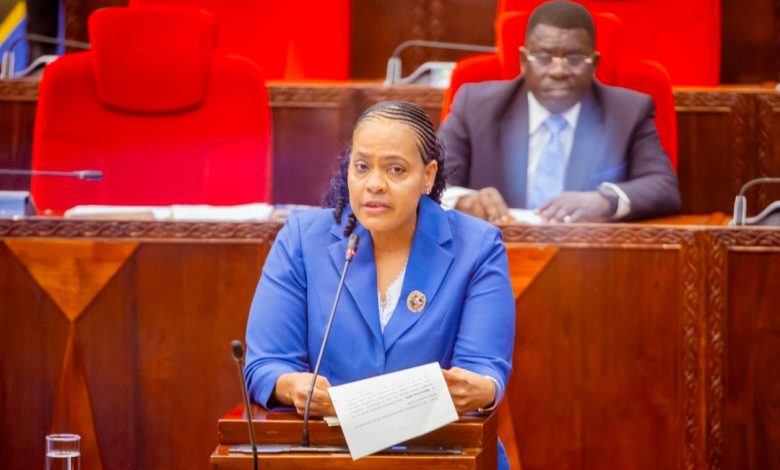
DODOMA: THE Ministry of Information and Communication Technology has outlined plans to implement eight development projects in the next financial year aimed at improving access to communication services and enhancing the use of ICT in the country.
Minister for Information and Communication Technology, Angellah Kairuki, told the National Assembly yesterday that the projects are part of government efforts to build a digital economy driven by ICT.
Ms Kairuki was presenting a 222.6bn/- budget estimates for the 2026/27 financial year for the implementation of the Ministry’s responsibilities.
She said the Ministry is continuing to coordinate and oversee the implementation of the National Digital Economy Strategy 2024–2034, under which the Tanzania Digital Project has supported improvements in ICT infrastructure and systems, forming the foundation of the strategy.
Kairuki said in the 2026/27 financial year, the Ministry has projected to spend 12.2bn/- on the Tanzania Digital Project.
She said the funds will be used to establish the National Digital Technology Institute and an Innovation Hub, as well as five regional centres across the country’s zones.
The project will also support procurement, installation and use of ICT equipment in the centres.
She further said the government has allocated 103.6bn/- for the construction of the National ICT Backbone, which will connect Tanzania with the Democratic Republic of Congo.
The project will also include 20 new stations, two data centres in Dodoma and Zanzibar, and expansion of internet services to 100 schools and 100 public areas.
On rural connectivity, the Ministry has set aside 40bn/- for the construction of 636 communication towers, improvement of services in 31 regions, and increased internet access in rural areas.
For the National Addressing System, the government has allocated 16.1bn/- to strengthen the digital system, improve regulations, raise public awareness, and integrate it with other government systems.
In the ICT innovation sector 13.7bn/- has been allocated for the development of ICT parks, Artificial Intelligence training, integration of 110 government systems, and strengthening cybersecurity through national awareness campaigns.
ALSO READ: Tanzania, Singapore prioritize cooperation in the financial sector, digital economy
Kairuki said the government will continue to strengthen cybersecurity, review the Cybercrimes Act of 2015, establish a National Cybersecurity Committee, and enhance public education on safe use of digital platforms.
She said the investments are aimed at building a modern economy driven by innovation, data and digital systems, which will increase employment, revenue and global competitiveness.
On support to ICT startups, she said the government has secured 5bn/- for loans, which will be disbursed starting May 2026 through NMB Bank.
She said guidelines for selecting beneficiaries have been completed, and about 50 ICT start-ups are expected to benefit in areas including financial technology, law, agriculture, tourism, insurance, education and digital services.
Applications will be submitted through a digital platform linked to NMB to simplify the selection process.
Minister Kairuki further said that in the next financial year, her office will implement its responsibilities based on key priorities aimed at strengthening the ICT sector and advancing the digital economy.
She said the priorities include formulating, reviewing and overseeing the implementation of guidelines governing the ICT sector.
Other priorities include improving access to telecommunications and postal services in the country, as well as creating an enabling environment for the growth and strengthening of e-commerce.
The Ministry will also focus on strengthening infrastructure that supports the implementation of the digital economy and enhancing cybersecurity and protection of cyberspace.




References:
Lollybet Casino Bonus Code http://www.hamatata.com
References:
%random_anchor_text% https://strongholdglobalgroup.com/employer/schnell-anmelden-sicher-einloggen
References:
Intense Casino Bonus https://shwemusic.com/
References:
Bwin Casino Bonus ohne Einzahlung https://bios-fix.com/proxy.php?link=https://qulixe.com/antoniohornick
References:
Candy96 Casino minimum deposit https://part-time.ie/companies/candy96-com-casino-review-scam-or-safe-1-100-trust-score
References:
Candy96 security https://jobszimbabwe.co.zw/companies/candy96-casino-australia-pokies-bonus-deals-fast-withdrawals
References:
Candy96 payment proof https://toptalent.co.mz/employer/play-the-best-online-casino-games-at-candy96-pokies-table-live
References:
Monro Casino Auszahlung http://toolbarqueries.google.com.my/
References:
Tg.Casino Bonus ohne Einzahlung http://cvet-forum.ru/proxy.php?link=https://smartcard.phoenixopia.com/rudolphfrederi
References:
Drip Casino Einzahlung savvylion.com
References:
Jet Casino Bonus https://ua.cvbankas.lt/pasirinkti-kalba.html?route=https://jandlfabricating.com/employer/1go-casino-bonus-2026-50-freispiele-ohne-einzahlung/
References:
Betino Casino Einzahlung http://shop3.opencage.cafe24.com
References:
Total Casino App http://hnscom1.finejin.com/
References:
Free payid pokies http://bbs.lotsmall.cn/home.php?mod=space&uid=615950
References:
Trusted payid pokies australia https://hedgedoc.uni-ak.ac.at/m8hPLbTmTJ6Bttioqf45dQ
Appreciate https://sites.google.com/view/best-seo-company-in-lagos