African states urged to strengthen institutions amid global pressure
DAR ES SALAAM: A Tanzanian political analyst has called on African countries to reinforce domestic governance systems as a strategic response to growing geopolitical pressure and external scrutiny over human rights and democracy.
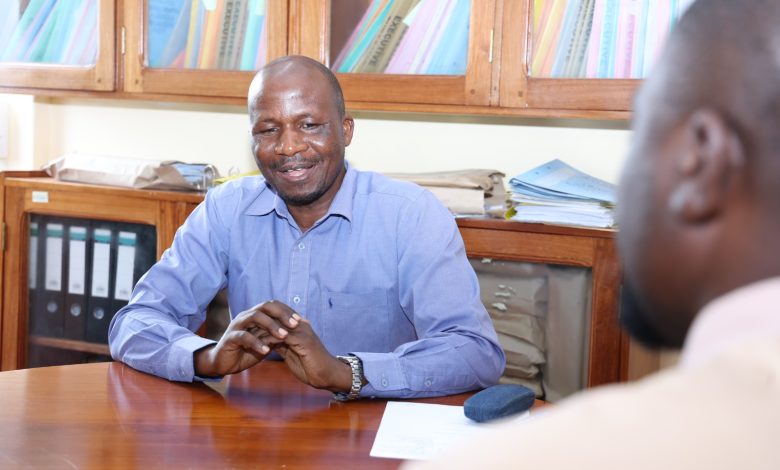
In an interview, Dr. Lupa Ramadhani, a lecturer at University of Dar es Salaam, said weaknesses in internal systems often create openings for international actors to intervene in domestic affairs.
“In an interconnected world, no country operates in isolation. Where there is a vacuum in governance or accountability, external actors will inevitably step in,” he said.
Ramadhani noted that debates around sovereignty and foreign interference have intensified in recent years, particularly as African countries navigate relationships with global powers and institutions.
Watch Full interview Here:
HUMAN RIGHTS OR POWER TOOL? AFRICA, ICC & GLOBAL POLITICS EXPLAINED
He said concerns over the use of human rights as a foreign policy tool are not new, but remain relevant.
“There is a long-standing argument that human rights narratives can be used selectively, sometimes as an entry point for influence in domestic political processes,” he said.
He pointed to the role of international financial institutions such as the International Monetary Fund and the World Bank, noting that policy conditions tied to financial support have historically shaped governance reforms in Africa, particularly during the structural adjustment era.
“These frameworks often emphasised political and governance reforms, sometimes without equal focus on economic rights, which remains a subject of debate,” he said.
Ramadhani said Africa’s response should not rely solely on criticism of external actors, but on building credible, enforceable systems at home. He cited regional judicial bodies such as the East African Court of Justice, where rulings are sometimes undermined by weak implementation mechanisms.
ALSO READ: Analyst says ICC still vital but faces credibility gap in Africa
“If African institutions are to provide alternatives, they must demonstrate consistency and enforcement. Otherwise, they risk losing legitimacy,” he said.
On Tanzania, he said strengthening institutional transparency and responsiveness is critical, particularly in managing politically sensitive issues such as elections and public accountability.
“Failure to act internally invites external attention. The international community will always have an interest in governance issues, especially where instability is perceived,” he said.
Addressing concerns over foreign influence in political processes, Ramadhani said such influence is not limited to one group, noting that governments, opposition parties and civil society organisations often engage with international partners.
“At this stage, without conclusive evidence, it is important to avoid premature conclusions. Influence is complex and often multi-directional,” he said.
He added that Africa’s long-term position should be anchored in developing governance models that reflect local contexts while remaining compatible with global norms.
“The challenge is to define systems that are both locally grounded and internationally credible. That balance is essential for maintaining sovereignty while engaging the global system,” he said.