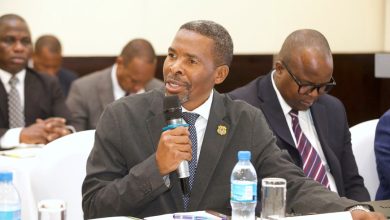
Analyst says ICC still vital but faces credibility gap in Africa

DAR ES SALAAM: A political analyst has said the International Criminal Court remains a necessary institution for global justice but is increasingly viewed with scepticism across Africa due to perceived double standards in its enforcement.
Speaking in an interview, Lupa Ramadhani, a lecturer at University of Dar es Salaam, said the court was created to address serious international crimes, including genocide and widespread human rights abuses, at a time when existing mechanisms such as the International Court of Justice were limited to disputes between states.
“The ICC emerged out of necessity, particularly after events such as the Rwandan Genocide and conflicts in the Balkans, where impunity was evident,” Ramadhani said.
However, he noted that over time, the court’s record has drawn criticism, particularly from African states, which argue that prosecutions have disproportionately targeted the continent while powerful countries escape scrutiny.
“There is a growing perception that the court acts selectively. While it has addressed crimes in Africa, similar actions elsewhere have not received the same response,” he said.
Ramadhani added that despite these concerns, the ICC has had measurable impact, including prosecuting individuals and contributing to deterrence by establishing personal criminal liability for serious offences.
“It has provided a platform for justice and discouraged impunity, even if not perfectly,” he said.
On calls for “African solutions to African problems,” he said regional mechanisms could offer alternatives but face structural weaknesses, particularly in enforcement. Courts such as the East African Court of Justice have issued rulings that are not consistently implemented by member states.
“Without enforcement, even well-designed institutions become ineffective,” he said.
Ramadhani also pointed to broader geopolitical tensions, arguing that human rights discourse is sometimes used by powerful nations to advance foreign policy interests. He cited debates linked to international financial institutions such as the World Bank, where governance and political reforms are often tied to economic programmes.
ALSO READ: Hungary votes to withdraw from International Criminal Court over Israeli warrants
At the domestic level, he said countries such as Tanzania must strengthen internal accountability systems to reduce external intervention.
“Where there is a governance vacuum, external actors will step in. The priority should be to build credible internal institutions,” he said.
On recent concerns over electoral violence and foreign influence, Ramadhani urged caution, noting that investigations remain preliminary and that external support affects multiple actors, including governments, opposition groups and civil society.
He said Africa’s long-term response should focus on building coherent political frameworks that reflect local realities while meeting international standards.
“Africa needs to demonstrate institutional credibility and consistency. Without that, claims of double standards will remain difficult to challenge effectively,” he said.