How Tanzania is financing the fight against malaria
DAR ES SALAAM: If you are reading this somewhere in Tanzania, malaria has almost certainly touched your life. It could be a child in your household who missed a week of school, or a relative rushed to a health facility in the middle of the night. Or, more devastating still, it could be a funeral you attended that should never have happened. That is the impact of the disease we are fighting.
As we continue to commemorate World Malaria Day this month, we want to share with you how Tanzania is paying for that fight, and why we believe the coalition behind it is one of the most important stories in African malaria control and elimination.
If we can end malaria in Tanzania, the prize is an economy that stops losing shillings, hours, and lives to a preventable disease. It requires a financing model that reaches beyond the national budget into the private sector, faith communities, civil society, and the institutions that form the backbone of Tanzanian public life.
Government cannot close the gap alone, and it should not have to. Building a coalition around Government is the reason the End Malaria Council Tanzania (EMCT) exists. Three recent examples show what that coalition is producing.
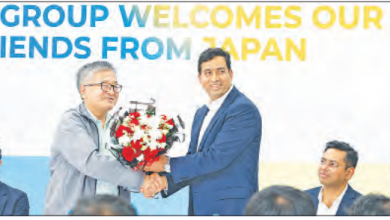
The first is how private capital is being channelled into Government delivery systems. Through EMCT, the company SC Johnson committed USD 750,000 (close to TZS 1.9 billion) to Tanzania’s malaria fight. Out of this, USD 250,000 has built dispensaries in two hard-to-reach high malaria burden districts. The remaining USD 500,000 is now supporting nationwide capacity building in Larva Source Management, through training at regional and district level, and community sensitisation involving religious and interfaith leaders. This is what it looks like when private investment is deliberately routed through the national programme rather than into parallel structures.
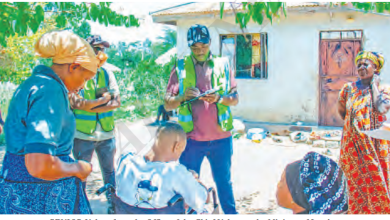
The second is what faith-led contribution looks like at community level. At the EMCT quarterly meeting in December 2024, the national malaria scorecard identified Chunya District in Mbeya Region as one of the country’s high-burden area. Four months later, in April 2025, a two-day faith-led initiative had trained more than 100 community malaria ambassadors in Chunya, backed by the Regional Commissioner and the District Commissioner.
ALSO READ: Mobile clinic to boost early cancer in Zanzibar
The operation was mounted almost entirely on in-kind contributions, including donated larvicide from Kibaha Biolarvicide Factory, a venue from the Catholic Church in Lupatingatinga, and support from the regional private sector and the community itself. A training that could have cost millions of shillings was delivered on almost none.
The third is how government is backing this coalition with its own resources, and how local manufacturing is making that investment go further. Tanzania is now producing two of the malaria tools that matter most. At AtoZ Textile Mills in Arusha, insecticide-treated nets are being manufactured on Tanzanian soil, creating jobs, retaining foreign exchange, and strengthening our local economy.
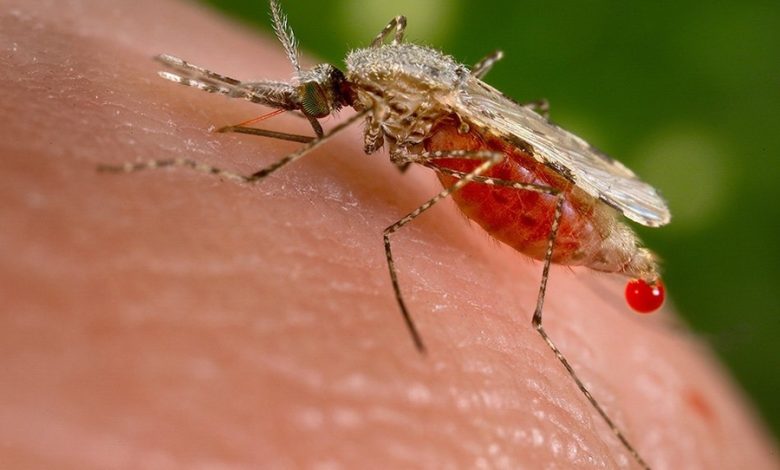
At Kibaha, our biolarvicide is now a Tanzanian product, progressing toward WHO prequalification. Together these cover both ends of the vector control chain: bednets protect the family at the point of contact, and biolarvicide reaches the mosquito before it ever leaves the water.
Every shilling spent on a Tanzanian-made net or a Tanzanian-made larvicide is a shilling that stays at home, enhancing economic development and building supply resilience that cannot be bought after the fact. This is an important shift, and End Malaria Councils across the continent have been championing it, because a Tanzania that makes its own malaria commodities is a Tanzania that can sustain the fight indefinitely.
Through sustained Government investments in health care, the health facilities are equipped with malaria rapid diagnostic tests, antimalaria, insecticide treated nets and capacitated frontline health workers. In addition, the Government have been allocating substantial resources in procurement and distribution and implementation of bio-larvicide intervention.
The Prime Minister’s Office is championing a Multi-Sectoral Malaria Framework that requires every Sector Ministry through its own resources to prioritize and implement malaria smart actions.
None of this would be possible without the governance architecture established by Her Excellency President Dr. Samia Suluhu Hassan, whose vision gave rise to the EMCT. Her decision to establish the Council with a Chair drawn from the private sector and the substantive Minister of Health as Co-Chair was a deliberate one, because malaria elimination demands both the convening reach of Government and the mobilisation capacity of every other sector.
This points to a wider approach we are now asking every sector of Tanzanian society to take. Public institutions, private companies, faith communities, and civil society organisations all have resources at their disposal: employees, clients, members, premises, and channels of communication. Applied systematically, in line with the approaches recommended by the Ministry of Health, these resources can protect workers, reach customers, mobilise congregations, and change behaviour in neighbourhoods. The artists have shown what this looks like in practice, using social media platforms to host and amplify the Zero Malaria Starts With Me campaign and reach audiences. We are asking every sector to apply what it already has to the malaria fight, starting with its own people, and to do so in a coordinated way under national strategy.
To our international partners, and to companies at home and abroad, this work is happening even at a moment when aid budgets are contracting and many African health programmes are under pressure. Tanzania is demonstrating one way an African country can finance its own path to elimination, by mobilising the full capacity of its society alongside the resources of its Government. There are many areas where partnership would strengthen and sustain this effort: training, equipment, supervision, local manufacturing, and the multi-year financing that will carry this coalition into the next decade. We welcome partners who are ready to build on what Tanzanians have already started.
And to the Tanzanian reading this: your role in this fight is not over either. Use the net you have been given. Bring your child for testing when they have a fever. Support your community health worker. Ask your councillor and your employer what they are contributing to the malaria fight in your area. Malaria will only end in Tanzania when every citizen, every faith community, every business, and every level of government is pulling in the same direction.
Commitment is the starting line. The distance that matters is everything that follows it, and we are asking you to run it with us.
‘’Driven to end malaria: Now we can, Now we must’’
** ENDS **