Chinese language unlocks new youth opportunities

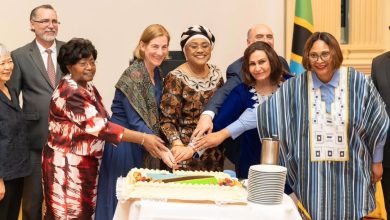
DAR ES SALAAM: THE recent celebration of International Chinese Language Day at the University of Dar es Salaam brought together students, lecturers, diplomats and cultural stakeholders in a lively blend of academic exchange and cultural expression.
Beyond marking the global observance, the event became a platform for reflection on the growing relevance of Chinese language education in Tanzania and a call for young people to seize emerging opportunities linked to it.
From the outset, discussions and presentations emphasised how Chinese studies are steadily gaining ground within Tanzanian higher learning institutions.
Participants noted that language learning today is no longer confined to classrooms but is increasingly tied to realworld opportunities in education, trade, diplomacy and cultural exchange. In this context, Chinese was presented not simply as a foreign language, but as a practical tool that can open doors to international engagement.
Addressing the gathering, Chinese Ambassador to Tanzania Chen Mingjian expressed her appreciation for the strong turnout and active participation of students and educators.
She framed the celebration within the broader context of United Nations Language Days, which aim to promote multilingualism, cultural diversity and equal recognition of the UN’s six official languages. Such initiatives, she explained, play an important role in strengthening global communication and fostering inclusivity across cultures.
Building on this, Ambassador Chen highlighted the historical and global significance of the Chinese language. She noted that Chinese was officially recognised as one of the United Nations languages in 1946, reflecting its longstanding role in international affairs.
Its cultural influence has continued to expand over the years, including recognition by UNESCO in 2009, when Chinese calligraphy was inscribed on the Representative List of the Intangible Cultural Heritage of Humanity.
A year later, the United Nations formally established International Chinese Language Day, further cementing its global importance. She then drew attention to the meaning behind the date itself, explaining that it coincides with “Guyu,” or Grain Rain, one of the 24 traditional solar terms in the East Asian lunar calendar. This period symbolises renewal, growth and seasonal transition.
The day is also linked to Cang Jie, a legendary figure believed to have invented Chinese characters. According to tradition, when he created the writing system, the heavens responded with a rain of grain, symbolising the transformative and life-sustaining power of language and literacy.
This historical and cultural background, Ambassador Chen noted, underscores why the Chinese language continues to hold deep significance today. Observed globally around April 20, the day celebrates not only linguistic diversity but also the cultural richness embedded in the language.
She referenced remarks by Xi Jinping, who has described language as a vital tool for communication and a carrier of civilisation, one that promotes mutual understanding and preserves cultural heritage across generations. Expanding on this idea, she pointed out that the Chinese language embodies thousands of years of knowledge from one of the world’s oldest civilisations.
Its contribution to global cultural diversity is increasingly recognised, especially in a world that is becoming more interconnected. Today, Chinese language education is available in about 200 countries and regions, with more than 80 countries incorporating it into their national education systems.
Over 30 million people worldwide are currently studying Chinese as a foreign language. The trend is equally evident across Africa. Ambassador Chen noted that interest in Chinese language learning has grown rapidly in recent years, including in Tanzania.
More than 20 African countries have integrated Chinese into their national curricula, while over 40 higher learning institutions offer Chinese language programs. Graduates from these programmes are playing a growing role in cultural exchange, acting as bridges that strengthen ties between China and African nations.
She described these graduates as cultural ambassadors who help deepen cooperation and mutual understanding.
Their ability to navigate both linguistic and cultural contexts positions them as key contributors to the evolving relationship between China and Africa. In this regard, she also highlighted China’s broader role in global development, noting its long history of civilisation and ongoing contributions to peace, stability and economic progress.
Looking ahead, Ambassador Chen referenced the Forum on China–Africa Cooperation Beijing Summit 2024, where President Xi Jinping announced that 2026 will be designated as the China–Africa Year of People-to-People Exchange.
This initiative is intended to strengthen cultural ties and build on agreements aimed at fostering deeper cooperation under a shared vision of modernisation. Against this backdrop, she said the celebration at the University of Dar es Salaam reflects the strengthening relationship between China and Tanzania at the people-to-people level.
ALSO READ: Govt speeds Mkapa pitch rehab
She described Chinese language learning as a “golden key” for Tanzanian youth, one that can unlock opportunities in education, employment, tourism, diplomacy and international partnerships. That opportunity is already taking shape through platforms such as Confucius Institutes, Confucius Classrooms and Luban Workshops operating in Tanzania.
Through these initiatives, students are not only learning the language but also gaining exposure to Chinese culture, including calligraphy, music and visual arts. This blend of language and cultural education, she noted, helps create a deeper and more meaningful understanding.
At the same time, she urged young people to see Chinese not just as an academic subject, but as a pathway to broader experiences.
By learning the language, she said, students can explore Chinese culture, build friendships and contribute to strengthening long-standing bilateral relations. Such engagement, she added, supports the development of a shared future grounded in cooperation and mutual respect.
Returning to a broader perspective, Ambassador Chen noted that language serves as a bridge connecting people, cultures and civilisations. Learning Chinese, she said, goes beyond vocabulary and grammar, it involves understanding traditions, values and ways of life. This deeper engagement is what enables genuine crosscultural connections.
She also highlighted the practical benefits of language proficiency, encouraging students to take advantage of opportunities such as scholarships, exchange programmes and career pathways linked to Chinese language skills. As global connections continue to expand, such competencies are becoming increasingly valuable.
The event itself reflected these themes, featuring cultural performances and student activities that showcased elements of Chinese tradition. These presentations added a dynamic and interactive dimension to the celebration, reinforcing the importance of cultural exchange alongside academic learning.
In essence, the International Chinese Language Day celebration served as both recognition and inspiration. It highlighted the growing role of Chinese language education within Tanzania’s academic landscape while also pointing to the wider possibilities it offers. By placing young people at the center of this conversation, the event underscored their role as future cultural ambassadors.
For Tanzanian students, the message was straightforward but significant that embracing Chinese language learning can open doors to new experiences, broaden perspectives, and strengthen ties in an increasingly interconnected world.