‘Reduce reliance on external agri-financing’
DODOMA: THE Parliamentary Standing Committee on Industry, Trade, Agriculture and Livestock has urged the government to increase investment in the agriculture sector and reduce reliance on unpredictable external financing.
Presenting the views after the Minister for Agriculture, Daniel Chongolo, presented the 2026/27 budget estimates for his docket before the National Assembly, the Committee’s Chairperson, Deodatus Mwanyika, said the current budget trend contradicts international commitments to allocate at least 10 per cent of national budgets to agriculture, calling for increased funding to meet that target.
The Committee also raised concern over persistent crossborder smuggling of crops, urging tighter inspection and enforcement to safeguard government revenue.
It further called for the fast-tracking of legislation to protect indigenous seeds, saying this will safeguard farmers’ rights and boost local seed production.
On inputs, the Committee warned of rising global fertiliser prices and urged the government to strengthen local production capacity while ensuring timely availability of fertilisers to farmers.
In irrigation, the Committee noted that delays in fund disbursement have stalled several projects, calling on the government to clear contractors’ arrears and scale up investment in irrigation infrastructure to enhance food production.
On the cooperative sector, it urged the revival of stalled projects and processing industries to improve the competitiveness of key cash crops such as cotton, coffee and tobacco.
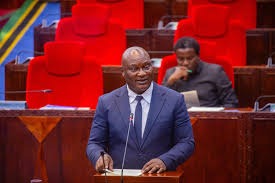
Presenting the budget estimates for his docket before the National Assembly on Tuesday, Minister for Agriculture, Mr Daniel Chongolo, said the government will complete and roll out the National Edible Oil Strategy aimed at increasing domestic production and reducing dependence on imports.
He said national demand for edible oil stands at about 731,974 tonnes annually, against local production of 305,906 tonnes, leaving a deficit of 426,068 tonnes that forces the country to spend significant foreign exchange on imports. To close the gap, the ministry will mobilise farmers to increase production of oilseed crops from 2.24 million tonnes in 2024/25 to 2.3 million tonnes in 2026/27. The ministry will also train farmers on good agricultural practices.
As part of broader efforts, the government will establish 48,000 hectares of block farms for palm and sunflower in Kigoma, Morogoro, Singida and Dodoma.
Mr Chongolo requested a total of 1.105tri/- for the ministry’s 2026/27 programmes, with 876.76bn/- allocated for development projects and 229.18bn/- for recurrent expenditure.