Reconciliation call grows after Inquiry Commission’s report
DAR ES SALAAM: RECONCILIATION is often used in moments of political tension, post-crisis reflection or social repair, but it is frequently misunderstood as a simple call for people to “move on” or “forgive and forget”. In reality, reconciliation is a structured and often long-term process of rebuilding relationships, restoring trust and addressing the underlying causes of conflict within a society.
At its core, reconciliation is about restoring broken social bonds. It acknowledges that conflict whether political, ethnic, economic or institutional creates divisions that cannot be healed by silence or time alone. Instead, it requires deliberate engagement between affected parties, recognition of harm and a commitment to preventing repetition.
In political contexts, reconciliation is not an event but a process. It typically involves truth-telling, accountability, institutional reform and efforts to rebuild confidence in state systems.
Following the release of a report on the October 29, 2025 unrest, political and diplomatic stakeholders have called for a renewed path centred on reconciliation, rebuilding public trust and strengthening national stability. Analysts said the findings of the Presidential Commission of Inquiry into the disturbances during and after the October 29 General Election point to one clear priority: National unity and dialogue.
They argue that the time has come for Tanzanians to come together and engage in meaningful reconciliation, noting that President Samia Suluhu Hassan has consistently demonstrated a willingness to extend a hand of unity to all sides.
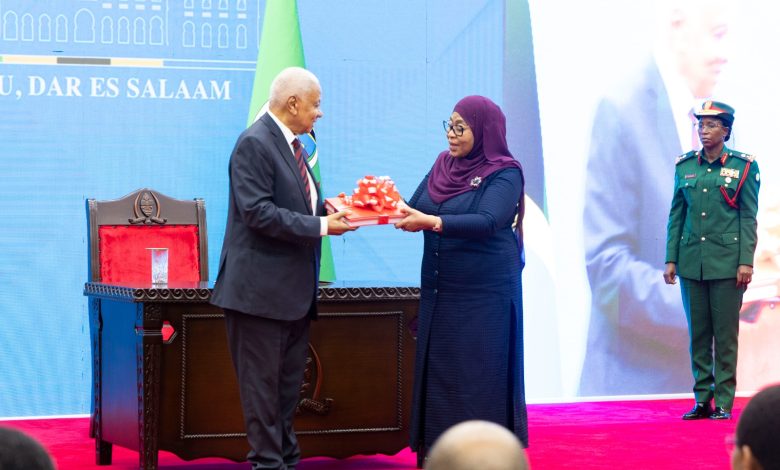
These sentiments follow the submission of the commission’s report, chaired by Retired Justice Mohamed Chande, to the President.
Among its key recommendations is the establishment of a National Reconciliation Commission under presidential authority to prevent a recurrence of such unrest. Speaking to international media, Presidential Adviser on Diplomacy Lazaro Nyalandu stressed that the government’s foremost responsibility is to protect its citizens, noting that President Samia’s remarks upon receiving the report reaffirm that commitment.
He said the commission’s findings have shed light on critical issues that troubled the nation, including how the unrest unfolded and the government’s response.
According to Ambassador Nyalandu, the report indicates that some individuals involved in the protests were armed with firearms and explosives, and had received training in various camps prior to the events.
“As the commission explained, what happened on October 29, 2025 was not spontaneous but organised,” he said.
“The government took action to save lives. It was a difficult day for every Tanzanian.” Even so, he emphasised the need to look forward, urging citizens to support President Samia in implementing the commitments she made after receiving the report.
Ambassador Nyalandu also called on citizens to be vigilant against misinformation, particularly on social media, warning that it can fuel unnecessary unrest and conflict.
He said access to accurate information from trusted sources and cooperation with state institutions remain essential in maintaining stability. He added that in a period when the world is experiencing major changes in security, politics and international relations, protecting peace and stability remains a top government priority.
“Tanzania is among nations that pride themselves on a history of peace and continues to put in place strong strategies to ensure this is maintained despite emerging challenges,” he said.
He stressed that the government continues to take firm steps to ensure the security of citizens and their property is protected at all times, adding that its position has not changed but has been further strengthened to respond to the evolving global security environment.
Ambassador Nyalandu said the directives from President Samia Suluhu Hassan demonstrate strong leadership commitment to ensuring every Tanzanian lives in a safe, just and equitable environment.
He added that security and defence institutions are being strengthened and directed to operate professionally and in accordance with the laws of the land.
In another development, he highlighted the importance of the Commission chaired by Justice Chande, saying it has helped clarify the truth about events that had generated public debate. He noted that the government’s decision to allow an independent investigation and publish its findings reflects accountability, transparency and good governance.
“These steps help build trust among citizens and the international community that the government is ready to assess itself and take corrective action where necessary,” he said.
ALSO READ: KCMC’s Laboratory Week boosts awareness on safe drug use
On civic rights, he urged citizens to understand the limits of constitutional freedoms, particularly the right to peaceful assembly, warning that it should not be misused in ways that endanger lives or property.
“It is the responsibility of each of us to protect the peace of our country. The government has its role, but success depends on cooperation from all citizens,” he said.
He further emphasised that national solidarity remains a key pillar in building a strong nation capable of withstanding challenges, adding that political and ideological differences should be used constructively rather than as a source of division. Mr Nyalandu said Tanzanians should continue to uphold unity, peace and solidarity, noting that these are long-standing national achievements that must be safeguarded for future generations.
He also reiterated President Samia’s pledge that all those injured during the unrest and still receiving treatment would be supported by the government, including access to necessary medical care free of charge. She also announced plans for an independent body to investigate all criminal acts linked to the unrest, underscoring the importance of accountability.
Addressing concerns over the commission’s credibility, Ambassador Nyalandu defended its integrity, saying it comprised highly experienced individuals with strong national and international records.
“This commission brought together respected figures who have served at senior levels nationally and internationally. The process was transparent and inclusive, involving a wide range of stakeholders, including political parties,” he said.
He added that the focus should now shift from questioning the process to building consensus.
“What matters most is for Tanzanians to unite sincerely, rebuild trust and continue building the nation. We must sit at the table and engage in dialogue for the benefit of current and future generations,” he said.
He further pointed to President Samia’s “4Rs” philosophy: Reconciliation, Resilience, Reform and Rebuilding as a guiding framework for national healing. Political analyst Dr Baraka Mfinanga said moments of political tension can offer opportunities to rebuild stronger social contracts.
“A nation facing political strain can choose to dwell on blame or use the moment to forge a new path,” he said, adding that reconciliation without institutional reform is often short-lived.
He called for strengthening electoral systems, sustaining political dialogue and expanding youth participation in governance. Disaster and governance analyst Dr Neema Kasesela stressed that reconciliation depends heavily on public trust in institutions.
“Reconciliation cannot be separated from citizens’ trust in institutions. That trust is the foundation of long-term stability,” she said. She added that discussions on the Constitution, justice and accountability should be seen as essential steps in rebuilding national confidence, while emphasising greater youth inclusion in decision-making processes.