Lessons from the region: Why Tanzania must choose dialogue over division
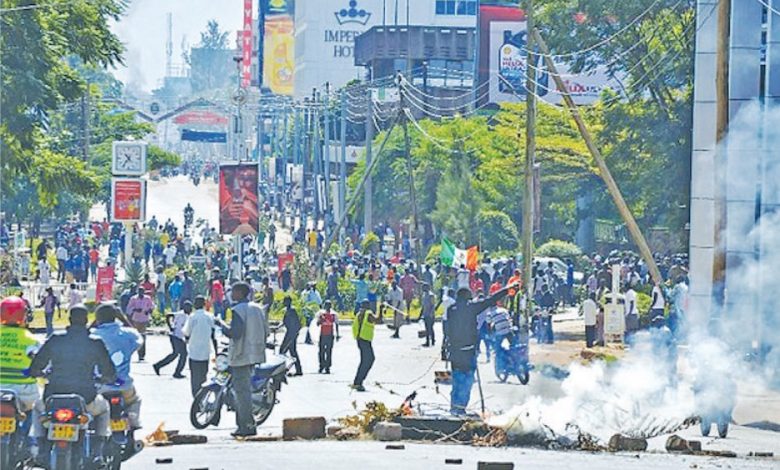
DAR ES SALAAM: NATIONS rarely slide into crisis in a single moment. More often, instability begins quietly, through contested narratives, rising mistrust and unresolved grievances. If left unattended, these pressures can accumulate, harden positions and, in some cases, escalate into violence with far-reaching consequences.
Tanzania’s unrest that followed the October 29 General Election has been successfully limited and contained. Even so, in a region where similar tensions have in the past developed into serious crises, it presents an opportunity for reflection.
The experiences of neighbouring countries show that the period immediately following political contestation is often decisive in determining whether a nation consolidates stability or drifts towards division. Kenya’s 2007–2008 post-election crisis remains one of the clearest illustrations of how quickly tensions can escalate. Following a disputed presidential vote, protests broke out and within days turned into widespread violence.
According to widely cited international figures, more than 1,100 people were killed and about 600,000 displaced. What had initially appeared to be a political dispute rapidly took on broader social dimensions, with communities fractured and long-standing grievances resurfacing.
Reporting at the time captured the speed and intensity of the escalation, noting how violence spread across different parts of the country, disrupting daily life and undermining confidence in institutions.
The situation required urgent international mediation, led by former United Nations Secretary-General Kofi Annan, whose intervention helped broker a power-sharing agreement between rival political leaders. Reflecting on the crisis, Annan emphasised the central role of leadership in maintaining stability, observing that peace and prosperity depend on the choices made by political actors, particularly in moments of tension.
Kenya eventually stabilised, but the social and economic costs of the violence were significant and the process of rebuilding trust took years. Further west, the Democratic Republic of Congo provides a more prolonged example of the consequences of unresolved conflict.
Since the late 1990s, instability in the country has contributed to an estimated six million deaths, making it one of the deadliest crises since the Second World War.
The situation remains fragile, with periodic surges in violence, particularly in the eastern regions. Recent reports indicate that thousands of people have been killed in renewed fighting, while hundreds of thousands have been displaced from their homes.
The humanitarian impact is severe, with many communities lacking access to basic services and relying on aid. Despite numerous peace initiatives and agreements, the persistence of mistrust and competing interests has made lasting stability difficult to achieve.
Even in such circumstances, calls for dialogue and reconciliation continue to emerge. President Félix Tshisekedi has urged renewed efforts towards peace, noting that it is not too late for parties to pursue a more constructive path. Similarly, United Nations Secretary-General António Guterres has repeatedly highlighted the importance of addressing conflicts through dialogue, warning of the human cost when tensions are allowed to escalate.
The experiences of both Kenya and the DRC point to a common lesson: Conflict is rarely inevitable, but it becomes more likely when early signs of tension are not addressed through inclusive and credible processes. Once violence takes hold, it becomes significantly more difficult to restore stability and the consequences extend far beyond the immediate crisis.
The impact of conflict is not limited to loss of life. Economies are disrupted as investment declines and trade slows. Public resources are diverted towards managing crises rather than supporting development. Social cohesion is weakened, as communities become divided and trust erodes. Institutions, particularly those responsible for managing disputes, may come under strain, affecting their ability to function effectively. For countries that have experienced prolonged instability, these effects can persist for generations.
Children growLessons from the region: Why Tanzania must choose dialogue over division ing up in conflict-affected areas often face disruptions to education and limited opportunities, while the psychological impact of violence can shape societies long after the conflict itself has subsided.
Tanzania has, for decades, been regarded as a stable and cohesive nation within the region. This reputation has been built on a strong sense of national identity, a tradition of dialogue and a commitment to peaceful coexistence.
These are significant assets, particularly in a region where stability cannot always be taken for granted. However, stability is not automatic. It requires continuous effort, especially during periods of political contestation. The October 29 unrest, though limited, serves as a reminder that even resilient societies must remain attentive to early signs of tension.
ALSO READ: Experts: Media play key role in promoting peace, unity and reconciliation
In this context, the concept of reconciliation becomes particularly important. Reconciliation is sometimes misunderstood as a concession or a sign of weakness. In practice, it is a strategic approach to maintaining stability. It provides a framework for addressing differences constructively, allowing societies to move forward without allowing disagreements to deepen into divisions.
Experiences from the region suggest that early engagement is critical. In Kenya, dialogue helped prevent further escalation after significant damage had already occurred. In the DRC, delays in achieving comprehensive reconciliation have contributed to recurring cycles of conflict. These contrasting outcomes highlight the importance of timely and inclusive approaches. Reconciliation involves multiple actors.
Political leaders play a central role in setting the tone and direction of engagement. Institutions must operate in a manner that is credible and trusted by the public. The media has a responsibility to inform accurately and avoid amplifying tensions. Citizens, too, contribute by engaging constructively and resisting misinformation. Tanzania’s current situation remains far removed from the scale of crises seen elsewhere in the region.
This distinction is important and reflects the country’s enduring strengths. At the same time, the experiences of neighbouring countries suggest that maintaining stability requires deliberate choices, particularly in moments of uncertainty.
The period following elections is often characterised by heightened emotions and competing interpretations of events. Managing this phase effectively requires patience, restraint and a commitment to established processes.
It also requires a shared understanding that national stability is a collective responsibility. The events following the October 29 general election can therefore be viewed as an opportunity rather than a setback. They provide a chance to reinforce institutional trust, encourage dialogue and reaffirm the principles that have supported Tanzania’s stability over the years.
Across different contexts, a consistent message emerges from those who have worked to resolve conflicts. Dialogue, even when difficult, remains the most effective tool for addressing differences. Avoiding engagement may offer short-term relief, but it often allows underlying issues to persist.
As Kofi Annan observed during efforts to resolve Kenya’s crisis, sustainable peace depends not only on agreements but also on the willingness of parties to act in the broader interest of society. This perspective underscores the importance of looking beyond immediate political considerations towards long-term national wellbeing. Similarly, calls from international and regional leaders, including religious leaders, have consistently underlines the value of restraint and cooperation.
During his November 2, 2025, address in St Peter’s Square, the Pope expressed deep concern over Tanzania’s uncharacteristic election-related violence. Pope Leo XIV urged Tanzania to choose peace, dialogue and reconciliation over violence following the 2025 post-election unrest.
Zambia’s President Hakainde Hichilema reminded Tanzanians that peace, security and stability are necessary virtues that must be protected at all times. “We know the value of peace, security and stability. I want to appeal to the people of Tanzania – mainland, Zanzibar, Pemba and others; what you have enjoyed for years must be protected at all costs.
You cannot experiment with the opposite to have a breakdown of law and order,” urged Zambia President Hichilema at the inauguration of Tanzania’s President Samia Suluhu Hassan in Dodoma on November 3, last year. These principles and calls are not abstract ideals but practical approaches that have helped societies navigate periods of tension. For Tanzania, the path forward lies in building on its existing strengths.
This includes maintaining open channels of communication, supporting the effective functioning of institutions and promoting a culture of dialogue. It also involves recognising that differences, while inevitable, do not have to lead to division. The lessons from the region are clear. Political disagreements are a normal part of democratic processes. The outcome depends on how they are managed.
Where dialogue and reconciliation are prioritised, stability can be preserved. Where divisions deepen, the consequences can be more difficult to contain. Tanzania remains well positioned to choose its path. Its history of peace provides a strong foundation and its institutions and society have demonstrated resilience over time. The challenge is to ensure that these strengths continue to guide responses during periods of tension.
At this point, the emphasis is not on assigning responsibility, but on reinforcing shared commitments. These include respect for institutions, openness to dialogue and a focus on the national interest. Such an approach helps to ensure that differences are managed constructively and do not evolve into broader challenges.
The experiences of Kenya and the Democratic Republic of Congo serve as reminders of what is at stake. They illustrate both the risks of escalation and the value of timely intervention. They also demonstrate that, even in difficult circumstances, progress is possible when there is a commitment to dialogue and reconciliation. Ultimately, the choice facing any nation in moments of tension is not whether disagreements will arise, but how they will be addressed.
Tanzania’s experience suggests that it has the tools and traditions necessary to manage such moments effectively. Preserving stability requires more than avoiding conflict. It involves actively fostering trust, encouraging engagement and maintaining a shared sense of purpose. These are the elements that have sustained Tanzania in the past and can continue to do so in the future.
As the region’s experience shows, the cost of conflict is high, while the benefits of peace extend across all aspects of society. The priority, therefore, is to ensure that differences are approached in a manner that strengthens, rather than undermines, national cohesion. In doing so, Tanzania can continue to serve as an example of stability in the region, demonstrating that even in times of tension, dialogue and reconciliation remain the most effective path forward.