Pula slams the SA court’s ruling over a 195m US dollar suit

DAR ES SALAAM: TANZANIA’s Pula Graphite has snubbed the South African court’s ruling over a 195m US dollar suit against African Rainbow Capital (ARC) from South Africa, calling it unfair.
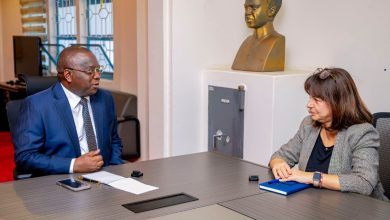
The reaction comes barely days before the High Court of Tanzania (Commercial Division) is scheduled to hear a case of Pula Graphite Partners a Tanzanian company, against African Rainbow Capital (ARC) from South Africa. Pula Executive Chairman, Ambassador Charles Stith, a former US Envoy to Tanzania, has reacted following the Gauteng High Court ruling in favour of ARC.
ARC, a company linked to South African billionaire Patrice Motsepe, is in a legal dispute with Pula connected to a $ 195 million mining case involving Tanzanian interests.
The allegation is straightforward that Motsepe’s African Rainbow Minerals signed a non-compete and confidentiality agreement with the Pula Group over a graphite project in Tanzania, received Pula’s data on the resource, and then channelled investment through a sister company into a rival graphite project next door.
The case has been running since 2023. And then, on 14 April — days before the Tanzanian trial — a South African High Court intervened.
ALSO READ: Data protection and the media: A necessary alignment, not a threat
The court ruled that ARC had been wrongly included in the case and cannot be held liable under a 2019 confidentiality agreement it did not sign. The agreement, the court said, was between Pula Group and African Rainbow Minerals (ARM).
According to the judgment, ARC had no contractual obligations under the agreement and could not be accused of breaching it. The court also found that Pula Group had not established a valid contractual claim against ARC.
This mining dispute is one of its kind as it draws attention to the independence of the Judiciary system in Africa, in which Pula Group and its Tanzanian partner are pursuing damages in Tanzania, accusing companies linked to Motsepe of using confidential mining data to gain and enjoy advantages in graphite- related projects.
Reacting to the ruling, Ambassador Stith said in a statement that it was unfortunate that the decision was delivered shortly before the case is due to be heard in Dar es Salaam, Tanzania, early next week.
He went on to say in his statement that Patrice Motspe’s African Rainbow Minerals (ARM) signed a non-compete and confidentiality agreement with the Pula Group, in connection with a graphite project being developed by its Tanzanian subsidiary, Pula Graphite Partners. ARM accessed all of Pula’s data about the mineral resource, political trends in Tanzania, and market research. Patrice’s other firm, African Rainbow Capital (ARC), then invested in an Australian firm with a graphite project next door to Pula’s
Ambassador Stith said Australian firms currently do 70percent of the mineral exploration in Tanzania.
Tanzanian companies only do 4percent of the exploration in Tanzania. Australians, Canadians, and the British do 73percent of the exploration across the continent.
He also referred to Tanzania’s historical movement for the Tanzanian support for the South African liberation struggle, while questioning the current state of economic relations in the sector.
“Soon after I was posted to Tanzania as Clinton’s envoy to the country, one for first places I visited was Morogoro. One of the first things my Tanzanian host pointed out was a training site the Tanzanians provided for Umkhonto we Sizwe, the military wing of the ANC.
“There were other such sites in Mbeya and Bagamoyo. He was proud of the part Tanzania played in ending apartheid in South Africa. How ironic that a member of South Africa’s elite that benefitted from the sacrifice of Tanzania to free South Africa would involve the courts of the “new” South Africa in continuing to support the exclusion of Tanzanians from developing the resources of their country, he noted.
In its ruling, the Johannesburg High Court also confirmed its jurisdiction over the matter, saying the agreement was signed in Gauteng and governed by South African law
Proceedings in the High Court of Tanzania will begin next week, where liability will be determined.