Safety, stability: The quiet systems that keep Tanzania moving
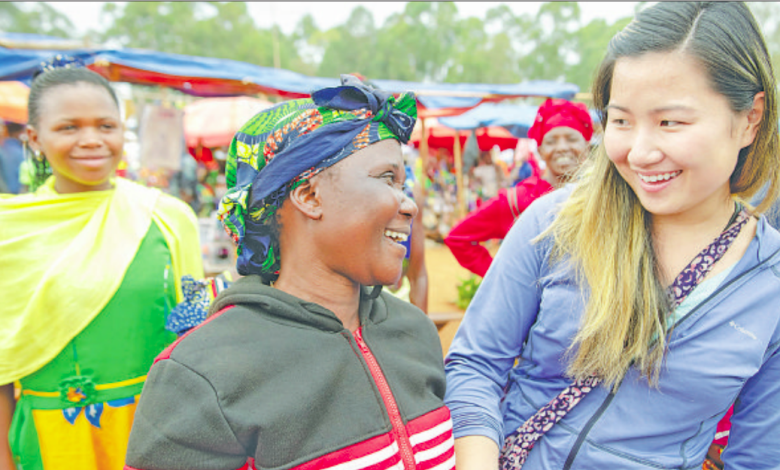
DAR ES SALAAM: IN public debate, peace is often spoken about in broad and hopeful terms. It is praised in speeches, highlighted during national celebrations, and referenced as a shared value.
But in everyday life, peace is something more practical.
It is what allows people to open their shops in the morning, send their children to school, travel safely, and plan for the future with confidence.
In Tanzania, that sense of calm does not happen by chance. It is supported by a network of institutions that work largely out of sight.
Their presence becomes most obvious in moments of crisis, yet their real contribution is felt in the absence of disruption. These institutions form the backbone of the country’s security, defence and safety systems.
They include the Tanzania People’s Defence Force (JWTZ), the Police Force, the Prisons Service, the National Intelligence Service, the Immigration Department, and the Fire and Rescue Force.
Each has a defined role, guided by the Constitution of 1977 and supported by laws that set out their responsibilities clearly. Together, they create a system that does more than respond to threats.
They help maintain order, protect rights, and support the conditions needed for development.
Their work ensures that daily life continues with minimal interruption, which, for most people, is the true meaning of stability.
confidence One of the most visible responsibilities of these institutions is law enforcement.
This goes beyond reacting to crime. It involves creating an environment where laws are understood, respected and fairly applied.
The Police Force, for example, plays a key role in preventing crime, investigating offences and preparing cases for the courts.
This process may seem routine, but it is essential. When people trust that laws are enforced consistently, they are more likely to follow them.
That trust builds confidence in public institutions and strengthens the rule of law.
Equally important is the duty to protect life and property.
Whether dealing with petty crime or more serious threats, security organs are expected to act within the law to keep communities safe.
This directly affects how secure people feel in their homes, workplaces and public space.
Protecting borders in a changing world
Security today is not limited to what happens within national borders. Movement of people, goods and information has increased, bringing both opportunities and risks.
TPDF and Immigration Department, working with other agencies, helps manage these risks.
Its role includes regulating entry, exit and residence, while also tackling issues such as human trafficking and irregular migration.
This work is part of a broader effort to protect national sovereignty while supporting lawful movement and trade. Modern security challenges are increasingly complex.
Cybercrime, financial fraud and organised cross-border networks require new approaches.
In response, the government has invested in training, technology and coordination to keep pace with these changes.
The use of information and communication technology has been particularly important.
It allows for faster information sharing, better tracking of criminal activity and more efficient responses.
This marks a shift from simply reacting to problems towards preventing them before they escalate.
Working with communities
Safety is not something delivered by institutions alone. It depends on cooperation between authorities and the public. Community policing is one example of this approach.
It encourages closer and sustainable relationships between officers and local communities, helping to build trust and improve the flow of information.
When people feel comfortable reporting concerns, it becomes easier to prevent crime rather than just respond to it. Public awareness campaigns also play a role.
They remind citizens that maintaining peace is a shared responsibility. This sense of partnership helps create stronger, more resilient communities.
The Prisons Service adds another important layer to the system. Its work is not limited to custody. It also focuses on rehabilitation, preparing individuals for a return to society.
Through education and skills training, inmates are given opportunities to rebuild their lives. This reduces the likelihood of reoffending and contributes to long-term stability.
It reflects a broader understanding that lasting security depends not only on enforcement, but also on giving people a second chance. Security challenges have no limit, and often, cross boundaries.
As a result, cooperation with regional and international partners has become increasingly important.
Tanzania works with other countries and organisations to share information, conduct joint training and coordinate responses to common threats.
This collaboration strengthens the country’s ability to deal with transnational organised crimes.
It also highlights a key reality: no country can address modern security challenges alone.
A coordinated approach leads to better outcomes for everyone involved.
ALSO READ: Samia assures investors’ safety
Stability and economic growth
There is a clear connection between stability and development. Countries that are peaceful tend to attract more investment and experience stronger economic growth. Tanzania offers a good example of this link.
With a Global Peace Index score of 1.987 in 2023, it remains among the more stable countries in Africa.
This stability has helped support economic activity, with growth averaging 4.7 per cent in 2022.
Investors often look for environments where risks are manageable and the rule of law is respected.
In 2022, Tanzania attracted more than 1.1 billion US dollars in foreign direct investment, according to UNCTAD.
This reflects confidence in the country’s stability and governance. The benefits are not limited to business. Stability supports education, healthcare and social services.
When communities are peaceful, children are more likely to stay in school, and public systems can function effectively.
Tanzania’s high primary school enrolment rates above 90 per cent in recent years are one sign of this.
Security institutions also play a vital role during emergencies. Whether dealing with floods, fires or major accidents, their response can make a significant difference.
The Fire and Rescue Force, along with other agencies, helps manage these situations, providing rescue services and supporting recovery efforts.
Strong emergency systems reduce damage and help communities return to normal life more quickly.
This work may not always attract attention, but it is essential. It shows how security is not only about preventing crime, but also about protecting lives during unexpected events.
Building capacity and maintaining trust
The effectiveness of security institutions depends on continuous investment. This includes recruiting new personnel, improving training and adopting modern equipment.
At the same time, maintaining public trust is crucial. Professional conduct, accountability and respect for human rights are key principles that guide these institutions.
When people trust those responsible for their safety, cooperation improves, and the system works more effectively.
Balancing strong enforcement with respect for rights is not always simple, but it remains an essential part of sustainable security.
For many citizens, the impact of these efforts is felt in simple ways. It is the ability to walk freely, to work without fear, and to make plans for the future.
These everyday freedoms are often taken for granted, yet they depend on systems that operate reliably in the background.
The role of Tanzania’s defence and safety organs is therefore both practical and foundational.
They are not only responders to crises. They support the conditions that allow society to function and grow.
In this sense, security is not just about control or enforcement. It is about continuity, resilience and the steady protection of everyday life.
It is what allows a nation to move forward, quietly and consistently, even when the systems behind it are rarely seen.
And perhaps that is the clearest measure of success: when peace is not something people have to think about, but something they can simply live with, every day