World Bank backs TZ credit guarantee firm with 388bn/-

DAR ES SALAAM: THE World Bank has pledged 150 million US dollars (about 388bn/-) in concessional financing to capitalise Tanzania’s newly established Credit Guarantee Corporation (CGC), a move aimed at de-risking the small business sector and unlocking billions in private credit.
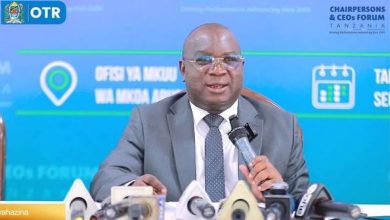
Opening the second Banks and Financial Institutions Leaders’ Forum in Dar es Salaam on Monday, the Bank of Tanzania Governor, Emmanuel Tutuba said the agreement, signed on January 30th, this year, would underpin the transformation of the country’s credit guarantee function into an independent, commercially run public company.
“We are grateful to our partners at the World Bank for agreeing to support us by providing an additional 150 million US dollars in concessional financing through the government,” he said.
The CGC, currently housed within the central bank, is set to be spun off as a standalone entity, replacing the smaller SME Credit Guarantee Scheme and Export Credit Guarantee Scheme with a scaledup, professionally governed institution.
“Based on the funds we have mobilised so far, we are confident, particularly as the goal is to establish this as an independent company that will operate on a commercial basis, while we remain in our role as regulator. We will licence it and oversee it under a governance framework that ensures more effective operations for the benefit of our country,” he said.
He added that the company would play a critical role in reducing the risks faced by lenders.
A longstanding constraint for Tanzanian entrepreneurs has been an “information gap” that leads banks to treat smallscale lending as high risk.
The World Bank-backed programme seeks to address this through a broad upgrade of the country’s credit infrastructure.
ALSO READ: World Bank flags inefficiencies at Mombasa Port in Kenya
Beyond offering partial guarantees to participating financial institutions, the CGC will support businesses to formalise operations and develop “bankable” project proposals.
This includes training in financial literacy, cash-flow modelling and compliance with licensing standards.
The vehicle is also expected to lift private sector credit as a share of GDP, widen access to formal finance among Micro, Small and Medium-sized Enterprises (MSMEs) and support job creation targets running into the millions by the end of the decade.
At the core of the reform is an effort to close Tanzania’s persistent “bankability gap”, where limited financial records and weak credit histories have kept smaller firms locked out of formal borrowing