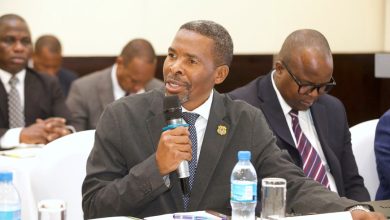
A bold blast: What MP Gisairo’s attack on public spending signifies for Kenya’s economic future
NAIROBI: THE recent outspoken remarks by Kenyan Member of Parliament Cleve Gisairo, which condemn the government’s waste of public funds, have struck a nerve across the country, despite the political climate often being characterised by circumspect language and guarded criticism.
For us, following what is happening in our nation, such direct criticism, aimed at the systemic misuse, inefficiency, and lack of accountability in public expenditure, has reignited a national debate that is fundamental to Kenya’s governance: the management of public resources and their beneficiaries.
Although political criticism of government expenditure is not new in Kenya, Gisairo’s intervention stands out because of its timing and tone.
In my view, MP’s comments, which come at a time when the country is dealing with high public debt, rising living costs, and increasing public dissatisfaction, reflect growing frustration among both citizens and leaders.
However, Gisairo’s view and revelations have significant implications for Kenya’s economic management, political accountability, and fiscal policy.
The issue of public finance discipline is central to Gisairo’s criticism because, in recent years, Kenya’s fiscal situation has been under pressure due to rising public debt, raising concerns among both local and international stakeholders.
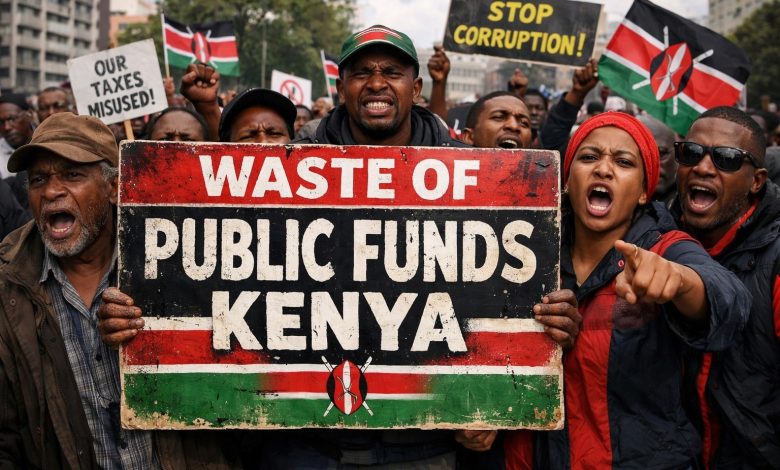
Critics contend that a large portion of public spending is squandered due to inefficiencies, inflated procurement costs, and unnecessary expenses, even though the government defends its expenditure as vital for funding infrastructure projects and social programmes.
Gisairo has effectively brought into sharper focus a question that many Kenyans have been asking: why does wastage persist when resources are scarce? This has been achieved by publicly “blasting” the government.
His comments emphasise the discrepancy between ongoing reports of extravagant spending in specific government sectors and the austerity measures implemented by the government, which are frequently perceived as higher taxes and reduced subsidies.
The implications of this are significant. The explicit admission of waste by public officials not only validates citizen concerns but also reveals deficiencies in oversight mechanisms. It implies that the issue is not merely technical, but rather institutional.
There are numerous interpretations of Gisairo’s outburst. On the one hand, it may symbolise authentic political courage—a readiness to challenge the status quo and demand accountability from within the system.
Conversely, it could also be interpreted as strategic positioning in a political environment where public sentiment is becoming more antiestablishment.
Historically, Kenyan politics has rewarded leaders who align themselves with public grievances, particularly on economic issues. Gisairo establishes himself as a champion of fiscal responsibility and a spokesperson for taxpayers by adopting a stringent posture against waste.
This could potentially increase his political capital, particularly among urban populations and younger voters who are more vocal about governance issues.
Nevertheless, this boldness carries risks. Criticising government spending can cause tensions within political ranks, especially if one remains consistent with the governing coalition. It may lead to political isolation or internal resistance. The extent to which Gisairo’s statements are supported or opposed by his peers will be a key factor in determining whether this moment sparks a broader reform movement.
Perhaps the most immediate and significant consequence of Gisairo’s statements is their impact on public trust. In Kenya, as in many other countries, perceptions of transparency and accountability are closely connected to trust in government institutions. The state’s credibility suffers when citizens suspect that their taxes are being misappropriated.
Gisairo’s critique, which aims to reveal inefficiencies, may have a dual effect. On one hand, it could increase public scepticism by confirming concerns about widespread waste. On the other hand, it might also restore some confidence by showing that there are leaders willing to speak out and push for change.
The balance between these outcomes will depend on subsequent events. If his statements lead to tangible actions, such as audits, policy reforms, or disciplinary measures, they could boost institutional credibility. However, if they remain rhetorical, they risk fostering cynicism and the perception that accountability is difficult to achieve.
The issue of public expenditure has immediate economic and political implications. The effectiveness of government spending is compromised by the wastage of public funds, which limits its ability to foster growth and deliver services. In a country like Kenya, where resources are limited and development needs are vast, inefficiency results in a significant opportunity cost.
Every shilling wasted on inefficiency is a shilling not spent on infrastructure, education, healthcare, or social protection.
Consequently, Gisairo’s comments highlight both a governance issue and a development challenge. By reducing wastage, it is possible to enhance service delivery, allocate resources more effectively to priority sectors, and boost overall economic performance.
Moreover, the preservation of investor confidence is contingent upon fiscal discipline. The financial management of governments is closely monitored by international investors and credit rating agencies. Kenya’s borrowing costs and access to capital markets may be impacted by persistent allegations of inefficiency and misuse, which can erode confidence.
Gisairo’s criticism also highlights Kenya’s oversight institutions, such as the Auditor-General, Parliament, and anti-corruption agencies. These institutions must be scrutinised to determine whether they are effectively fulfilling their mandates, assuming that wastage is as widespread as suggested.
Parliament, in particular, serves as both a legislative body and an oversight authority. Gisairo’s statements can be interpreted as an appeal to his own organisation to enhance its oversight of government expenditures. This may entail increased transparency in procurement processes, more stringent enforcement of audit recommendations, and more rigorous budget evaluations.
The current debate will either fade into the background of political discourse or lead to meaningful change, depending on the efficacy of these institutions.
The issue of public fund wastage is not exclusive to Kenya. In Africa, governments encounter comparable obstacles in reconciling development requirements with governance constraints and restricted resources. Nevertheless, Kenya’s active civil society and relatively vibrant political environment offer a distinctive context in which such debates can acquire traction.
Gisairo’s comments have the potential to resonate beyond Kenya’s borders, thereby fostering a more comprehensive regional dialogue on fiscal accountability. This episode serves as a reminder of the importance of political will and internal accountability mechanisms in countries such as Tanzania, Uganda, and Nigeria, where similar concerns are present.
Ultimately, the significance of Cleve Gisairo’s critique will depend on the reaction it provokes. Is it likely to lead to a renewed focus on fiscal discipline? Will it motivate other leaders to share their opinions? Or will it be absorbed into the cycle of political rhetoric without any meaningful change?
This is a clear message for the Kenyan government: the public’s patience is running out. Citizens expect visible accountability as well as effective resource management when errors occur. It is no longer just a technical matter; it is a political duty to tackle wastage.
Gisairo’s challenge will be maintaining the momentum of his critique and turning it into concrete action. This could involve advocating for legislative reforms, supporting oversight initiatives, or rallying public support for greater transparency.
ALSO READ: Billions in question: What Ksh 6.3 billion e-citizen transfer controversy means for Kenyan taxpayers
An important chapter in Kenya’s ongoing fight for fiscal accountability has been opened by Cleve Gisairo’s bold attack on government wastage of public funds. It reflects deep concerns about economic management and governance, while also offering a chance for reform.
The stakes are incredibly high in a nation where public resources are both limited and essential for development. The collective response of leaders, institutions, and citizens will determine whether this moment marks a turning point for Kenya or is just another headline. Nonetheless, it is undeniable that the discourse has been reignited, and Kenya cannot afford to ignore it for the sake of Kenyans’ future.