Tanzania moves from policy to action in inclusive development
DAR ES SALAAM: AS inclusive development gains global recognition as a cornerstone of sustainable progress, Tanzania is reinforcing its commitment to ensuring that no one is left behind.
At the center of this effort is a renewed government pledge to dismantle systemic barriers that hinder women, children, and persons with disabilities from fully participating in national development.
Minister for Community Development, Gender, Women and Special Groups, Dorothy Gwajima, recently reiterated that the government will continue strengthening legal, policy, and social protection frameworks to advance gender equality, safeguard children, and promote the meaningful inclusion of persons with disabilities.
Her remarks signal not only political will but also recognition that social equity is fundamental to Tanzania’s long-term development agenda.
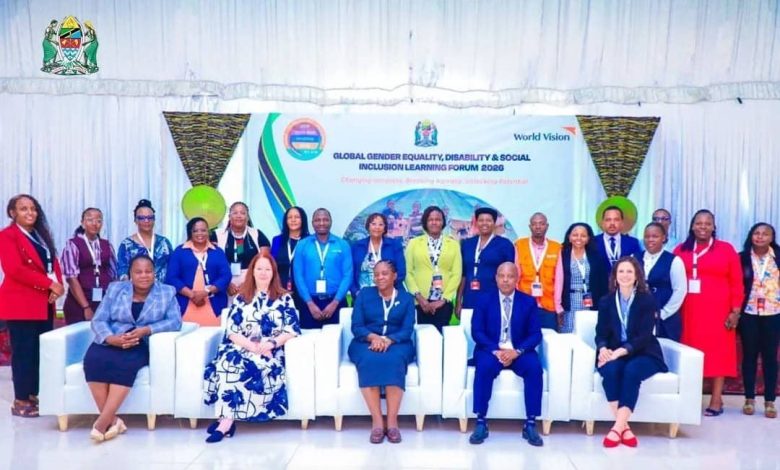
She made the commitment while officially opening the 4th International Gender Equality, Disability and Social Inclusion (GEDSI) Learning Forum in Arusha.
The forum, organized by World Vision Tanzania in collaboration with the government, convened representatives from 25 countries under the theme “Changing Mindsets, Breaking Barriers.”
The theme reflects a strategic shift from policy rhetoric to transformative action, addressing deeprooted cultural norms, structural inequalities, and institutional gaps that perpetuate exclusion.
Dr Gwajima stressed that Tanzania cannot attain sustainable development if marginalized groups remain excluded from social, economic, and political processes.
“Our government remains committed to strengthening legal, policy, and social systems to ensure gender equality, child protection, and inclusive participation in national development,” she said.
She added, “Tanzania cannot achieve sustainable development if women, children, and persons with disabilities continue to face exclusion and marginalization.”
She highlighted ongoing government interventions, including the Second National Plan of Action to End Violence against Women and Children and the expansion of integrated service centers for survivors of genderbased violence.
These measures illustrate an effort to move beyond reactive responses toward systemic prevention and coordinated support services.
Moreover, she condemned persistent violence against women and girls, particularly harmful traditional practices such as female genital mutilation, describing them as barriers to both dignity and development.
She called for greater male engagement in ending gender-based violence, acknowledging that sustainable change requires shifting societal power dynamics and shared accountability.
“Ending gender-based violence requires the active involvement of men as partners in transforming mindsets and breaking harmful traditions,” she said.
World Vision Tanzania national Director, James Anditi, commended the government collaborative approach saying that joint efforts are focused not only on service delivery but also on transforming social attitudes and dismantling structural barriers that limit opportunities for women, children, and persons with disabilities.
“Through our partnership with the Government, we are not only delivering programs but also changing community mindsets that hinder inclusive development,” he said.
Speaking on behalf of children with disabilities, Sinyati Moinesi outlined the persistent challenges they face ranging from limited access to education and safe environments to exclusion from decisionmaking processes.
ALSO READ: Nambuo’s quest to give girls a choice
She urged the government to continue improving policies and strengthening their implementation, ensure the participation of children with disabilities in decisions affecting them, and invest more in safe and inclusive environments.