Govt urges TCU board to safeguard university education quality
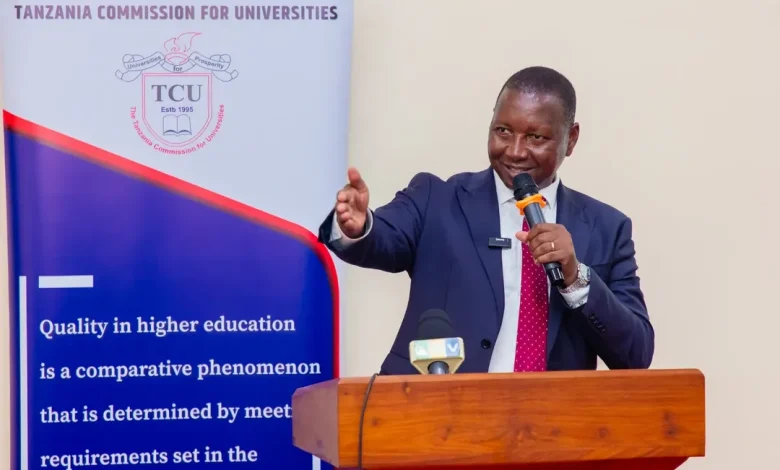
DAR ES SALAAM: MINISTER for Education, Science and Technology, Professor Adolf Mkenda, has urged the newly inaugurated Board of the Tanzania Commission for Universities (TCU) to uphold professionalism and ensure that quality standards in higher education are strictly maintained.
Prof Mkenda made the call during the inauguration of the TCU Board for the 2026–2029 triennium, stressing that the commission plays a crucial role in safeguarding the credibility of Tanzania’s higher learning institutions and protecting the public from the consequences of poor training.
He called on the board to strike a balance between promoting investment in the higher education sector and maintaining rigorous quality assurance systems.
“As a regulatory body, you must assist investors who want to establish higher learning institutions, but you should never compromise on quality. Take time to visit these institutions and provide guidance so that they meet the required standards,” Prof Mkenda said.
The minister noted that regulatory bodies such as TCU are sometimes criticised for enforcing strict monitoring systems, but insisted that such oversight is necessary to prevent serious consequences that may arise from poorly trained graduates.
“Sometimes TCU is blamed for closely monitoring institutions, but without such supervision the repercussions could be very serious,” he said.
Prof Mkenda warned that inadequate training in critical professions could lead to devastating outcomes, particularly in sectors such as medicine, aviation and engineering.
“Studying medicine is important, but the consequences can be devastating if a person is not properly trained in our universities,” he said.
He explained that a poorly trained doctor or pilot could cause catastrophic results during medical emergencies or aviation accidents.
“In such situations, when a disaster occurs, the regulator is often the one that receives the most blame,” he noted.
The minister added that similar risks apply in the engineering field, where graduates are responsible for designing and supervising major infrastructure projects.
ALSO READ: OUT to boost ties with Higher Education Quality Forum
“If engineers are poorly trained, you may end up with high-rise buildings or bridges collapsing. That is the result of producing poorly trained graduates, and it can lead to deaths and massive destruction,” he said.
Prof Mkenda also addressed concerns raised by some institutions regarding the strictness of higher education regulations in Tanzania, arguing that the country’s regulatory framework is not as restrictive as some universities claim.
“Sometimes I hear complaints that the regulations are too tight, including from some public universities,” he said.
According to him, comparisons with other East African Community countries show that Tanzania’s regulatory environment is relatively flexible.
Responding to the minister’s call, TCU Board Chairman Prof Makenya Maboko pledged that the board would prioritise strengthening quality assurance across universities.
“We will implement the minister’s directives and ensure that universities adhere to established standards so that graduates are well equipped with the knowledge and skills required for national development,” Prof Maboko said.
The newly inaugurated board will serve for the 2026–2029 term, overseeing policies and regulatory frameworks aimed at strengthening the quality, credibility and international competitiveness of higher education in Tanzania.