If your land is being acquired compulsorily, you are not the one who is being valued
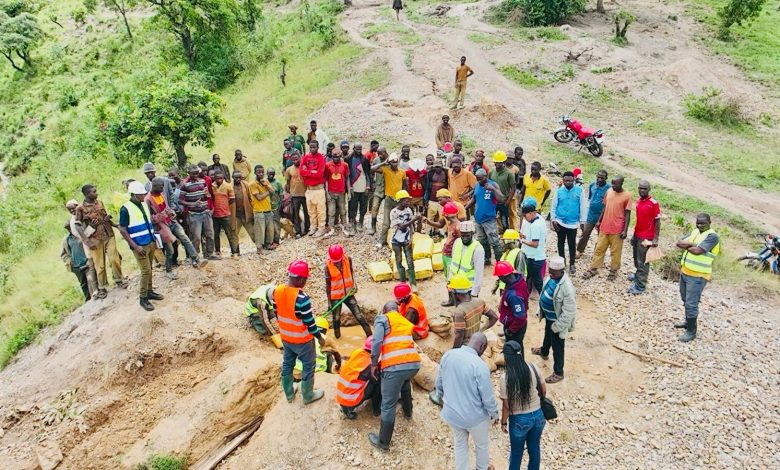
DAR ES SALAAM: IF you are a “lands” person, like I am, this story titled: “Government gives compensated residents 90 days to leave to allow mine expansion” (Good citizen, March 5, page 8), should surely attract your attention.
The news item, by a reporter from Tarime, is about an order given by the Mara Regional Commissioner, Col EM, to the District Commissioner and Land Officers to meet residents who have not ‘undergone valuation’ within seven days and educate them on the need to comply with the law”.
The Mine’s General Manager, AL, is quoted to have said that 654 out of the affected 728 residents have ‘undergone valuation’ and received compensation to allow expansion of the open pit.
Twice, above, the reporter is talking about “residents who have undergone valuation”, which, surely, is not the case.
It is not “residents (or owners) who have undergone valuation”; it is “residents, (or, owners), whose land has been valued”.
These residents, or owners (technically called Project Affected Persons (PAPs)), however, are the ones who receive compensation, after the approval of the valuation.
We are told, towards the end of the news item, that: “of the 728 residents earmarked for compensation, 571 have been paid in cash, 74 have not signed compensation documents, and ‘11 have refused valuation’”.
The phrase: “11 have refused valuation” is vague. It could mean that the residents have not allowed officials to assess the value of their land; or they have rejected the figures arrived at as the appropriate amount to be paid as compensation.
We are left wondering! After that, we take a quick hop from Tarime, across Lake Victoria (Lake Lweeru, if you like), to Bukoba, where we find this interesting story appearing in the Daily Blog (5 March, page 2) and titled: “Kagera PCCB recovers over 57m/= in unpaid taxes”.
The Kagera PCCB Regional Chief, Mr. VM is quoted as saying that officials at the Mutukula border, intercepted five vehicles carrying large consignments of goods ‘entering’ the country illegally”. Something is not clear here.
ALSO READ: PM demands citizens to be educated on land issues
Were the five vehicles entering the country illegally? Was it the consignments of goods they were carrying that had been brought in the country illegally?
Or, was it that both the vehicles and their consignments were found to be in the country illegally? On further reading of the story, it becomes clear that the problem was with the consignments not the vehicles.
Moreover, the verb “entering” does not convey the true picture of what happened. Duties are paid at the entry point, at which you are not yet in the zone of illegality.
It was after these vehicles had crossed the border (that is, entered the country), that they were intercepted, and it was established that the appropriate duties for the consignments they were carrying, had not been paid.
To reflect this situation, the reporting should be along these lines: “The Kagera PCCB Regional Chief, Mr VM is quoted as saying that officials at the Mutukula border, intercepted five vehicles, having entered the country and carrying large consignments of goods, whose appropriate duties had not been paid.”
As a result, according to the story: “PCCB is conducting investigations and the suspects will be ‘arraigned in court’ once the inquiries are complete”.
We have pointed out this one before. “To arraign” means “to formally charge someone with a crime in a court of law, where the charges are read, rights are explained, and a plea (guilty/not guilty) is entered”.
Thus, “to arraign in court” is slightly redundant, though generally understood. For that reason, the sentence could be recast in a shorter version as follows: “PCCB is conducting investigations and the suspects will be arraigned once these are complete”. Time flies! It is already half way through Ramadhan!
lusuggakironde@gmail.com