‘Unrest, property destruction derail development projects, force budget reallocations’
DAR ES SALAAM: ANALYSTS, academics and youth leaders have urged Tanzanians to preserve peace, unity and national harmony, asserting that stability is essential for enabling the government to implement development projects effectively.
They have warned that political unrest and violence pose a serious threat to development efforts and the country’s long-term stability.
Speaking to Daily News recently, they stressed that peace is not merely a political slogan but a critical foundation for economic growth, social progress and the successful implementation of government development projects.
Without a stable environment, they cautioned, both domestic and foreign investments are put at risk, public resources are wasted and citizens’ livelihoods are disrupted.
Tumaini University lecturer, Rachel Yusuph said political unrest and violence often have devastating consequences on a country’s development trajectory.
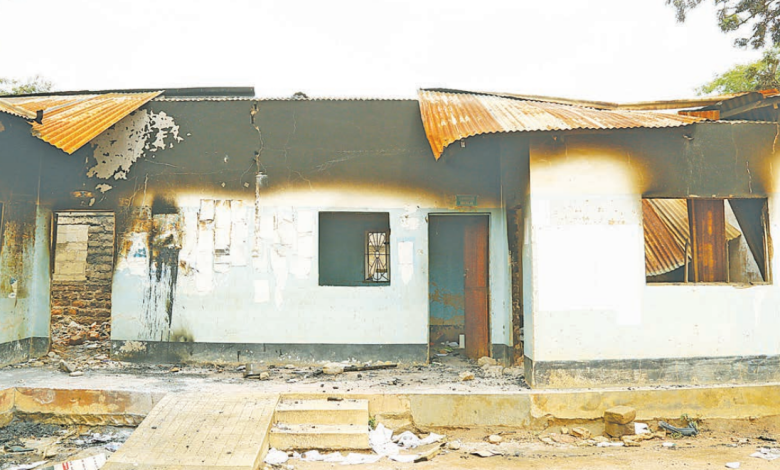
She said that instability weakens productivity, disrupts economic activities, destroys public and private property and compels the government to redirect funds meant for development into emergency response, repairs and security.
“Political unrests and violence have far reaching impacts. They interfere with people’s ability to work, discourage investment and slow down or completely halt development projects. There can be no meaningful economic or social progress in an environment that is unsafe,” she said.
She cited the October 29 demonstrations, which resulted in property damage and the suspension of economic activities in some areas, as a clear example of how unrest undermines national development.
She said such incidents are particularly harmful to a developing country like Tanzania, which is already implementing major projects financed through domestic revenues and loans from external partners.
“For a young nation like Tanzania, which has ambitious development plans and has borrowed funds to finance infrastructure and social projects, this kind of destruction is a major setback,” she said.
Ms Yusuph emphasised that citizens especially young people must understand that destroying public property is equivalent to destroying their own future.
“When someone destroys national property, they are destroying their own country. It is a sign of a lack of patriotism and responsibility,” she said.
She added, “It is like burning your own house. Such an act reflects poor judgment and a failure to understand the broader consequences.”
She warned that if incidents of unrest continue to occur during election periods without being effectively addressed, the country risks losing human capital, weakening its economy and fostering hostility and division among its citizens.
ALSO READ: Police closely monitor threats of the Dec 9 demonstrations
“If we continue repeating the same cycle of violence and destruction every election period, we must ask ourselves where we are heading as a nation,” she said.
Ms Yusuph called on Tanzanians to promote a culture of peace, tolerance and unity, noting that social cohesion is essential for restoring confidence among national institutions, investors and development partners.
She stressed that peace and stability are the cornerstones of sustainable development and that safeguarding them is a collective responsibility.
“Development partners and investors need to see genuine stability and security. Trust is built through actions, not statements, without confidence, projects stall, opportunities are lost and the nation moves backward instead of forward,” she said.
She also raised concerns about the growing influence of social media in fuelling unrest, warning that hate speech, misinformation, disinformation and manipulated content are spreading rapidly and inciting anger, fear and emotional reactions among young people.
According to her, many youths lack adequate skills to distinguish between credible information and false or misleading content, making them vulnerable to manipulation.
“There is an urgent need to educate young people on how to verify information before acting on it. This will enable them to make informed decisions rather than being driven by anger, emotions, or unfounded narratives,” she said.
Political analyst, Mr Hamiduni Maliseli echoed similar concerns, warning that violence and instability could significantly erode investor confidence and derail transformative development projects.
“Investors are highly sensitive to security risks. They look at the real situation on the ground, not political promises. If instability becomes common, investors will simply take their capital elsewhere,” Mr Maliseli said.
He added, “Tanzania must ensure that its internal political disagreements do not escalate into violence or prolonged instability,” he said.
“Failure to do so could damage not only Tanzania’s image but also the region’s overall credibility.”
Mr Maliseli stressed the importance of strong mechanisms for conflict prevention and management, saying peace and security must be demonstrated through the protection of people and property.
“Security is reflected in stable conditions, respect for the rule of law and the safety of citizens and their assets,” he said.
He urged Tanzanian youths to channel their energy, talents and creativity into productive activities that contribute to national development rather than being drawn into destructive actions.
“I dream of seeing Tanzania continue to earn respect at the international level and serve as a model for other nations, especially in peace, national unity and youth participation in development,” he said.
He added that African countries must reflect on how they utilize their human resources, particularly young people, who constitute the largest workforce and the backbone of development across the continent.
He said that safeguarding peace requires collective effort from citizens, leaders, institutions and the youth, stressing that choosing dialogue over violence, unity over division and responsibility over destruction remains the only path toward sustainable development and national progress.
Another political analyst, Mr Said Miraji, said peace cannot be achieved by rhetoric alone but must be lived and practiced through daily actions and decisions.
“We cannot simply speak about peace, we must internalise it and demonstrate it through our behaviour,” he said.
He said that such an approach would help educate and guide young people who may not fully understand the destructive effects of violence, political division and social fragmentation.
He also called on the government to strengthen accountability by holding non-performing leaders responsible, arguing that poor governance and lack of essential services often fuel public frustration and social unrest.
“Unity is built on trust, trust is built on equality and equality is built through cooperation. When citizens feel treated fairly, they develop confidence in government and are more likely to live peacefully with one another,” Miraji said.
Moreover, a youth Masoud Mambo urged Tanzanians to reject individuals or groups that incite violence, chaos, or political division, saying such actors do not have the nation’s best interests at heart.
“Those who encourage violence are not interested in the country’s development. Without peace there is no justice, without stability there is no development and without national unity there is no strong Tanzania,” he said.
He reminded citizens that Tanzania has long been a safe haven for people fleeing political instability in their home countries and warned against allowing short term political interests to undermine that proud legacy.
“Tanzania has been a symbol of peace in the region. We must protect this identity and pass it on to future generations,” he said.