From hives to hashtags: how Adam is building a honey business online
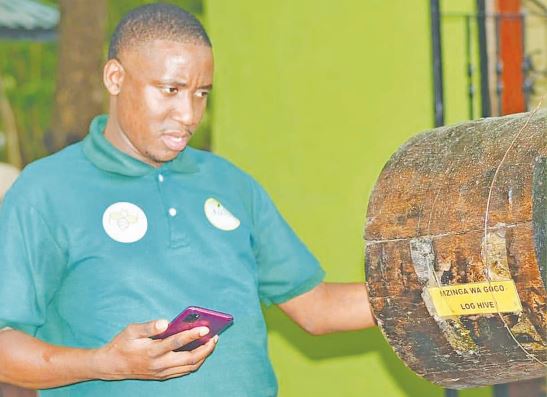
IGUNGA: AT 25, Adam Joseph is part of a growing generation of young African entrepreneurs using digital platforms to bypass traditional barriers to market access and build businesses with regional reach.
Joseph is the founder and chief executive of Safarigreen Honey, a beekeeping enterprise based in Igunga district, Tabora region, producing honey and a range of value-added bee products, including royal jelly, bee pollen, beeswax, bee bread and bee venom.
Unlike many small-scale producers who rely on local traders, Joseph has turned to social media, particularly Instagram — to market his products directly to consumers.
“Today, most customers are on social media,” he said in an interview.
“These platforms allow us to reach people of all ages, without borders.” Safarigreen Honey has built an online following of more than 15,000 Instagram users, providing what Joseph describes as a stable marketplace that has enabled the business to expand beyond Tanzania into neighbouring Kenya, Uganda, Zambia and Malawi.
The company sells honey at about 20,000 Tanzanian shillings per kilogramme and currently produces roughly one tonne a year, targeting both retail and wholesale buyers.
Joseph says his long-term ambition is to position Safarigreen as an international brand offering high-quality bee products.
Educating consumers, adding value
Beyond sales, Joseph uses social media to educate the public about modern beekeeping and the broader value chain of bee products — an area he believes remains poorly understood.
“Many people only think of honey,” he said.
“But products like royal jelly, which is linked to antiageing, and bee pollen, which is rich in protein, have significant health and commercial value.”
Joseph holds a bachelor’s degree in beekeeping from the University of Dar es Salaam and has spent a decade in the sector.
His company employs 10 people, modest by industrial standards but notable in rural Tanzania, where youth unemployment remains high.
He encourages other young Tanzanians to use digital platforms more strategically, arguing that monetising content and promoting skills or products can turn social media from a distraction into a livelihood. “Investment is possible,” he said. “We have to start with what we know and what we can do.”
Youth at the centre of economic policy
Joseph’s experience aligns with the government’s broader push to turn youth entrepreneurship into an engine of economic growth. Speaking recently in Dar es Salaam, the Minister of State in the President’s Office for Youth Development, Joel Nanauka, outlined plans to support innovation, startups and youth-led manufacturing.
The government aims to establish more than 100,000 youth-owned companies over the next five years, with 20,000 of them to be based in Special Economic Zones (SEZs) in partnership with the Tanzania Investment and Special Economic Zones Authority (TISEZA).
“These companies will be required to create jobs and contribute to industrial growth,” Nanauka said, adding that priority sectors would include agro-processing and digital creative industries.
ALSO READ: Honey earnings increase in Coast Region
Under the plan, youth-led firms in SEZs would benefit from infrastructure such as electricity and ICT services, alongside asset-financing schemes designed to help businesses acquire machinery and equipment.
Each selected company would be expected to create at least 50 jobs, contributing to a broader target of generating one million youth jobs.
Nanauka said the ministry would also establish a credit guarantee scheme and encourage banks to create dedicated youth investment windows, easing access to finance without requiring traditional collateral.
An indicative 8bn shillings has been earmarked to support youth enterprises, part of a wider 200bn shilling pledge announced by President Samia Suluhu Hassan to finance citizen-owned businesses.
Digital future, real economy
With young people accounting for more than half of Tanzania’s workforce, officials see digital skills as central to future growth.
The government plans to establish an open coding school to equip youth with skills relevant to the digital economy.
Nanauka urged young Tanzanians to view digital platforms not only as tools for communication but as engines for income generation and enterprise.
For entrepreneurs like Joseph, the promise of the digital economy is already tangible.
From beehives in rural Tabora to customers across East Africa, his business illustrates how technology, when paired with skills and persistence, can help bridge the gap between local production and regional markets.