Historic launch strengthens media freedom, public trust
DAR ES SALAAM: AS Tanzania marks 64 years of independence, the launch of the Journalists’ Accreditation Board (JAB) stands out as a key milestone in the country’s growing and evolving media landscape.
From the early post-independence media environment of 1961, shaped by a single broadcaster and a handful of newspapers, Tanzania has grown into a nation with a vibrant, diverse and increasingly empowered press.
This transformation has reached a new milestone with the current accreditation of more than 3,200 journalists through the digital system of JAB, a development celebrated as a bold step toward strengthening professionalism and rebuilding public trust.
The official launch of the Journalists’ Accreditation Board on March 3, 2025, in Dar es Salaam has been described as both historic and necessary.
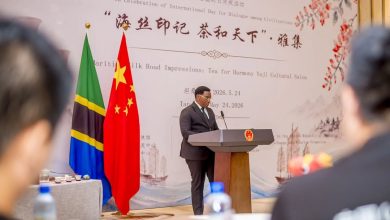
Minister for Information, Culture, Arts and Sports, Prof Palamagamba Kabudi, who officiated the event, called the board a crucial milestone in elevating professionalism, accountability and integrity within the media.
His remarks came as the country continues to realign its media policies under President Samia Suluhu Hassan’s philosophy of Reforms, Resilience, Rebuilding and Reconciliation, a framework that has reopened once-banned media outlets, improved dialogue between government and journalists and laid the foundation for a more enabling media environment.
To appreciate the significance of this moment, one must look back to 1961, the year Tanzania gained independence.
At that time, the media environment was limited to a handful of newspapers and a single national broadcaster. Journalism as a profession was still in its infancy.
Few trained practitioners existed and the idea of an independent press had not yet taken shape. More than six decades later, the landscape has transformed in ways that would have been unimaginable in 1961.
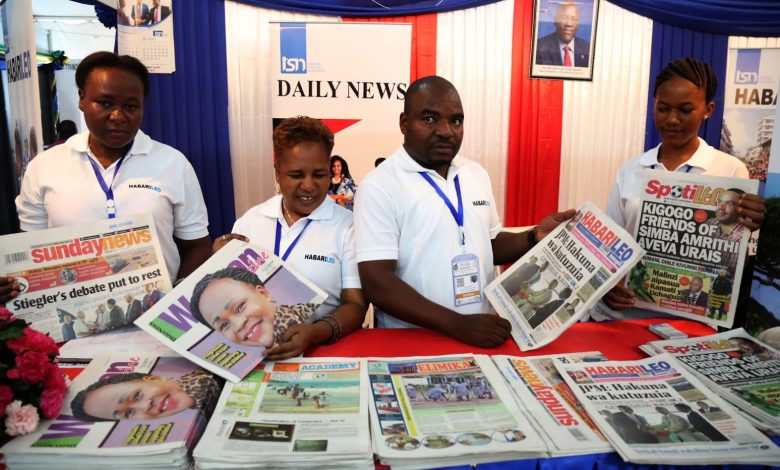
Tanzania now has hundreds of media outlets television stations, newspapers, radio stations and a fast-growing digital media space.
Citizen journalists, online platforms and community radio have become essential pillars of public discourse.
The launch of the TAI HABARI digital system, used by the Accreditation Board to register journalists, signifies the modern era the sector has entered.
Journalists are no longer just observers, they are data-driven storytellers operating in a world that demands accuracy, speed and ethical responsibility.
These fears resurface at a time when the economic reality of journalism paints a difficult picture.
ALSO READ: Tanzanian Media warned against misuse of press freedom
Many journalists remain underpaid, overworked and without stable employment conditions that undermine the depth and quality of reporting.
Despite the concerns, the launch of the board has also generated optimism.
Veteran journalist Tido Mhando, appointed as the board’s chairperson, declared that this marks the end of intruders in the profession and those who masquerade as journalists without training or ethical grounding.
He promised that the board will safeguard integrity, accountability and professionalism, restoring public confidence in journalism.
Board members, including representatives from Tanzania Standard Newspapers (TSN), the Tanzania Media Women’s Association (TAMWA) and the School of Journalism and Mass Communication (SJMC). Media scholars credit the progress to political will, legal reforms and increased openness in newsrooms.
They said that journalists today work with far less fear than in previous years and that media houses now provide space to both government and opposition voices, an evolution far removed from the tightly controlled communication system of 1961.
Dr Dotto Kuhenga, a lecturer from the University of Dar es Salaam’s School of Journalism and Mass Communication (UDSMSJMC) commended various efforts made to improve the media environment in the country, including the government’s acceptance of amendments to the Media Service Act of 2016.
He also mentioned that the increase in media outlets in Tanzania, which act as a platform for people to air their opinions without fear, is an indication of media freedom.
“It is also important to prioritise professionalism by employing competent journalists and ensuring the protection of journalists when performing their duties,” Dr Kuhenga said.
On his part, Dr Zakaria Malima from the UDSM-SJMC said that Tanzania’s progress in press freedom is the result of maturity and political will in the country.
He said media outlets are also free to provide equal airtime and space for politicians from both the ruling party and opposition parties to express their opinions without interference and the ban of their media outlet.