Universities as labs of thought
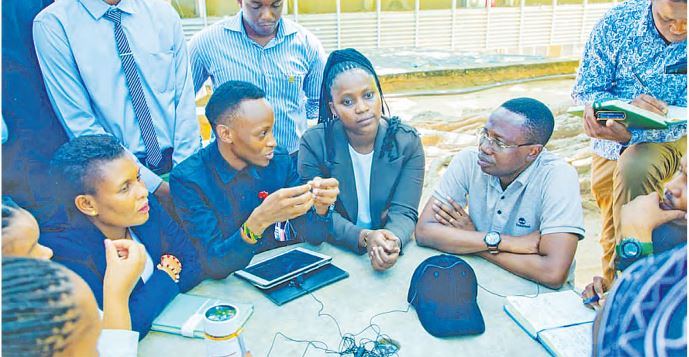
The discussion, led by Minister of State for Youth Development Joel Nanauka, placed strong emphasis on academic discourse, critical reasoning and constructive civic engagement. His message was clear: the intellectual freedom nurtured within universities must translate into responsible citizenship outside them.
DAR ES SALAAM: EVERY society flourishes, when ideas are free to breathe, interact and grow and universities have long been the vibrant centres where this unfolds.
They are places where young minds are encouraged not only to question, but to imagine; to build on inherited wisdom and to shape the intellectual foundations of a nation’s brighter future.
This understanding was reaffirmed during a recent engagement at the University of Dar es Salaam, where the government underscored the essential role of universities as laboratories of thought, spaces where informed debate, innovation and civic responsibility must thrive.
The discussion, led by Minister of State for Youth Development Joel Nanauka, placed strong emphasis on academic discourse, critical reasoning and constructive civic engagement.
His message was clear: the intellectual freedom nurtured within universities must translate into responsible citizenship outside them.
In a climate where peace, unity and tranquillity underpin Tanzania’s development, Nanauka’s call for patriotism and social responsibility serves as an important reminder that national stability is both a right and a duty for the country’s youth.
Tanzania’s demographic landscape is both a strength and an opportunity.
With a majority of citizens under the age of 35, harnessing the energy, creativity and aspirations of young people is essential for economic growth, political stability and technological advancement.
The government’s creation of a dedicated Ministry of Youth reflects a strategic commitment to integrating youth voices into national planning, an institutional shift that acknowledges young people not only as beneficiaries but as partners in development.
The idea that universities serve as laboratories of thought is deeply rooted in global educational discourse.
Scholars such as Ernest Boyer and Martha Nussbaum emphasise that higher education must cultivate both professional competence and reflective citizenship.
Nussbaum, especially, warns against reducing universities to mere job factories; instead, she advocates for nurturing critical thinking, ethical judgement and empathy.
Nanauka’s emphasis on structured debate and intellectual engagement aligns naturally with this global perspective.
Youth inclusion and participatory development
Equally important is the growing expectation that young people must be active contributors to national development.
Research by youth scholars such as Barry Checkoway shows that meaningful youth inclusion strengthens innovation and social cohesion.
Countries like Rwanda and South Korea demonstrate the effectiveness of youth advisory councils, innovation hubs and academic-policy partnerships, models that Tanzania’s Ministry of Youth Development signals readiness to adapt.
Such steps could position the nation as a regional leader in youthdriven policymaking.
Nanauka’s reflections on responsible digital engagement also highlight a critical aspect of modern governance.
While social media can fuel misinformation, it also empowers youth to influence policy, mobilise communities and spur entrepreneurship.
Studies from institutions like Stanford University and the London School of Economics show how African youth effectively use digital spaces for development-oriented initiatives.
ALSO READ: Youth must champion peace, unity and development
Encouraging constructive digital citizenship strengthens social trust and helps protect the nation’s unity, especially vital at a time when online narratives can quickly escalate tension.
A notable element of the government’s youth engagement was its commitment to resuming the constitutional review process
. Tanzania’s young people were encouraged to prepare to articulate their priorities, a rare opportunity for generational input
Comparative experiences from Kenya, Tunisia and Chile reveal that youth participation in constitutional reforms enhances democratic legitimacy and shapes national identity for decades.
If conducted transparently, this process could transform universities into vibrant platforms for national dialogue.
Higher education reform and employability The contributions from University of Dar es Salaam leaders, Professors Anangisye and Killian, highlight structural reforms needed in higher education.
Curriculum upgrades aimed at producing competent, workready graduates reflect a global educational shift, seen in countries such as Finland, Singapore and South Africa.
Tanzania’s effort to produce over 11,000 graduates across fields aligns with international best practice in connecting education with economic needs.
Yet producing graduates is only half the task. Ensuring that these graduates’ access meaningful opportunities whether through employment, entrepreneurship or innovation, is the greater challenge.
Campus-based programmes and youth-focused partnerships, as recommended by university leadership and supported by the Ministry of Youth, provide a practical route toward bridging this gap.
Meeting young people where they are strengthens participation and accelerates national development.
DARUSO President William Emanuel’s call for more structured youth participation in national dialogue underscores a recurring issue: while young people are expected to drive development, their platforms remain limited.
Scholars note that integrating student leadership into national consultative processes nurtures future public leaders.
Tanzania’s history, where several prominent figures emerged from student activism, including Minister Nanauka himself, illustrates the long-term value of such engagement.
Ultimately,the message conveyed through this engagement blends developmental ambition with philosophical clarity.
It reminds the nation that youth are not just recipients of government plans they are thinkers, innovators, guardians of peace and custodians of national unity.
Universities must therefore cultivate citizens who excel academically while also contributing meaningfully to society: questioning constructively, innovating boldly, respecting national harmony and upholding patriotism.
By affirming universities as laboratories of thought, Tanzania reinforces a future oriented national ethos: that true progress emerges not only from infrastructure, but from the powerful ideas generated by a peaceful, united and intellectually engaged generation.
If young people seize this moment, embracing responsible digital behaviour, engaging in constitutional reform, contributing to national dialogue, and applying their skills to collective challenges, Tanzania is well positioned to transform its demographic advantage into one of Africa’s most dynamic intellectual and economic success stories.