‘Monitoring, evaluation key to development’
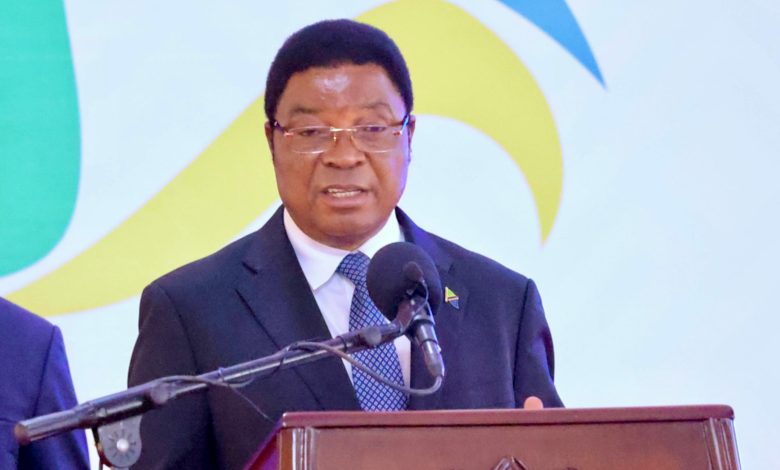
MWANZA: PRIME Minister Kassim Majaliwa has said that monitoring and evaluation activities are essential tools for enabling the nation to achieve various development objectives.
He noted that it is undeniable that when all stakeholders and the general public share a common understanding of monitoring and evaluation activities, results are achieved more quickly.
Mr Majaliwa made the remarks yesterday while representing President Dr Samia Suluhu Hassan at the opening of the Fourth National Conference on Monitoring, Evaluation and Learning, held in Mwanza.
The Prime Minister said the government has continued to make various efforts to strengthen monitoring and evaluation systems as part of implementing President Dr Samia’s vision to improve performance measurement in public institutions, enhance accountability and accelerate transparency and service delivery for the welfare of citizens.
“Monitoring and evaluation activities involve collecting, analysing and measuring information regarding planned activities, their implementation and the results achieved. The government has established a system to conduct these activities periodically,” he said.
Mr Majaliwa also urged all responsible government departments to complete preparations for the National Monitoring and Evaluation Policy, covering both levels of government, to enable the formulation of legislation that will guide monitoring and evaluation.
He further directed the Prime Minister’s Office, together with the e-Government Authority (eGA) to complete preparations for an Integrated Electronic Monitoring and Evaluation System.
This system will serve as the central platform for all government performance monitoring and evaluation systems, enabling better oversight of government departments and providing accurate, timely information and statistics to leaders, decision makers and citizens.
“All senior officials should use information generated from monitoring and evaluation work to make decisions and establish strong strategies to inform the public about government performance with greater certainty,” he said.
ALSO READ: Why development plans shift from promises to outcomes
In another development, Mr Majaliwa called on the African Evaluation Association (AfrEA) to continue supporting Tanzania’s institutions, TanEA (Tanzania) and ZaMEA (Zanzibar), by strengthening their capacity to perform their duties, including guiding technological improvements in data management and monitoring.
“TanEA and ZaMEA, continue to strengthen yourselves and accelerate the integration of all key stakeholders, with the aim of exchanging ideas, experiences and discussing innovative approaches that will enable successful monitoring and evaluation,” he said.
Meanwhile, Minister of State in the Prime Minister’s Office for Policy, Parliament, and Coordination, Mr William Lukuvi, said that in efforts to strengthen the Monitoring and Evaluation Unit in the country, the Prime Minister’s Office, in collaboration with the eGA, has begun developing a national electronic monitoring and evaluation system, the Government Wide Electronic Monitoring and Evaluation System, which will collect data from other systems, process it and generate reports on government performance.
“The system will allow data to be collected, processed and interpreted in real time, enabling the government at all levels to use accurate statistics in planning, improving interventions and making informed decisions,” Lukuvi said.
Permanent Secretary in the Prime Minister’s Office (Policy, Parliament and Coordination), Dr Jim Yonazi, said the government has established a solid foundation to strengthen monitoring and evaluation by creating the Monitoring and Evaluation Unit for Government Performance.
He noted that the unit has continued to be a key pillar in contributing to and advancing efforts to improve evaluation expertise in the country, allowing public agencies and institutions to learn from its work.
“We believe that its impact extends not only nationally but also internationally, and our aim is to make it a centre for learning and knowledge,” Dr Yonazi added.
For her part, United Nations Resident Representative in Tanzania, Ms Suzan Ngongi, said transparency and accountability have enabled Tanzania to make significant development progress in sectors such as education, health, infrastructure and poverty reduction programmes.
“These efforts have made Tanzania a model for other countries in East and Central Africa,” she said.