New literacy report urges evidence-to-policy shift
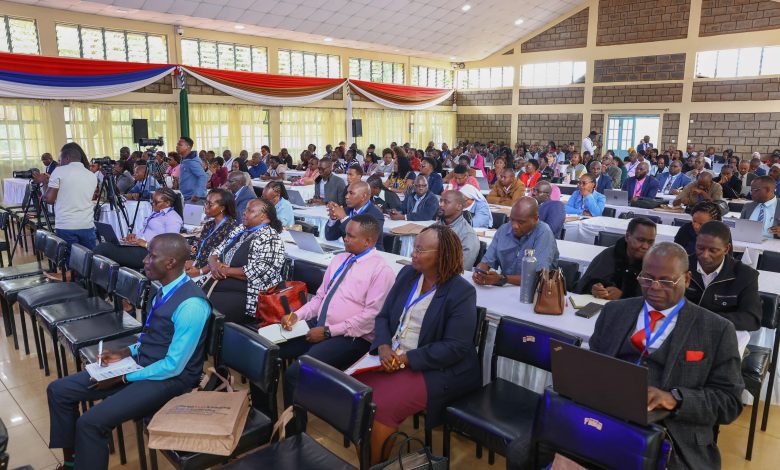
A forthcoming literacy paper, spotlighted at the 6th Biennial Education Evidence for Action (EE4A) and Education Development Forum (EDF) Conference, calls for the urgent translation of robust, evidence-based insights into government policy and classroom practice to address persistent global learning poverty.
The report advocates for systemic reforms that move beyond diagnosis to implementation highlighting a critical need for stronger linkages between research, policymaking, and education delivery.
Produced by the What Works Hub for Global Education (WWHGE), in collaboration with the Global Education Evidence Advisory Panel (GEEAP) and the British Council, the paper outlines three central messages.
First is the foundational literacy is essential—without basic reading skills, children are locked out of all future learning opportunities.
Secondly, the education sector already knows what works: structured pedagogy, teacher professional development and targeted interventions have been shown to significantly improve learning outcomes at scale.
Thirdly, the partnerships are critical—connecting global evidence with national policies and classroom practices enables sustainable, system-wide change.
ALSO READ: Tanzania, Algeria regulators keen to boost petroleum sub-sector
The EE4A conference, convened by Zizi Afrique Foundation, served as a platform for meaningful dialogue between education stakeholders, policymakers, and researchers.
The EE4A, as a biennial initiative, aims to bridge the persistent gap between education research and decision-making—an objective closely aligned with the Literacy Paper’s call to embed evidence into reform agendas.
During the conference, WWHGE hosted a high-level session titled “Strengthening the Evidence Ecosystem: Building a Roadmap for Education Reform in Kenya”, bringing together education leaders to explore how research can shape national education strategies.
In this session, WWHGE reinforced its mission to ensure that rigorous global evidence such as that produced by GEEAP is not just published but translated into national education policies and implemented in classrooms where it can directly improve teaching and learning.
WWHGE is an international initiative hosted by the Blavatnik School of Government at the University of Oxford and supported by the UK Government’s Foreign, Commonwealth & Development Office and the Gates Foundation.
The Hub includes 12 strategic and 43 consortium partners working together to identify and scale effective education reforms in low- and middle-income countries.
Also featured at the conference was the British Council’s Learning and Life for Global Education (LL4GE) initiative, which complements the Literacy Paper’s policy-oriented focus with a learner-centered approach.
LL4GE integrates literacy, language, and life skills to equip young people with both academic competencies and the social-emotional skills needed for employment, resilience, and active citizenship.
Together, WWHGE, GEEAP, the British Council, and LL4GE represent a powerful synergy—combining global evidence, national policy reform, and holistic learner development.
This collaboration aims to ensure that foundational literacy is not treated as a siloed goal but as a cornerstone of wider educational and societal transformation.
Looking ahead, WWHGE and its partners will take forward the Literacy Paper’s recommendations by working directly with ministries of education, teacher training institutions, and local organizations.
The goal is to embed evidence-based strategies into national reform agendas and implement them at scale transforming how teachers teach and how students acquire foundational skills.
This marks a pivotal phase in WWHGE’s mission: ensuring that every child, regardless of their context, benefits from proven strategies that build foundational literacy and unlock lifelong learning opportunities.