Engineering competence key to aviation safety
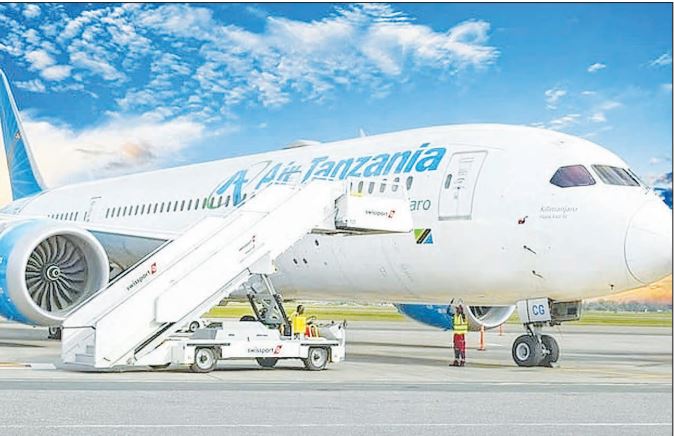
DAR ES SALAAM: IN the rapidly evolving landscape of global aviation, Africa stands at a crossroads. The continent’s potential is vast, but so too are the challenges.
As we strive to elevate aviation safety standards, one truth becomes increasingly clear: Technical competence is not optional it is foundational.
Across Africa, we have witnessed the consequences of under investment in engineering education and training.
Aircraft maintenance errors, inadequate oversight and insufficient regulatory enforcement have too often led to tragic outcomes.
These are not merely technical failures they are failures of systems, of leadership and of vision.
The stakes are high
Aviation is not just a mode of transport, it is a lifeline for economic development, regional integration and global connectivity.
In many African countries, air travel is the most efficient way to bridge vast distances and connect remote communities.
Yet, the promise of aviation is undermined when safety is compromised. Every incident, every accident, chips away at public trust and investor confidence.
It sends a message that we are not ready, not equipped, not serious.
This is not a narrative we can afford to accept. Africa’s aviation sector is projected to grow significantly over the next decade, with increased passenger traffic, expanded fleets and new infrastructure investments.
But growth without safety is reckless. Expansion without competence is dangerous. If we are to seize the opportunities ahead, we must first confront the deficiencies that hold us back.
Engineering competence is a strategic imperative
To change course, we must engineer competence. This is more than a slogan— it is a strategic imperative. It means investing in rigorous academic programmes that produce not just graduates, but professionals.
It means fostering industry partnerships that bridge the gap between theory and practice. It means creating pathways for continuous professional development, so that engineers remain current, capable and confident. Competence is not static. It must be cultivated, tested and renewed.
In aviation, where the margin for error is razor-thin, competence is the difference between safety and catastrophe. We must equip our engineers not just with tools, but with judgment. Not just with knowledge, but with wisdom.
The role of government, academia and industry
Governments must prioritise aviation safety as a strategic national interest. This requires policy frameworks that support education, certification and oversight.
It requires funding for institutions that train engineers, inspectors and technicians. And it requires political will to enforce standards—even when it is inconvenient.
Universities must align their curricula with realworld demands. Too often, engineering programs are disconnected from the realities of the hangar, the runway, and the control tower.
We need educators who understand the industry, and industry professionals who contribute to education. Internships, apprenticeships and joint research initiatives must become the norm, not the exception. Industry leaders must mentor, train and empower the next generation.
This is not charity-it is survival. The aviation sector cannot thrive without a pipeline of skilled professionals. Companies must invest in training, support certification and create cultures of excellence.
They must recognise that safety is not a cost—it is a value. Regulators must enforce standards with consistency and courage.
This means resisting political pressure, rejecting shortcuts, and holding all stakeholders accountable. It means building institutions that are independent, transparent and technically competent. Regulation is not about punishment—it is about protection.
Building systems that sustain talent
Africa does not lack talent. It lacks systems that nurture and sustain that talent. We must build those systems deliberately, urgently and together.
This includes regional cooperation, where countries share best practices, pool resources and harmonise standards. It includes leveraging technology to improve training, monitoring and reporting.
And it includes engaging international partners who can support capacity building without imposing one-size-fits-all solutions.
We must also address the brain drain that continues to siphon talent away from the continent. African engineers are sought after globally for their skill and resilience.
But too often, they leave because they cannot find opportunities at home. We must create environments where talent is valued, rewarded and retained.
ALSO READ: Aviation safety workshop benefits 72 Africans
A personal commitment
As Vice-President for the African Region at the International Federation of Airworthiness, I have had the privilege of working with professionals across the continent who are passionate about safety, excellence and progress.
I have seen firsthand the brilliance of young engineers, the dedication of educators and the resolve of regulators.
But I have also seen the gaps the underfunded programmes, the outdated equipment, the missed opportunities. This is why I believe so strongly in the call to engineer competence.
It is not enough to train engineers; we must build ecosystems that support their growth. It is not enough to talk about safety; we must institutionalise it. It is not enough to hope for change; we must lead it.
The future is ours to shape
Africa’s aviation future is not predetermined. It will be shaped by the choices we make today.
Shall we invest in competence, or continue to improvise? Shall we build systems, or rely on individuals? Shall we prioritise safety, or gamble with lives?
The answers to these questions will define our legacy. They will determine whether African aviation becomes a model of excellence or a cautionary tale.
With deep commitment to aviation safety in Africa, I encourage governments, academia and industry to unite in building a future of excellence.
Let us not only train engineers, let us engineer competence. The future of African aviation depends on our shared commitment to skill, resilience and readiness
The writer is International Federation of Airworthiness Vice-President (African Region)