Denmark’s EU role, what it means for Tanzania
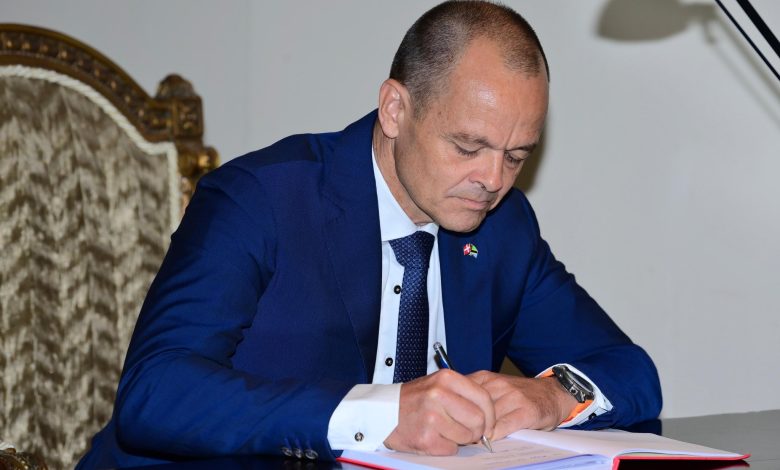
FROM July to December 2025, Denmark is taking on a major role within the European Union one that most people outside Europe may not have heard of, yet one that can influence policies that stretch far beyond Europe’s borders, even reaching as far as East Africa.
This role is known as the Presidency of the Council of the European Union. Let me break it down.
The European Union (EU) is a political and economic partnership of 27 countries in Europe. Denmark being one of them. Together, we work on a wide range of issues from trade and climate to security and migration through shared institutions and common policies.
One of those key institutions is the Council of the European Union, often called the Council of Ministers. Every six months, a different EU country takes on the presidency of this Council.
That means they chair meetings, set the agenda and help EU governments agree on new laws and policies.
As of 1 July 2025, it is Denmark’s turn to lead. We have taken over the presidency from Poland and while we are not acting as the “president” of the EU as a whole, we now hold the crucial role of facilitating consensus, managing legislation and pushing forward priorities that matter for Europe and, in many ways, for the wider world. For Denmark, this is both a huge responsibility and an important opportunity.
Under the slogan “A strong Europe in a changing world,” our presidency is focusing on a more secure, competitive and green Europe. But Europe does not exist in isolation. Decisions made in Brussels The European Union capital often shape the global playing field on trade, climate, energy and development.
And as Africa takes on a more central role in global geopolitics, Europe must rise to the challenge of being an even stronger partner. Not just a donor.
ALSO READ: Why your brilliant idea needs IP bodyguard
A partner who listens, learns and acts in mutual interest. One who shows respect and delivers results. We live in uncertain times. Conflict, economic shocks and global power rivalries are shaping a new world order. Peace can never be taken for granted.
That is why Denmark’s presidency is focusing on strengthening Europe’s ability to defend itself, protect its democracies and reduce its dependence on unreliable partners. But European security also depends on global partnerships. Africa is a critical partner.
Europe and Africa face common threats, from terrorism and cyber-attacks to irregular migration and disinformation. We also share common values: the pursuit of peace, stability, economic growth and dignity for our people.
Denmark will work to ensure that the EU strengthens its cooperation with Africa on these issues, based on dialogue, shared priorities and long-term commitment.
The second pillar of our presidency is economic competitiveness, anchored in the urgent need for green transformation. Europe must lead on clean energy, digital innovation and future-ready infrastructure.
And we must do so in a way that creates jobs, cuts red tape, and accelerates sustainable growth. This also opens new doors for cooperation with Africa. The upcoming COP30 climate summit will be an important moment for global climate action.
And it is no coincidence that Denmark is currently chairing the EU’s internal climate coordination, while at the same time, Tanzania is leading the African Group of Negotiators on climate change.
This unique alignment places both countries at the heart of the global climate conversation, on opposite sides of the negotiating table, yet united by a common cause. It offers a rare opportunity for Europe and Africa to align priorities, deepen trust and drive real progress together.
That includes promoting fair trade, increasing climate finance and creating investment frameworks that benefit both sides. The EU’s Global Gateway initiative, offers one platform through which Europe can support infrastructure, energy and digital development across Africa.
Denmark will push to make this initiative even more effective, more equitable and more rooted in local ownership. This is not Denmark’s first time holding the EU presidency.
We have done it several times before, most memorably in 2002, when we oversaw a historic enlargement of the EU. But things have changed and the EU today is more complex The world is more volatile. And presidencies are no longer just about managing internal policies, they are also about positioning Europe in the world.
This is why we take this task seriously. Over the coming months, Denmark will globally host high-level meetings, steer critical legislative processes and help define what kind of Europe we want to be in the years ahead.
Here in Tanzania, Denmark will continue to support the EU-delegation and cooperate with EU-member States in the ongoing work to strengthen the EU-Tanzania partnership even further.
ALSO READ: When life gives you babies, make business plans
We hope our presidency will be remembered as efficient, pragmatic and ambitious, but also outward-looking, fair and open to dialogue with global partners. And yes, that includes partners in Tanzania and across Africa.
In the months ahead, we look forward to using this presidency as a platform to deepen our cooperation with Tanzanian institutions and to highlight the shared interests that bind Europe and Africa together. Whether on climate, trade, migration, or democracy, we are stronger when we face challenges together.
Denmark is ready to lead and to listen.
The write is the Ambassador of Denmark to Tanzania