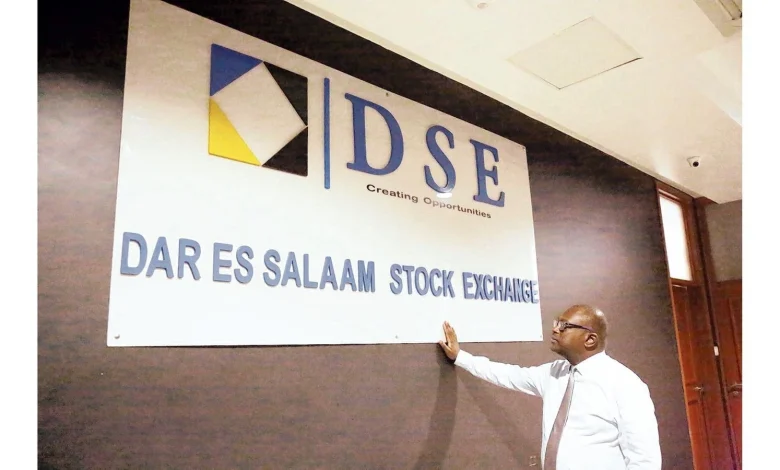
L IQUIDITY is the binding constraint on the development of the Dar es Salaam Stock Exchange (DSE). Market capitalisation and turnover have grown strongly in 2026, but trading remains concentrated in a handful of bank and beverage counters, many listed equities trade infrequently, and secondary bond trading is thin and lumpy.
Investors, in particular pension funds, insurers and collective investment scheme (CIS) managers, find it costly to build or exit positions without moving prices.
Market making addresses this directly. A market maker commits capital to post continuous, two-way quotes in assigned securities, so that a buyer or seller can transact immediately rather than wait for a natural counterparty.
Well-designed programmes narrow bid-ask spreads, add depth at the best price, reduce price impact and support price discovery.
This article sets out the liquidity problem facing the DSE and how the mechanics through which market making improves liquidity, Its principal recommendations are:
• Establish the legal basis. Introduce a licensed Designated Market Maker (DMM) regime under CMSA, with DSE rules setting security-level quoting obligations.
• Pilot, then scale. Begin with a small basket of equities, selected government bonds and listed ETFs/CIS units, rather than the full market.
• Match obligations with incentives. Pair obligations (spread, size, uptime) with real incentives: fee rebates, securities lending and borrowing, repo access and clear tax treatment.
• Measure and enforce. Publish quote-quality metrics monthly, and review appointments against them.
• Treat it as one pillar of a wider liquidity agenda. Market making supplies immediacy, not demand. It should run alongside work on free float, new listings, foreign participation and investor education.
Background: The Liquidity Challenge on the DSE.
The DSE has expanded rapidly. In the second quarter of 2026, total market capitalisation rose 79.11 per cent year on year to 35.175tri/-, and equity turnover rose 227.24 per cent to 496.795bn/-, from 151.813bn/- in the second quarter of 2025.
ETF market capitalisation stood at 185.517bn/-, with ETF transaction value of 11.840bn/-. The Government’s 2026 Foreign Exchange (Amendment) Regulations, which open the market to non-resident investors, are expected to broaden the investor base further.
Aggregate turnover masks structural weaknesses that market making is designed to address:
• Concentration. In the week ended 28 August 2026, the top two banks alone accounted for over 86 per cent of weekly equity turnover. Most other counters trade rarely or in small amounts.
• Thin and lumpy bond trading. On 18 May 2026, bond turnover of 6.31bn/- was recorded in only six deals, while the equity market recorded thousands of deals on the same day. Secondary bond trading contracted notably in the week ended 28 August 2026 relative to the preceding week.
• Reliance on negotiated blocks. Large trades are frequently executed on the block-trade pre-arranged board (for example, a 3,000,000-share block in CRDB on 18 May 2026), which suggests that large orders are difficult to execute on the normal order book without prior arrangement.
ALSO READ: DSE slows as treasury bond demand surges
• Volatile turnover. Weekly equity turnover swings by tens of percentage points from week to week, which signals episodic rather than continuous liquidity.
How market making improves liquidity.
A market maker is an exchange participant, normally a licensed broker-dealer, that undertakes to quote both a buy price (bid) and a sell price (offer) for specified securities during trading hours, in agreed minimum sizes and within agreed maximum spreads.
The market maker earns the spread and, in many programmes, rebates or other benefits, in return for bearing inventory risk and providing immediacy.
Mechanism
How it works Expected benefit on the DSE Continuous two-way quotes Standing bids and offers are visible throughout the session. Investors can trade on demand rather than waiting for a counterparty; fewer “no-trade” days.
Tighter bid-ask spreads
Competition among quoters, plus maximum-spread obligations, compresses the cost of trading. Lower transaction costs; more attractive for institutions and retail users of mobile platforms.
Depth at the best price
Minimum quote sizes ensure meaningful volume is available at the touch.
Price discovery
quote updates incorporate new information quickly.
Fewer stale prices; more reliable valuation for funds, banks and regulators. Inventory absorption Dealers temporarily take the other side of order imbalances. Smoother prices on IPO days, index events and large institutional flows.
Product support Quotes in ETFs, CIS units and bonds create a reliable secondary market. Stronger case for issuers and fund managers to list; better investor exit options. What market making cannot do Market making provides immediacy, not demand.
If free float is very small or the investor base is narrow, a dealer will widen quotes or withdraw to manage inventory risk, and spreads will narrow only modestly.
Programmes therefore work best where they are combined with measures that expand supply of tradable shares, demand from domestic and foreign investors, and the range of listed products. Risks and mitigantsisk Description Mitigant Inventory and capital risk Dealers may be unable to hold inventory in volatile, illiquid names.
Realistic tiering,
SLB access, inventory limits, fast-market exceptions. Few providers A small pool of dealers may concentrate liquidity provision and market power. Open entry, supplemental roles, and foreign participation via local partners.
Gaming and manipulation Quoting only to earn rebates, or manipulating prices to profit from inventory. Minimum fill and size rules, surveillance, sanctions and removal.
Cost without benefit Incentives paid without measurable liquidity gains. Pay-for-performance rebates; independent evaluation against baseline.
Withdrawal in stress Makers may widen or pull quotes in turbulent markets. Defined exceptions with duration limits; post-event review. Dealers may trade ahead of client orders.
Conclusions and recommendations
Market making can improve liquidity on the DSE by supplying continuous quotes, narrowing spreads, adding depth and supporting price discovery, particularly for mid-cap equities, government bonds and listed funds.
International experience shows that programmes succeed when obligations are binding and measured, incentives are real, and the market has enough underlying demand.
The Nigerian experience, with its relaunch after nine years, is a reminder that design and sustained support matter as much as the decision to launch.