Home Affairs’ 1.7tri/- budget sails through
DODOMA: THE National Assembly on Wednesday endorsed the Ministry of Home Affairs’ 1.7tri/- budget for 2024/2025 fiscal year with six priorities that aim at improving the services and performance of the Police Force, Prisons Service, Immigration Service, Fire and Rescue Force, Refugees Service and Community policing.
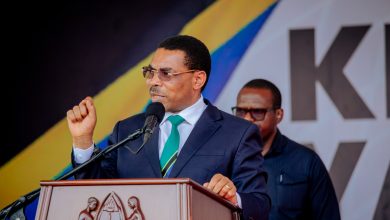
The budget has increased by 418bn/-, from 1.2tri/- that was allocated to the docket in the ending financial year 2023/2024. Presenting the estimates of his budget in the National Assembly, Minister for Home Affairs, Eng Hamad Yussuf Masauni said the first priority for the budget will be to continue with the implementation of the Criminal Justice Commission’s recommendations.
The commission was formed by President Samia Suluhu Hassan purposely to examine and improve the performance of the nation’s criminal justice institutions with a vision of promoting fairness, efficiency, and human rights.
The Minister added that another priority will be to complete and continue with the construction of offices, police stations and houses.
Also, the Ministry plans to purchase modern working equipment such as vehicles, motorcycles, boats and helicopters.
Eng Masauni added that the government through his ministry is planning to implement the safer cities project, mandatory vehicle inspection, strengthen the highway patrol project, strengthen the ICT system for collecting government revenues and ensure the use of clean energy in prisons, refugee camps and all colleges under the Ministry of Home Affairs. He said the Ministry is planning to collect 403bn/- from various sources.
“The Ministry is looking forward to strengthening the ICT system in its offices to ensure proper collection of revenues, this will also involve the purchase of modern equipment,” he noted.
The Minister also pledged before the National Assembly that his ministry will ensure protection of people and their properties through security bodies under its docket and in collaboration with the public.
On the implementation of projects and performance of the Police Force, the Minister told the National Assembly that criminal cases have decreased from 45,485 to 43,146 between July 2023 and April 2024, which is down by 5 percent compared to the same period in 2022/2023.
He said 16,173 out of the reported 43,146 cases were filed to the court, 2655 cases were suspended at police stations, 167 were transferred to other institutions and 24,151 are still under investigation.
“The criminal acts have decreased due to the cooperation between the Police force and the public,” he noted.
He added that between July 2023 and April 2024 a total of 1,463 traffic related incidents were reported with an increase of 180 incidents of 2022/23, which is an increase of 12 percent.
Also, accidents that caused deaths increased from 842 in 2022/23 to 985 in 2023/24 causing deaths of 1,408 people. He said a total of 1289 people perished in road accidents in 2022/23.
On gender-based violence, the minister said the incidents have increased from 21,317 of 2022/23 to 24,535 in 2023/24, which is an increase of 3,218 incidents, which is 13 percent increase. He said the increase is linked to moral decline.
“Most of these incidents involve raping and defilement, a total of 5,865 cases have been filed in the court of law,” he said. On the state of prisons in the country, the Minister said until April 2024 there were a total of 27,461 prisoners and inmates in all prisons in the country.
He said 18,370 are prisoners and 9,091 are inmates. He said Tanzania prisons have the capacity to accommodate a total of 29,902 prisoners. He said in 2019/2020 there was a total of 38,501 prisoners and inmates in the country.
He said the number of prisoners has dropped due to application of alternative punishments and some walking free after being pardoned by the Head of State. Eng. Masauni said so far, a total of 2,675 prisoners are doing community work while serving their suspended sentences.
“The government has saved a total of 3,611,250,000 by applying the suspended sentences, each prisoner spends 5000/- per day” he noted. In the 2024/25, the government has allocated 3.8bn/- for improving the agriculture sector in the prison department.
The fund will be spent on purchasing agricultural machineries, construction of food warehouses and purchase of agriculture inputs.
Moreover, by April, this year, a total of 390m/- was received for the construction of a biogas system at Kimbiji, wazo Hill, for Dar es Salaam and Ngara-Kagera prisons. The construction is expected to be completed by July, 2024.
On Fire and Rescue, the minister said until April, this year, a total of 28 fire and rescue vehicles had been received. He said in the 2024/25 a total of 2.6bn/- has been allocated for the construction of seven fire and rescue stations in Geita, Kagera, Katavi, Manyara, Njombe, Simiyu and Songwe.
Also, 236m/- has been allocated for purchasing plots for fire and rescue officials and 150m/- for repair of 140 fire hydrants in various regions in the country.
On the performance of Immigration department, the minister said from July 2023 to April 2024 at least 1,695,350 foreigners entered the country compared to 1,143,645 of 2023/24.