Why Tanzania’s minerals hold key to 2050 vision
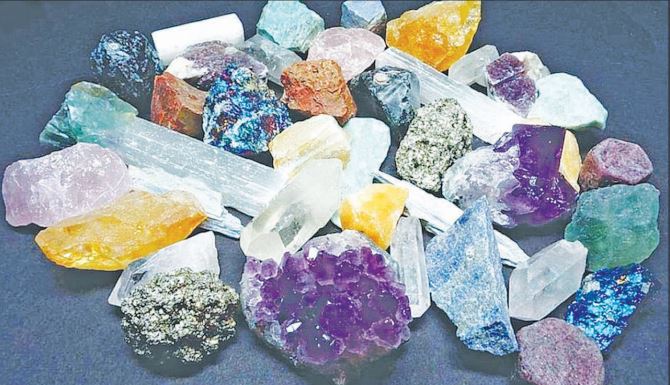
ARUSHA: CRITICAL and strategic minerals found in Tanzania have been identified as some of the most important drivers for the successful implementation of the Tanzania Development Vision (TDV) 2050.
While the phrase “critical minerals” may sound technical, their impact is anything but abstract.
In fact, they are already sitting quietly in your kitchen drawer, powering your phone and charging the battery of the future electric vehicle you may one day drive. Tanzania’s mineral endowment is no secret.
What remains essential, however, is coordinated effort and that is between government and the private sector to ensure these resources are used wisely, responsibly and profitably, while building a strong value chain that benefits Tanzanians first and foremost. Consider your kitchen for a moment.
The spoons, forks, knives and other steel made utensils you use daily are products of minerals, many of which Tanzania possesses in abundance. Step outside the kitchen and into the modern world and the list grows longer.
Mobile phones, computers, batteries, solar panels, electric vehicles and even satellites all rely on minerals extracted from the earth. Many of those minerals originate from countries like Tanzania.
In batteries especially those powering electric vehicles the raw materials are sourced from minerals scattered across different parts of Tanzania.
Nickel, graphite, lithium and rare earth elements play starring roles in this global energy transition.
In short, Tanzania is quietly feeding the engines of global manufacturing, even if it does not always get credit or full value for doing so.
These realities place Tanzania at the centre of what can be described as global mining diplomacy.
The availability of highly demanded critical and strategic minerals positions the country as a strategic economic partner in a world racing toward clean energy, advanced technology and industrial transformation.
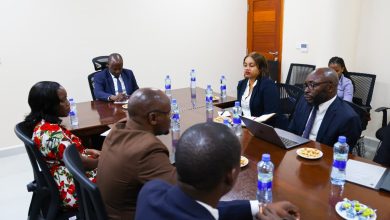
This strategic importance was recently highlighted in Dar es Salaam during a special dialogue on Mining and Economic Diplomacy organised by Azam UTV.
The discussion brought together key stakeholders from Tanzania’s mining sector, alongside senior diplomats, including retired Ambassador Yahya Simba.
The forum provided rare, direct insight into how the mining sector currently operates, where it is heading and what must be done to attract serious industrial investors. It was not a theoretical conversation.
These were practitioners or people who know the sector from the inside speaking candidly about opportunities, challenges and the future of Tanzania’s mineral economy.
In the process, many eyes were opened, including those of viewers who may previously have thought mining was only about digging holes and exporting rocks.
Mining sector consultant Mr Humphrey Simba explained that Tanzania is richly endowed with both critical and strategic minerals that are now in high demand due to the global energy transition and advances in engineering and technology.
“We are fortunate to have important minerals such as graphite, nickel, Rare Earth Elements (REE) and others that are essential in manufacturing modern devices, including electric vehicle batteries,” he said.
As countries across the globe push for cleaner energy solutions, demand for minerals such as graphite and nickel has surged.
ALSO READ: Dar eyes 29tri/- boost via minerals
These minerals are essential for producing batteries, renewable energy technologies and energy storage systems.
According to Mr Simba, Tanzania’s abundance of these minerals places it in a strong position provided the country moves strategically.
He further revealed that Tanzania has made a globally significant discovery of rare earth element deposits at Ngualla in Songwe Region, an area that is now ready for further mining development.
Rare earth elements are crucial for high-tech manufacturing, including electronics, defence equipment and renewable energy technologies. In addition, there is evidence of lithium deposits in Dodoma and Kilimanjaro regions.
However, Mr Simba noted that further exploration drilling is needed to establish the size and viability of these reserves.
Lithium, often referred to as “white gold,” is one of the most sought-after minerals in the global clean energy race.
When asked what Tanzania must do to attract industrial investors who can manufacture finished products locally, Mr Simba was clear: Friendly policies and the removal of unnecessary barriers are essential.
“In the mining sector, it is the final product that generates the most value,” he said.
“If we can attract manufacturers to operate here, Tanzania can benefit far more from its mineral wealth instead of exporting raw materials.”
He pointed to several challenges currently limiting downstream investment, including bureaucratic procedures, tax regimes that may not always be competitive, shortages of skilled labour, infrastructure gaps and energy availability.
These factors, he said, must be addressed if Tanzania wants to move from being a mineral supplier to an industrial player.
Tembo Nickel Company Chief Executive Officer, Mr Benedict Busunzu, reinforced the argument that Tanzania must invest heavily in its critical and strategic minerals sector.
“These minerals are the ones energising the world,” he said.
“If nearly 90 per cent of the required minerals are found in Tanzania, what is stopping us from attracting investors to establish manufacturing plants here such as those producing car batteries?”
Mr Busunzu expressed confidence that if investment challenges were addressed, many international investors would be eager to establish operations in Tanzania.
After all, the country already has the raw materials needed to manufacture many finished products locally.
“Imagine if Tanzania secured battery manufacturing plants,” he said.
“What would stop major companies like Tesla from eventually assembling electric vehicles here, given that we could produce up to 90 per cent of the required raw materials domestically?”
He added that these minerals would play a central role in supporting the implementation of Tanzania Development Vision 2050, particularly by driving industrialisation, job creation and technological advancement.
On the same note, God mwanga Gems Limited Manager, Mr Henry Joseph, revealed that Tanzania holds significant deposits of strategic minerals such as graphite and is currently ranked fifth globally.
“Despite being fifth in the world, I believe that with proper research and investment, Tanzania could rise to at least second place,” he said.
Beyond global rankings, Mr Joseph highlighted the mining sector’s role in addressing unemployment.
Mining employs people across a wide range of skills from geologists and engineers to drivers, technicians and support staff helping to support families and communities.
He also explained that local mining companies contribute to economic growth beyond direct employment. Mines rely heavily on locally sourced goods and services.
“At mining sites, we use explosives, which we purchase locally,” he said.
“This supports and upgrades local explosive suppliers. Even the diesel used by excavators is bought from local traders.”
As a result, mining creates a wide local content value chain, which aligns with government objectives to maximise domestic economic participation.
Former Ambassador Hassan Yahya added a diplomatic dimension to the discussion, noting that strategic minerals play a vital role in international relations.
“Developed countries rely on these minerals for weapons manufacturing, satellite technology and advanced systems,” he said.
“Countries that possess them naturally form strong diplomatic ties with industrialised nations.”
Commenting on Tanzania Development Vision 2050, Ambassador Yahya emphasised that minerals must be used strategically to benefit Tanzanians directly. “Our minerals should not simply be exported,” he said.
“Mechanisms must be put in place to ensure Tanzanians benefit through job creation, industrial growth and the transfer of advanced technology.”
As Tanzania looks toward 2050, one thing is clear: The country’s minerals are no longer just buried assets. They are strategic tools capable of shaping economic growth, strengthening diplomacy and transforming livelihoods. The challenge now is not what Tanzania has underground, but what it chooses to build above it.