What DUCE implementing new curriculum poses in education sector

TANZANIA: IN his heyday, Nelson Rolihlahla Mandela, South African antiapartheid activist and politician who served as the first president of South Africa from 1994 to 1999 once said: “Education is the most powerful weapon which you can use to change the world. The power of education extends beyond the development of skills we need for economic success. It can contribute to nation-building and reconciliation.” He further reminded us that no country can really develop unless its citizens are educated.
His school of thought was that access to a good education is the great engine of personal development.
It is through education that the daughter of a peasant can become a doctor, that the son of a mine worker can become the head of the mine, that a child of farm workers can become the president of a great nation. It is what we make out of what we have, not what we are given, that separates one person from another.
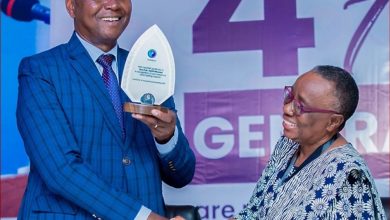
With this in mind, Dar es Salaam University College of Education (DUCE) in Dar es Salaam City, last week had all the rights to host ‘Utafiti Elimu Tanzania 2024 Auditorium with the theme: Implementing the new Curriculum; Climate, Environment and Education; Technology to Strengthen the Education System,” graced by the Minister for Education, Science and Technology, Prof Adolf Mkenda.
Sponsored by partners – the Agha Khan Foundation, British Council, Global Education Evidence Advisory Panel (GEEAP), UKaid, EdTech among others, it was an occasion for the think tanks to share ideas on how to address methods and processes of implementing new curriculum of education Tanzania.
With any new curriculum in implementation, we may find obstacles that vary with the curriculum itself, location, political situation, economic situation, teacher preparation, facilities and plenty other factors, making it more complex to execute.
This comes with the background that education as a human right is enshrined in the Universal Declaration of Human Rights given by the United Nations in 1948. According to this declaration, every person has the right to a good education, and local authorities should do whatever is needed to make sure every child gets a free and good quality education.
Despite this, there are still millions of children out of school – many people and NGOs have made it their mission to educate those who otherwise wouldn’t get a chance to gain an education. In his speech to the participants, Prof Mkenda noted on how the new curriculum will be a powerful driver of development and one of the strongest instruments for reducing poverty and improving health, gender equality, peace and stability in the country.
For example in addressing some gaps in the current system, he cited how a team of experts from the ministry will begin a pilot assessment in some selected schools, to find out how teenage mothers reintroduced in schools are progressing. Elaborating he added: “The team will be responsible to do thorough study of teenage mothers in schools, ask them to register challenges they face after being allowed back to school. “Also, the team will give them a platform to suggest ways to address the setbacks and recommendations taken by the government for amicable means to assist them.” This comes with the observation that teen mothers face many physical, psychological, social and spiritual challenges as they register again for studies in schools, hence, a need for comprehensive analysis of situations, which would fully address their full incorporation in such institutions.
He added that even the teenage mothers who started schooling and left midway will be tracked down to understand the reason(s), why they opted to drop out despite having a second chance to learn.
“Similarly, even those who were invited but did not turn up will be traced in order to find out the reason(s) behind such decisions,” he pointed out.
Equally, the minister reiterated that they are set to come up with a programme that will specifically deal with establishing the root causes of such dropouts among learners in schools.
“We are going to be serious on this, the focus of the government is to ensure that each child has access to school and ensure that they finish it, no need to give room for running away from school, yet there is free education being funded from Pre Primary to Form Six,” said Prof Mkenda.
Citing Geita Region for example, the minister said it is leading in the country with the highest number of school dropouts, with assumptions that it is located in the mining area attracting them to quit studies, which should not be the case.
“We want a professional research so that the ministry work on findings piled by experts and then come up with a long lasting solution,” he added.
On his part, the Vice Chancellor of the University of Dar es Salaam (UDSM) Prof William Anangisye noted that the main objective of the two-day conference was to bring together education researchers and policy makers under one roof. “They have come together to discuss key issues that concern our education and how they can be implemented in order to bring positive changes in the education sector,” he said.
Moreover, he said UDSM which holds important role in shaping minds of next generations will continue to partner with stakeholders to discuss on issues of national interest in the sector of education. “Through collective responsibilities, we can achieve good things essential for education development in the country and we need to align education programs with development agendas,” he said.
Similarly, Development Director at British High Commission Kemi Williams said that time is here for research works to be done in such a way that they are beneficial to people.
She also remarked that with the issue of climate change, that the whole world is facing, require stakeholders to conduct enough researches on how learners can continue with studies in such scenarios. Commenting, DUCE Principal Prof Stephen Maluka disclosed that this year, the institution has conducted 14 research activities and 3 consultancy activities all aimed at supporting the education sector.
It should be noted that implementing fully researched education curriculum provides a roadmap for learners and teachers and helps align educational goals to the latest standards. In addition, an effective curriculum can help foster student engagement, help them understand expectations, and prepare them for future success – whether in further education, career, or life. Reached for a comment, one of the participants, who preferred to remain anonymous, said: “Implementing researched curriculum will allow the students to fully understand the worldMany illiterate people are somewhat like the frog in the well.
They do not know the opportunities available to them outside their homes and workplaces. With education, many of the poor can train in new vocations and contribute to the betterment of society.
“With the help of educational programmes like this we are now implementing, we can help disadvantaged people from taking up arms to become militants. A good education gives people the chance to live a peaceful life where they can earn a good income for themselves and their families. Education also helps solve many other problems facing the poor and disadvantaged.