WALKING THE TALK: BUILDING A PROSPEROUS TANZANIA
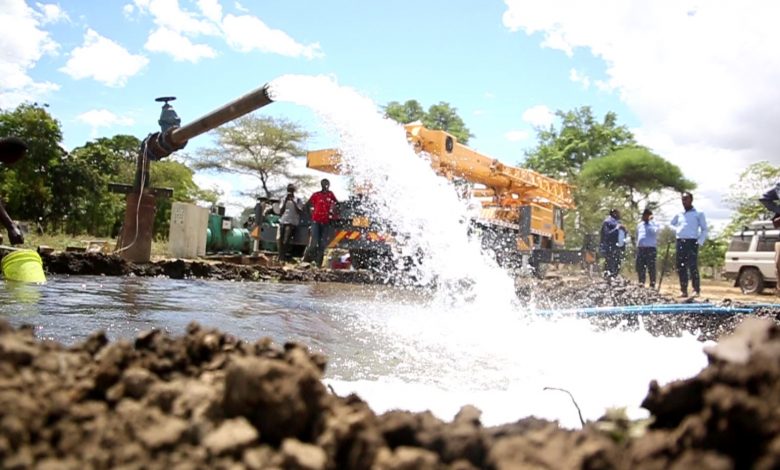
ARUSHA residents are optimistic that water woes will soon be history as the 520bn/- water project in the region nears completion.
The residents are now counting days when their water taps would start running once the multibillion project is completed.
The project in question is being executed by the Arusha Urban Water Supply and Sewerage Authority (AUWSA) as part of government efforts to improve water supply and sanitation services in Arusha Region.
However, even before the project is fully completed, there has been a significant improvement in water supply services in the region.
Richard Mollel, a resident of Sokoni Ward in Arumeru District recounted to ‘this paper’ of how women used to trek long distance in pursuit of the precious commodity before the project came to the city’s rescue.
“Our mothers had to suspend their domestic chores only to look for water,” recalled Mr Mollel.
Elsewhere at Moshono, the city’s bustling area, the number of water bowser trucks roaming around has dropped significantly.
Less than five years ago, the place was a beehive of activity as the trucks moved from one household to the other dispensing the precious commodity.
“Those owning such trucks used to make a kill out of the business, we are very glad that the new water project is slowly reducing such a burden,” quipped Ms Aweda Gwandu, a resident of Mlangarini area at Moshono Ward.
The mother of three wondered how water is supposed to be supplied like any other social service, but had turned out to be the most sought after commodity in the city.
But it’s not all doom and gloom for Arusha city residents as the city’s water authority is currently implementing a 520bn/- project that will see the construction of 56 wells for clean water that will also ensure conservation of the environment in Arusha Region.
The project funded by the Tanzania government in collaboration with the African Development Bank (AfDB) is aimed at providing safe, reliable and sustainable water and sanitation services in Arusha city and thereby, contribute to improvement in health, social well-being and living standards of the beneficiaries.
During her visit at one of the projects number five Booster Pump Station at Chekereni-Mlangarini area in October last year; President Samia Suluhu Hassan commended AUWSA Managing Director Engineer Justine Rujomba for a job well done at the site.
It is projected that some 200 million litres of water will be produced daily against the current demand of 109 million litres, as the project nears completion.
One of the water wells drilled at Kimnyaki village will have a capacity of producing 400, 000 liters per hour.
According to Eng Rujomba, AUWSA is also currently implementing some projects revealing that there was yet another ongoing 6.5bn/- ambitious project that was at the final stages.
He said the project would help the Arusha City to have access to the precious liquid from the current 75 per cent to 100 per cent by 2023.
“Let me appeal to Arusha residents to continue taking care of the water infrastructure and its sources in order to facilitate access to quality water services,” said the AUWSA boss.
He said that if consumers of water take good care of water sources and environmental sanitation, water production will double and match the existing needs.
He clarified that the amount of water in the city of Arusha had increased by 26,000,000 liters per day and that the increase had enabled the improvement of water availability in areas that had water woes.
Some of the areas that will greatly benefit from the project include Moshono, Kiserian, Murrieti, Olasiti, Sombetini, Kwa Moromboo, Olmoti, Sokoni 1, and some areas of Terat.
According to Eng Rujomba, as of July this year, the implementation of multi billion project had reached 90 per cent, where through the implementation of the project, the residents of Arusha had started to benefit from the completed projects.
“As at June 2022, the project had benefited 1,064 citizens by paying them compensation amounting to 5.8bn/- to vacate their areas for the construction of the infrastructure of the said mega project,” he added.
The CCM manifesto directs the government to improve access to clean and safe water to 95 per cent in urban areas and 85 per cent in rural areas by 2025.
According to the ruling party’s manifesto, there has been an increase in the number of people accessing clean and safe water in rural areas from 47 per cent in 2015 to 70.1 per cent in 2020.
In urban areas, the number of people accessing clean and safe water has increased from 74 per cent in 2015 to 85 per cent in 2020.
Overall, the number of households accessing clean water in the country from safe sources has increased to 77 per cent by 2020.
The government has placed much focus in improvement of water provision services as articulated in the Third National Five-Year Development Plan (FYPD III) 2021/2022-2025/2026 with a theme; “Realising Competitiveness and Industrialisation for Human Development.
FYDP III points that water and sanitation are some of the key ingredients for human development. This sector involves the availability and distribution of water and the protection of water sources and resource environment. In this regard, this plan focuses on improving the availability and distribution of water supplies and sanitation services in urban and rural areas, and protection of water sources and resource environment.
Key interventions include to strengthen supply infrastructures for clean and safe water, establish and strengthen the Community Based Water Supply Organisations (CBWSOs) for enhancing sustainability of rural water supply and sanitation services and to promote appropriate technologies for further treatment of effluent and sludge for recycling and re-use purposes.
Other interventions include to construct strategic water reservoirs, promote and support management, development and equitable utilisation of trans- boundary water resources, strengthen conservation and protection programmes of water resources and water sources, strengthen water resources research systems, data collection, processing, storage and dissemination of water statistics and establish programmes and mechanisms for management, monitoring and assessment of water and wastewater quality.
The national plan is consistent with the National Water Policy (NAWAPO) 2002, the Water Sector Development Programme (WSDP 2006-2025), and Regional and International Policy Frameworks such as Africa Water Agenda 2063 and Sustainable Development Goals (SDGs).
All these national and international planning frameworks are designed to meet aspirations of the Tanzania Development Vision 2025 that envisages the country to attain the middle-income country status by year 2025.
This plan aims at improving systems, procedures and structures that will strengthen water resources management; improve access to adequate, safe and clean water and sanitation services, boost institutional capacity and improve working environment; and enhancing Water Sector networks and partnerships.