UNIVERSAL ELECTRICITY ACCESS: Dar Declaration to chart way forward

DAR ES SALAAM: THE African Energy Summit is set to lead heads of state and government toward the adoption of the Dar es Salaam Declaration, a strategic framework aimed at achieving universal electricity access across the continent.
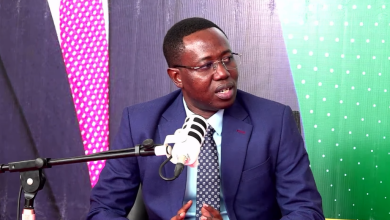
Speaking at a press conference in Dar es Salaam ahead of next week’s summit, Vice- President for Power, Energy, Climate and Green Growth at the African Development Bank (AfDB), Dr Kevin Kariuki said that through the declaration, African leaders will express their commitment to ensuring electricity access for all citizens by 2030.
Dr Kariuki said that following the adoption of the Dar es Salaam Declaration, each African head of state will sign a national compact.
This binding framework will outline specific actions countries will take to achieve universal electricity access in a sustainable manner.
“The Dar es Salaam Declaration will be signed by 54 heads of state. The goal is to deepen this declaration and develop what we call Energy Compacts,” Dr Kariuki said.
The Energy Compacts are built upon five key pillars, including a least-cost energy expansion plan. This plan aims to address issues related to power generation, transmission, distribution and supply in the most efficient manner possible.
Dr Kariuki also underlined the importance of enhancing interconnection to enable African countries to collaborate on large-scale power projects and export electricity, thereby benefiting from economies of scale.
He noted that Tanzania is well-positioned to benefit from these interconnections, particularly due to the Nyerere Hydro Power Project (JNHPP), which is expected to add 2,115 Megawatts to the national grid.
This will strengthen Tanzania’s capacity to export electricity to neighbouring countries.
“Electricity is the lifeline of African economies. We cannot grow our economies in the dark; we need power to drive the industrial transformation we are seeking,” Dr Kariuki stated.
The Energy Compacts also extend beyond grid extension, focusing on enhancing the availability of distributable renewable energy, including solar power.
ALSO READ: Economy soars, poverty fades
Furthermore, the compacts encourage private sector investment in energy projects to reduce reliance on insufficient public funding.
“The public sector alone will never be able to meet the funding requirements of the energy sector,” Dr Kariuki said.
Another key focus of the compacts is improving the viability of power utilities, such as Tanzania’s Electricity Supply Company (TANESCO), to ensure they operate more profitably and efficiently.
The African Energy Summit, scheduled to take place from January 27-28, 2025, at the Julius Nyerere International Convention Centre (JNICC) in Dar es Salaam, is co-organised by the World Bank and the African Development Bank (AfDB).
The summit aims to accelerate electricity connectivity across the continent, targeting the electrification of 300 million people out of the 685 million Africans currently without access to electricity.
The summit, which seeks to address the continent’s energy deficit, will bring together approximately 25 heads of state and over 50 energy and finance ministers from across Africa.
It is supported by the Global Energy Alliance for People and the Planet, the Rockefeller Foundation and Sustainable Energy for All.