TCAA targets 110bn/-to upgrade airport infrastructure
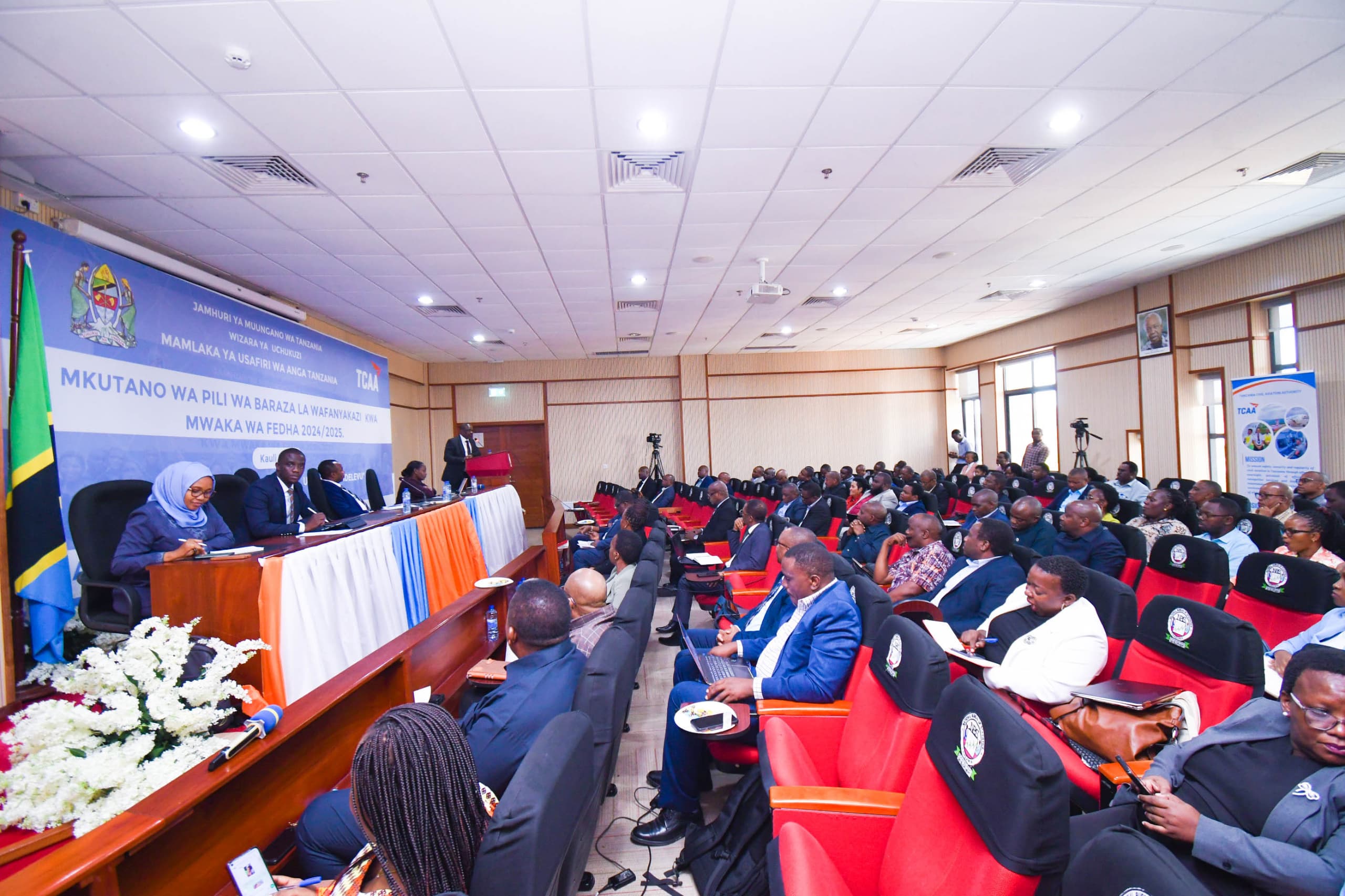
DODOMA: TANZANIA Civil Aviation Authority (TCAA) has set an ambitious revenue collection target of 110bn/- for the 2024/25 financial year to be sourced solely from internal streams.
TCAA Director General, Mr Salim Msangi, revealed in Dodoma today, April 11th, 2025, during the second TCAA’s Workers Council and named the internal streams as navigation and air traffic management services.
“These funds will be used to implement several strategic initiatives aimed at enhancing air traffic control, upgrading navigation equipment at airports and control centres, and reviewing sectoral regulations to ensure continued safety in Tanzania’s airspace,” he said.
Adding, he said the authority is also investing in digital systems to streamline regulatory operations and revenue collection, and conducting research to identify investment opportunities in the aviation sector to attract global players.
According to him, TCAA has allocated 5.8bn/- to support the ongoing construction of a new aviation training college, a project seen as essential to producing the next generation of aviation professionals.
The Authority, he said, has already installed four radar surveillance systems in strategic locations across the country, significantly improving the ability to monitor and secure Tanzania’s airspace.
“Although our Civil Aviation Training Centre (CATC) has played a key role in training aviation professionals, its current infrastructure is outdated and does not meet modern training demands. The construction of a new facility is therefore a top priority and is expected to commence in June this year,” he explained.
Mr Msangi noted that Tanzania’s safety oversight capabilities have improved significantly, with the International Civil Aviation Organization (ICAO) rating rising from 37.8 per cent in 2013 to 67.3 per cent currently. Another ICAO audit is expected soon, and the country anticipates positive results.
In terms of aviation security, Tanzania ranked fourth in Africa following a May 2023 audit by ICAO, scoring 86.98 per cent—a sign of growing confidence in the country’s aviation safety standards, which are also helping to boost tourism.
He further said that improved airport infrastructure and air traffic systems have contributed to the steady increase in both flights and passenger numbers.
“In 2022, post-COVID, we recorded 5,976,493 passengers. We expect this number to exceed 7 million by the end of this year,” he said.
ALSO READ: Dar-based airline to launch international flights from Arusha Airport
He reaffirmed the country’s resilience and preparedness, citing the absence of terror-related incidents in the aviation sector as a testament to the Authority’s effective safety oversight.
Despite the successes, Mr Msangi acknowledged challenges, including a shortage of skilled aviation professionals and the high cost of training due to the need to meet international standards.
Most aviation training is offered abroad, placing a strain on the Authority’s budget.
“We appeal for support, including potential scholarships and partnerships with international institutions, to help build the capacity of our workforce,” he said.
Additionally, TCAA has been urged to work more closely with other stakeholders in the aviation sector to foster healthy competition and enhance overall performance in the country’s airspace management.
The call was made by the Treasury Registrar, Mr Nehemiah Mchechu, during the meeting of the TCAA Council, where he also emphasized the importance of good in driving forward reforms within the sector.
“For the government to succeed in the reforms, the issue of good governance is unavoidable,” Mr Mchechu stressed, adding that reforms are designed to create opportunities for hardworking and committed individuals.
“We, who have been entrusted with the responsibility of overseeing public institutions with a special directive to implement reforms, must not let down our President Samia Suluhu Hassan. We will continue to push forward with the reforms,” he said.
Mr Mchechu commended TCAA for convening the Workers Council meeting, describing it as a key platform for enhancing workplace efficiency and productivity.
He noted that the council is instrumental in strengthening workplace democracy and ensuring inclusive decision-making.
“The culture of Workers Council meetings, which has existed since the 1970s, remains relevant. Without these meetings, decisions would solely be made by management and extended management, which is not ideal,” he noted.