Tanzania registers food security milestone
DAR ES SALAAM: TANZANIA marks 64 years of independence today, a moment that goes beyond celebrating sovereignty to recognise a historic milestone in national food security achieved through decades of agricultural reform.
The abundance enjoyed across the country reflects resilience, determination and deliberate long-term efforts to guarantee every household reliable access to food. The nation now stands poised not only to feed its population but, with time, to support food supply across the African continent and other parts of the world.
Over the years, Tanzania has made remarkable progress, recovering from the scars of colonial rule and tackling post-colonial challenges with a vision for comprehensive economic, social and political liberation. Agriculture has been central to this journey. Government efforts to modernise the sector have resulted in major gains in food security.
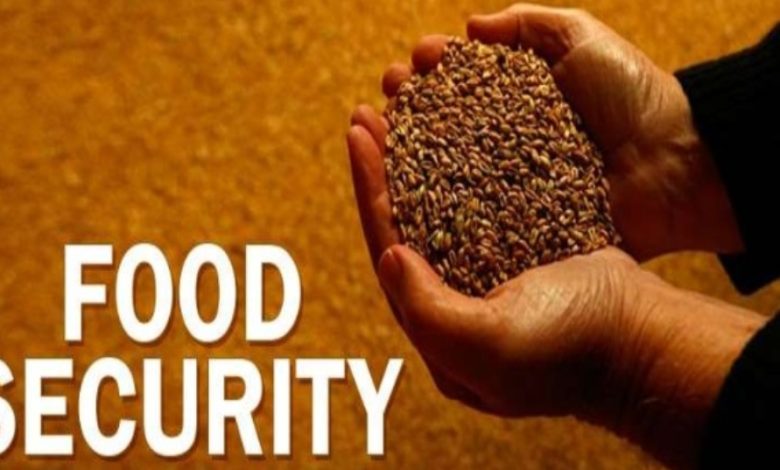
According to the National Bureau of Statistics (NBS), the Food Security Fact Sheet for Mainland Tanzania released in September 2024 shows that during the 2023/24 season the country produced 20.4 million tonnes of food, 19 per cent more than the previous year. This performance brought the food self-sufficiency rate to 124 per cent, with a surplus exceeding four million tonnes. Significant increases were recorded in staple crops, with maize production rising by 24.8 per cent and rice by 36.5 per cent.
Tanzania’s agricultural evolution has not been without difficulties. In the mid1970s, the country encountered severe setbacks. The Ujamaa policies, designed to build a self-reliant economy through villagisation and state-run agriculture, fell short due to weak implementation, insufficient infrastructure and low productivity. Many villages struggled to sustain themselves, leading to widespread food shortages.
Rising reliance on foreign loans coincided with declining export earnings from key cash crops such as coffee, cotton and sisal. By the mid-1980s, Tanzania began transitioning from central planning to a market-oriented economy, undertaking trade liberalisation, privatisation of public enterprises and reducing state control over economic activities. These reforms reshaped the economy, integrating Tanzania into global markets while presenting both opportunities and social costs.
Further reforms strengthened this shift. From 1985, economic liberalisation encouraged private-sector growth. Political reforms followed, most notably the reintroduction of a multiparty system in 1992, opening a new chapter of democracy and inclusiveness.
Tanzania has long demonstrated a strong commitment to food security. Beginning in 1973, the nation undertook “kilimo cha kufa na kupona,” a determined national campaign to boost food production under all circumstances.
During a meeting of the Southern Africa Frontline States in Dar es Salaam in 1975, Botswana’s founding President, Seretse Khama, famously told Mwalimu Julius Nyerere, “Tanzanians are known for supporting suffering Africans beyond your borders, yet at home you also maintain enough food for emergencies.” His observation mirrored Tanzania’s early resolve to safeguard food availability.
Driven by the ambition to secure adequate food supplies for both commercial and domestic needs, particularly during challenging periods, Tanzania introduced measures to strengthen food reserves. The National Food Reserve Agency (NFRA) was created to consolidate food security through large, diversified crop storage.
Following severe droughts in the 1970s, President Nyerere established the National Agricultural Produce Board (NAPB) and later the National Milling Corporation (NMC) to develop grain-storage capacity. Under President Ali Hassan Mwinyi, the Strategic Grain Reserve (SGR) was moved to the Ministry of Agriculture in 1991, accompanied by the creation of the Food Security Department (FSD). President Benjamin Mkapa restructured these efforts in 2002, making SGR an independent unit and renaming the FSD as the National Food Security Department (NFSD).
President Jakaya Kikwete advanced this work by prioritising improvements to storage infrastructure. Under President John Magufuli, storage systems and logistics were modernised significantly. President Samia Suluhu Hassan has continued this trajectory by expanding storage capacity and reinforcing food security mechanisms.
Despite successive administrations, NFRA’s mission has remained consistent. Its reserves have expanded beyond maize to include sorghum and paddy, with future plans to add sunflower and sugar. National reserve capacity has grown from 150,000 metric tonnes (MT) to 360,000 MT, with a target of three million MT by 2030. This expansion enhances the country’s ability to manage emergencies, stabilise food prices and respond to shortages.
NFRA currently operates nine zonal storage facilities positioned in both surplus and deficit areas to facilitate smooth grain redistribution. These zones are equipped with adequate infrastructure and staffing to serve farmers and the wider public, complementing the national storage capacity of 360,000 MT.
According to the National Development Vision 2050, Tanzania aims to become the leading food hub in the region, grounded in sustainability and resilience. The Ministry of Agriculture’s Agricultural Annual Report 2022/2023 indicates that Tanzania has 94.5 million hectares of land, of which 44 million hectares are arable.
ALSO READ: AGRA wins international peace and security award for excellence in food security advocacy
“About 10.8 million hectares, or 24 per cent, is currently under crop production. The nation is also blessed with water bodies suitable for irrigation and other agricultural uses, including rivers, lakes and groundwater sources,” the report states.
These natural endowments, paired with ongoing investment and policy support, place Tanzania on a firm path toward long-term food stability while enabling the nation to play a strategic role in regional and global food markets.