Tanzania off EU high-risk list, unlocking new opportunities
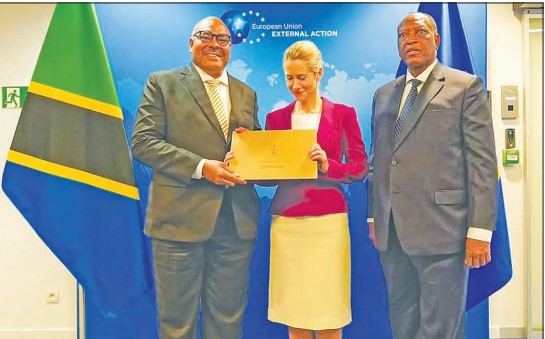
DAR ES SALAAM: THE country has scored a major reputational and economic win after being officially removed from the European Union’s list of high-risk financial jurisdictions, marking a significant milestone in the country’s financial sector reforms and its reintegration into global capital markets.
The delisting comes six months after the Financial Action Task Force (FATF) lifted Tanzania from its grey list, a move that had automatically placed the country on the EU’s financial blacklist. Financial Intelligence Unit (FIU) Commissioner Majaba Magana confirmed the development, saying the government had received formal communication from the European Union earlier last month.
“This is a big news for the country,” he said. “Great efforts were made to be removed from this blacklist which was an automatic consequence of its grey-listing by the FATF.” Tanzania was grey-listed in mid last year following a 2018 mutual evaluation that identified weaknesses in its Anti–Money Laundering (AML) and counterterrorist financing (CFT) framework.
Since then, a coordinated reform push by the government and regulators has worked to align national systems with international standards, efforts that have now paid off.
“This achievement results from Tanzania’s extensive efforts to strengthen anti–money laundering and counter-terrorist financing controls, culminating in its removal from the FATF grey list,” the commissioner said.
Understanding the FATF threshold The FATF operates on a demanding compliance framework comprising 40 standards, of which six are considered core, alongside 11 immediate outcomes that measure effectiveness.
“Violating even one of the six key standards or any of the eleven immediate outcomes is enough to place a country on the FATF greylist…” Mr Magana said.
ALSO READ: Reliable rural transparency in Zanzibar power curtails youth migration – RC Kunenge
The six key standards include the criminalisation of money laundering and terrorist financing, confiscation and provisional measures and the application of preventive measures across financial institutions.
Globally, only three countries: North Korea, Iran and Myanmar remain on the FATF blacklist, underscoring the severity of noncompliance. Alongside Tanzania, five other African countries: Burkina Faso, Mali, Mozambique, Nigeria and South Africa were also removed from the EU high-risk list following their exit from the FATF grey list. In its formal assessment, the European Commission noted that the six countries had strengthened the effectiveness of their AML/CFT regimes and addressed technical deficiencies identified by FATF, concluding that they no longer present strategic risks under EU rules.
Economic payoff begins The practical implications of the delisting are expected to be felt almost immediately. According to the FIU, starting January 29, trade and financial transactions between Tanzania and European countries will become smoother and less costly.
“This opens new avenues for investment, enhances the competitiveness of our products internationally and strengthens Tanzania’s position as a safe business hub in Africa,” Mr Magana said.
Countries placed on the FATF grey list or the EU financial blacklist typically face heightened scrutiny from global banks, higher borrowing costs, reduced foreign investment, reputational damage and operational pressure on domestic lenders. Financial market analyst Kelvin Msangi said removal from the list should ease those pressures, particularly for smaller firms.
“Delisting should reduce friction in EU-linked transfers and trade finance, especially for smaller firms and smaller banks that feel compliance burdens most,” he said.
“I view this as economically important because these labels behave like a hidden ‘risk premium’ on capital flows.” Mr Msangi cited International Monetary Fund estimates linking grey-listing to an average decline in total capital inflows of about 7.6 per cent of GDP and foreign direct investment of roughly 3.0 per cent of GDP. “I interpret delisting as a step that can lower perceived risk and gradually improve financing conditions. Still, I wouldn’t treat delisting as ‘problem solved.’” He cautioned that conservative internal risk models among EU banks could persist.
“I expect many EU banks to keep conservative internal countryrisk models, meaning fees and onboarding rules may not fall uniformly and some de-risking can persist if enforcement outcomes look weak,” Mr Msangi said. Pressure to sustain reforms Economist and investment banker Dr Hildebrand Shayo said inclusion on the high-risk list often signals deeper institutional weaknesses.
“When placed on the high-risk list, it often signals weaknesses in the frameworks governing counterterrorism finance and anti-money laundering,” he said.
“Therefore, removal of these nations signals a stronger commitment to institutional reforms and regulatory compliance, helping to rebuild trust with investors, banks and foreign partners.” While delisting is expected to improve Tanzania’s attractiveness to foreign direct investment, Dr Shayo stressed that it also raises expectations. “Instead, it puts pressure on governments and authorities to continue making changes and to improve them. To prevent relisting,” he said.
ALSO READ: Support for autism human rights issue, not charity – activist
Market players echo that sentiment. Vertex International Securities Advisory and Capital Markets Manager Ahmed Nganya said the move removes a major psychological and regulatory barrier for global investors.
“This will open the door for foreign direct investment as most global investors tend to avoid high risk countries due to fearing EU sanctions which always lead to US sanctions,” he said. “This will also open the doors for exports to the EU region as European businesses will be more willing to deal with Tanzanian businesses now the country is off the list.”
Looking ahead
Tanzania will undergo its next round of FATF evaluation in 2028, a process that will test whether the gains made are durable and deeply embedded across institutions. For now, being off both the FATF grey list and the EU highrisk list adds to a growing list of positives for the economy, lower compliance costs, improved capital access and renewed confidence in Tanzania as a regional business and investment hub.
As regulators turn from reform to enforcement, the challenge will be ensuring that the systems that earned delisting continue to function effectively long after the spotlight has moved on.