Tanzania celebrates progress in health sector
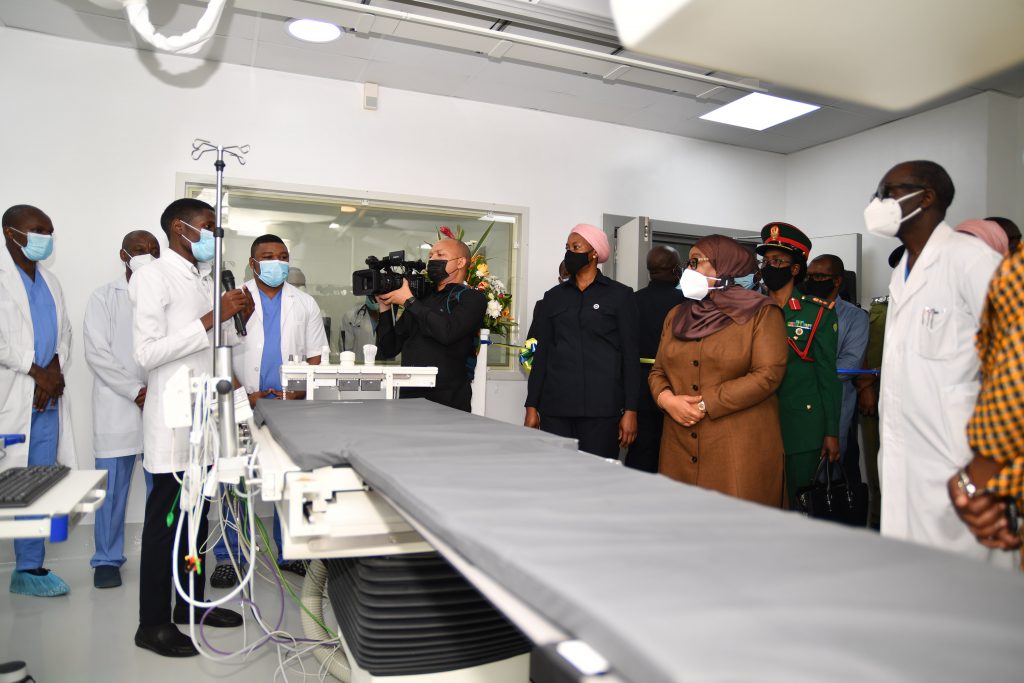
DAR ES SALAAM: TANZANIA is celebrating 63 years of independence today with remarkable achievements in health care services resulted from the massive investment undertaken by the government.
The country’s health sector has transformed significantly in the past 63 years following the government commitment to ensure that all important services, including routine, specialised and super specialised services are not only available in the country but are also brought closer to the people.
To realise its goal, the government invested heavily in infrastructure, medical equipment and supplies as well as training of medical personnel, a move that has strengthened the country’s position as a healthcare hub for medical tourism.
Before independence, people used traditional medicines to treat and prevent themselves from various diseases before the introduction of western medicines. The western health services were dominated with inequalities and were limited, denying majority of citizens important health care services.
Before independence, the country had a total of 1,343 hospitals and dispensaries which had 18,832 bed capacity.
Until 1960, there were only 12 large hospitals with 3,046 bed capacity. Of the hospitals seven were owned by the government, four by religious institutions and one was a private facility.
The hospitals were located in various areas in the country, including Dar es Salaam, Tanga, Moshi, Peramiho, Mwanza, Tabora, Morogoro, Bumbuli, Ifakara Dodoma, Ndanda and Sumve. The bed ratio was one bed in every 1000 people (1:1000).
After Tanzania attained independence, the late father of the nation Mwalimu Julius Nyerere directed more efforts in fighting three enemies, namely poverty, ignorance and disease.
His successors continued the fight to realise the dream of accessible healthcare by implementing effective health policies and fostering cooperation between religious institutions, private organisations, development stakeholders and citizens.
The efforts made by various government phases over the 63 years since independence have significantly transformed the health sector. The number of health centres has risen to 8,537, compared to just 1,343 in 1960.
According to the Ministry of Health, this represents an increase of 84.26 per cent, with 64 per cent of these centres owned by the government, 9 per cent by religious institutions and 27 per cent by private institutions. The health centre network has expanded, bringing services closer to the people.
Currently, there are 7,242 dispensaries, 926 health centres, 178 district hospitals and 151 other hospitals across the country. Tanzania also boasts 28 specialised hospitals at the regional level, six zonal hospitals, five hospitals with specialised services and one national hospital—Muhimbili National Hospital.
According to the ministry, all health facilities combined have a total of 90,488 beds, representing an increase of 71,656 beds or 79.18 per cent. The report also indicates that the ratio of health centres to population is now one health centre for every 6,751.5 people (1: 6,751.5), a significant improvement from the pre-independence ratio of 1: 40,000 to 50,000.
This success highlights Tanzania’s attainment of the United Nations’ goals for the availability of health services, taking into account both population and geographical factors.
The hospital bed ratio has also improved, now standing at one bed per 637 people (1:637), compared to 1: 1,000 before independence. The government continues to allocate more resources to enhance health services, further transforming the healthcare system in the country.
In addition, Tanzania has made significant strides in increasing the availability of modern diagnostic equipment. The number of MRI machines has risen from 7 to 13, CT-scan machines from 12 to 45, Digital X-ray machines from 147 to 346, Ultrasound machines from 476 to 668, Echocardiogram machines from 95 to 102, and Cathlab facilities from 1 to 4.
ALSO READ: Are adolescent reproductive health services friendly in TZ?
The introduction of a PET scan machine, previously unavailable, marks another major achievement in diagnostic capabilities.
A landmark moment came in 2023 when the National Assembly unanimously endorsed the Universal Health Insurance Bill, aimed at providing widespread access to healthcare services through a comprehensive health insurance system.
After five years of deliberations, the bill was signed into law by President Samia Suluhu Hassan on December 5, 2023. The Universal Health Coverage (UHC) scheme, which began operations in August 2024, aims to cover 15 million people, or 25 per cent of the population in its first year. This scheme will provide relief, especially to the most vulnerable citizens, by reducing the financial burden of medical bills.
Thanks to the government’s significant investment over the past 63 years, Tanzanians now have access to affordable specialised and super-specialised services. Previously, citizens had to travel abroad for complex treatments such as kidney transplants, cochlear implants, bone marrow transplants and interventional radiology services. These services are now available at Muhimbili National Hospital.
The availability of such specialised services has also attracted international patients, contributing to medical tourism. The number of foreign patients has increased from 5,705 in 2022 to 7,843 in 2024.
Tanzania has made notable progress in cardiovascular services through the investment in advanced equipment at the Jakaya Kikwete Cardiac Institute (JKCI). The institute now handles complex cases that were previously referred abroad.
It serves patients from across mainland Tanzania and Zanzibar, as well as from neighbouring countries such as the Democratic Republic of Congo (DRC), Comoros, Uganda, Kenya, Malawi, Rwanda and Burundi.
The government has also made substantial investments in the Ocean Road Cancer Institute (ORCI), installing modern equipment for cancer diagnosis and treatment. The ORCI now provides chemotherapy to up to 300 patients daily. Medicines for the leading types of cancer are also available 100 per cent of the time.
Meanwhile, the Muhimbili Orthopaedic Institute (MOI) continues to offer specialised services using state-of-the-art equipment to provide the highest quality care to patients.