Smile Train commits to strengthening cleft programmes in Tanzania

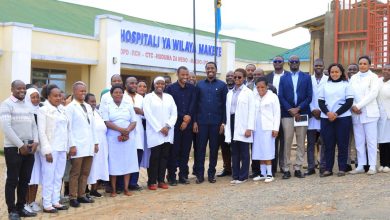
Dar es Salaam: World’s largest cleft Charity, Smile Train hosted a Partners Forum in Tanzania in efforts to strengthen cleft programs in the country.
The forum engaged stakeholders including surgeons, nurses, anaesthesia professionals, surgical societies, government representatives, and cleft-affected individuals to discuss innovative and sustainable approaches to comprehensive cleft care in the country.
Speaking during the one-day event, Smile Train Vice-President and Regional Director for Africa Ms Nkeiruka Obi acknowledged the strides achieved in Tanzania to strengthen its healthcare system through investment in infrastructure and capacity enhancement of healthcare personnel.
“Since 2006, we have transformed over 15,000 lives through safe and quality cleft surgeries and comprehensive cleft care through our partnership with over 15 hospitals, most of which are government facilities. Through strategic collaborations and investments in innovative solar surgery systems, our partners can attest to reduced costs in fuel for the generators, and more importantly, they can continue to operate uninterrupted, saving more lives,” said Ms Obi.
She added, “However, infrastructure alone is not enough. That is why we have trained over 1,000 dedicated medical professionals in critical areas such as nursing, AHA protocols, SAFE training, nutrition, and Team Cleft care—empowering them with the skills and knowledge to deliver world-class treatment, where it is needed most.”
ALSO READ: Doctors tout support to children with cleft lip
In his opening remarks, President of the Medical Association of Tanzania Dr. Mugisha Nkoronko acknowledged the support of Smile Train, noting that the government’s nutrition programs continue to contribute to maternal and child health saying. “Smile Train joins the efforts of the President of the United Republic of Tanzania Her Excellency Dr. Samia Suluhu Hassan, in growing cleft programs in Tanzania.
“Malnutrition not only delays surgery, but it also increases risks during anesthesia, impedes recovery, and places an additional burden on already strained healthcare systems. Tanzania has implemented key programs to combat malnutrition.”
Dr. Mugisha added that the country is in the process of reviewing their current National Surgical, Obstetric and Anaesthesia Plan (NSOAP) and rewriting the second plan, which is a roadmap for equitable and sustainable surgical care across the country. He called for collaboration to enhance quality cleft care, saying, “Cleft care requires collaboration across sectors, health, education, nutrition, social welfare, and across borders. Together, we must ensure that every child born with a cleft in Tanzania has access to timely, safe surgery and the support they need to thrive in life.”
As part of Smile Train’s commitment to supporting high-quality, locally led cleft care around the world, the organization recently established the state-of-the-art Cleft Leadership Center (CLC) at the Komfo Anokye Teaching Hospital (KATH) in Kumasi, Ghana.
The nearly 30-thousand square foot building makes it the largest cleft care center on the continent. As the latest addition to Smile Train’s global network of Cleft Leadership Centers, it promises to serve as a beacon of hope for thousands of children and families in need, enhancing capacity building and research in cleft care across sub-Saharan Africa.
Smile Train empowers local medical professionals with training, funding, and resources to provide free cleft surgery and comprehensive cleft care to children globally.
It strives to advance a sustainable solution and scalable global health model for cleft treatment, drastically improving children’s lives, including their ability to eat, breathe, speak, and ultimately thrive.