Ruvu basin project drives economic growth, water security
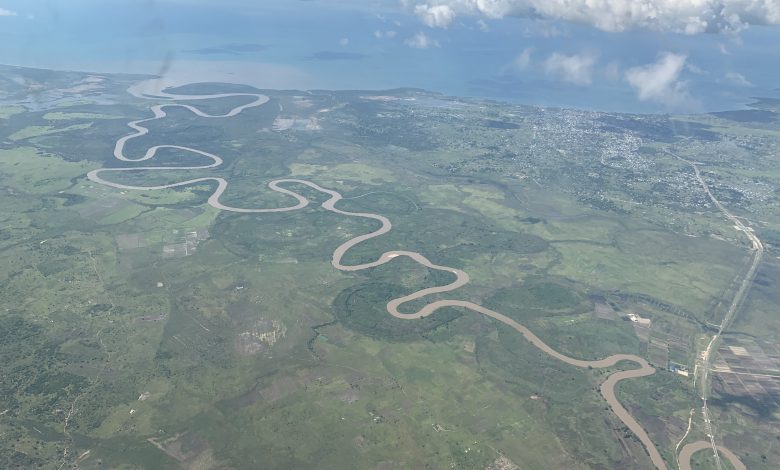
RUVU: IMPROVED water user management is set to unlock new economic opportunities for thousands of farmers and rural communities, as a multi-million-dollar project targets sustainable water use, climate resilience and livelihood diversification in the Ruvu sub-basin.
For farmers in the Ngerengere catchment in Morogoro, reliable access to water is the foundation of productivity, income generation and long-term economic security.
Better water governance will allow communities to expand climate-smart agriculture, invest in beekeeping and fish farming and reduce losses caused by drought and environmental degradation.
It is against this backdrop that a 1.94 million US dollar investment by Coca-Cola through its Africa Water Stewardship Initiative has been launched to restore the Ruvu Basin, a vital water source serving Dar es Salaam and sustaining farms, businesses and communities across eastern Tanzania.
The initiative, known as Nature-based Solutions for Catchment Restoration and Water Replenishment in the Ruvu Sub-Basin (NbS4Water-Ruvu), aims to restore ecosystems while improving water availability and supporting livelihoods.
The four-year project is being implemented by the International Union for Conservation of Nature (IUCN) in partnership with the Global Water Challenge (GWC) and the Wami-Ruvu Basin Water Board (WRBWB), alongside local government authorities.
Focusing on the Ngerengere catchment, the project targets a critical source feeding the Ruvu River, which sustains millions of residents and key sectors such as agriculture, manufacturing and domestic water supply.
IUCN Tanzania Country Representative Mr Charles Oluchina said during the launch in Morogoro that the project is designed to deliver both environmental and economic transformation.
“This initiative is aimed at restoring the Ruvu basin while improving water security and community livelihoods,” he said.
The project promotes naturebased solutions, including tree planting, restoration of degraded land, improved land-use practices and protection of water sources. These interventions are expected to restore at least 3,000 hectares of degraded land and replenish over 584 million litres of water, improving availability across the basin.
At least 2,000 farmers are expected to adopt climate-resilient practices, increasing yields while conserving water and protecting soil health. The project also promotes alternative livelihoods such as beekeeping, fish farming and fodder production, generating income while reducing pressure on ecosystems.
According to Water User Associations (WUAs), the project will play a central role in transforming water management. Seven WUAs will be strengthened in Integrated Water Resources Management (IWRM), equipping them to manage resources effectively, resolve conflicts and ensure equitable distribution.
By empowering these community-based institutions, the initiative ensures that benefits extend beyond the project’s lifespan, creating a sustainable model for water governance and economic development.
WUA member and a farmer Ms Maria Kionga Ngissa said the project will bring tangible benefits.
“For years, we have struggled with unpredictable water supply. During the dry season, irrigation becomes a challenge and our crops suffer.
“This project gives us hope that water will be managed better, that we can farm consistently and that our families will have reliable access to clean water,” she said.
Ms Ngissa stressed that community involvement is critical. “We know the river and we know how to protect it,” she said.
GWC Senior Water Stewardship Director Mr Malick Keita said the challenges are complex and interconnected.
“Key challenges include weak governance, deforestation, unsustainable water use, soil erosion, pollution and climate change,” he said.
Addressing these issues requires integrated solutions combining environmental restoration with community engagement.
“This is about strengthening a shared commitment to protecting one of Tanzania’s most vital water systems. It is a partnership built on trust, collaboration and a shared vision for sustainable water management,” he said.
Mr Keita added that around 5,000 people, 60 per cent men and 40 per cent women are expected to benefit directly, highlighting the project’s inclusive approach.
The initiative responds to growing pressure on the Ruvu basin from declining water levels caused by deforestation, unsustainable farming, unregulated mining and uncontrolled livestock grazing.
The WRBWB representative, Mr Juvenalis Tarimo, noted that the Ngerengere catchment contributes more than 70 per cent of the area’s water supply, making it vital for agriculture and the wider economy. However, human activities near water sources continue to degrade the catchment, threatening long-term security.
The project includes practical interventions such as establishing boundaries around water sources, constructing livestock watering troughs and promoting sustainable land-use practices. Community awareness campaigns will encourage responsible water use and conservation.
Coca-Cola’s East and Central Africa Vice-president for Franchise Operations, Alfred Olajide, said the project reflects the urgency of addressing global water challenges.
“The world is facing growing water insecurity, with demand for safe water exceeding supply in many areas. This project is not just an investment in water, but in people, livelihoods and our shared future,” he said.
He stressed that partnerships are critical in tackling water scarcity, noting that collaboration between governments, businesses and communities is essential for long-term impact.
Similarly, Coca-Cola Kwanza Managing Director David Chait reaffirmed the company’s commitment to protecting water resources and supporting local communities.
Globally, water scarcity is among the most pressing development challenges, driven by climate change, population growth and increasing demand. In Tanzania, the situation is particularly critical in fast-growing urban centres such as Dar es Salaam, which rely heavily on the Ruvu River.
The NbS4Water-Ruvu project represents more than just an environmental intervention; it is a strategic investment in economic resilience. By improving water availability, it is expected to enhance agricultural productivity, support industrial operations and ensure a stable water supply for millions of people.
IUCN Project Coordinator Mr Doyi Mazenzele said the restoration of ecosystems will contribute to biodiversity conservation, improved soil health and reduced climate risks, creating multiple co-benefits for communities.
He added that the initiative is designed for long-term impact. By strengthening governance systems, building local capacity and promoting sustainable practices, it aims to ensure gains are maintained after the project ends.
“For farmers in the Ngerengere catchment and beyond, the success of this project could mark a turning point, one where improved water management translates into higher incomes, greater resilience and better livelihoods,” Mr Mazenzele said.
The Ruvu basin, as a lifeline for millions, stands at the centre of Tanzania’s water future. Its restoration is not only an environmental priority but also an economic necessity. Ultimately, the NbS4Water-Ruvu initiative highlights a simple but powerful reality: sustainable water management is not just about conserving resources, it is about creating opportunities, driving growth and securing the future for generations to come.