Regulatory overhaul gives small-scale miners new protection
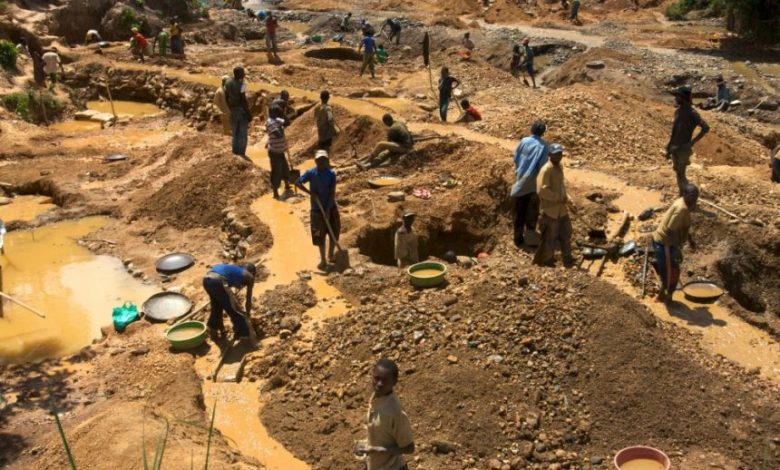
GEITA: SMALL-scale miners across Tanzania will operate under stronger legal protection, following a sweeping regulatory overhaul that tightens control over mining licences, foreign participation and revenue-sharing arrangements.
Addressing residents in Nyang’hwale District, Geita Region yesterday, Minister for Minerals Mr Anthony Mavunde said the reforms are designed to correct long-standing abuses and ensure that Tanzanians, especially small-scale miners, benefit more fairly from the country’s mineral wealth.
He noted that the mining sector has now contributed 1tri/- to government revenue, with about 40 per cent coming from small scale miners.
Tanzania is among Africa’s top five gold producers and, since the Bank of Tanzania (BoT) began buying gold directly on October 1st last year, the central bank has already acquired 15 tonnes, moving the country into the continent’s top ten gold-holding central banks.
“These gains have been driven by miners in places like Nyang’hwale,” he said.
“Our responsibility now is to make sure the rules protect the people doing the hard work, not only those whose names appear on licences,” he said.
Local leaders, including Nyang’hwale Member of Parliament Mr Hussein Amar and District Commissioner Grace Kingalame, praised President Samia Suluhu Hassan for continuing to allocate mining blocks to small-scale miners and urged the minister to cancel dormant licences that have been held for years without development.
The MP said small-scale miners in Nyang’hwale alone have contributed more than 20bn/- to national revenue. From the miners’ side, regional small-scale miners’ secretary Misana Nyabange raised concerns over the sharp rise in the cost of cyanide, a key input for gold processing.
The price of a 50-kilogramme container has climbed from about 650,000/- to between 1m/- and 1.2m/-, squeezing margins for miners who already face high fuel and equipment costs.
Youth representative Hamisi Mohammed, National Chairperson of Youth Small Scale Miners, told the minister that young people form the bulk of the workforce in the small-scale gold sector and are the “engine” of production, yet many remain stuck as casual labourers.
He said more than 2,000 youths are ready to join the government’s Mining for a Brighter Tomorrow (MBT) programme and called for fairer sharing of proceeds between licence holders and young miners, as well as dedicated small blocks for youth groups.
ALSO READ: Small-scale miners in Simiyu seek affordable loans
He also highlighted a recurring problem: once a pit becomes productive, some licence owners evict local youths and bring in foreign investors. In his response, Mr Mavunde said these concerns were precisely why the government had amended the Mining Act and its regulations.
The new protections are contained in the Mining (Mineral Rights) (Amendment) Regulations, 2025, made under section 112 of the Mining Act (Cap. 123), which introduce, among others, a new regulation 5A on permission to operate mining blocks within a primary mining licence area.
“Situations where people are allowed to dig, discover the ore and then pushed out must come to an end,” he said.
“That is what these changes are about, giving small-scale miners clear rights.” Under the new framework, it is now prohibited for a licence holder to casually invite small-scale miners into a licence area without a formal arrangement.
If a licence owner wishes to work with local pit operators, there must be a written contract, and that contract must be submitted to the Mining Commission for approval and registration.
Licence holders are also required to keep a register of all people operating in small-scale blocks within their licence area, with details as prescribed by the Mining Commission.
If a licence holder later wants to remove those miners whether to bring in a larger investor or change operations they will be obliged to compensate the miners for their costs, and the existing pit operators must be given priority in any new investment arrangement.
Mr Mavunde also announced that “renting out” Primary Mining Licences (PMLs) is illegal.
Licences are issued for mining, not for speculative subletting, he said, adding that all arrangements between licence holders and pit owners must be transparent and recorded with the Resident Mining Office.
Nationally, the ministry has already cancelled licences covering 741,000 acres that were being hoarded without development and directed officials to review the 191 exploration licences (PLs) in the wider Geita–Mbogwe area with a view to revoking dormant ones and reallocating the ground to productive small-scale miners, especially youth groups.