

Public–private partnership drives Tanzania toward greater sugar self-reliance
DAR ES SALAAM: TANZANIA’S journey toward achieving full sugar self-sufficiency by 2025 continues to gain momentum as the country expands its industrial capacity and strengthens public–private partnerships.
The Government, through the Office of the Treasury Registrar (OTR), holds minority shares in 56 companies, including Kilombero Sugar Company, playing a key role in supporting the growth and development of the sugar sector.
Going by the Sugar Board of Tanzania (SBT), national sugar production for the 2024/2025 season stands at 453,382.56 tonnes, against a national demand of 650,000 tonnes, including buffer stock.
Among the leading contributors is Kilombero Sugar Company, where the government is a shareholder, producing 105,310 tonnes—the second-highest output after Kagera Sugar with 140,484.62 tonnes.
Other contributors include TPC with 112,855 tonnes, Mtibwa with 51,082.89 tonnes, Mkulazi with 19,124.01 tonnes, Bagamoyo with 16,556.89 tonnes and Manyara Sugar with 7,969.15 tonnes.
Despite the progress made, production still falls short of national demand.
This gap underscores the importance of new investments, particularly the expansion of Kilombero’s K4 factory, a transformative project expected to more than double the company’s production capacity.
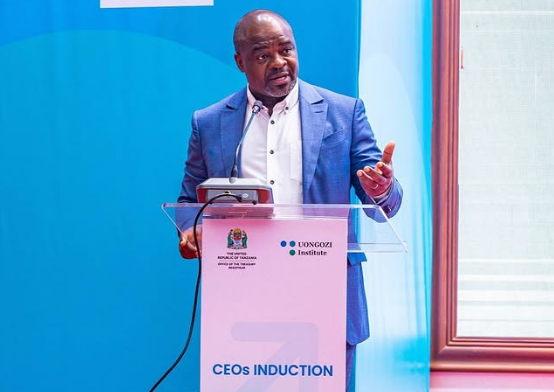
This week, the Treasury Registrar’s Corner sat down with Treasury Registrar Mr Nehemiah Mchechu to explore the government’s perspective on the K4 expansion project, its implementation, financing structure and the long-term impact on the nation’s sugar value chain.
Q1: What is the background of Kilombero Sugar Company and why is the K4 expansion necessary?
Answer: Kilombero Sugar Company was established in 1962 and privatised in 1998, with Illovo Sugar Africa acquiring 75 per cent of the shares while the government retained 25 per cent.
The company currently operates two factories—K1 and K2—with a combined capacity of 126,000 tonnes of sugar per year.
Demand continues to rise, while farmers in the Kilombero basin are producing more cane than the factories can process. The K4 expansion is therefore essential to support Tanzania’s target of full sugar self-sufficiency by 2025.
Q2: How does the government, as a shareholder, view the K4 expansion?
Answer: The government sees the expansion as a strategic and transformative investment aligned with Tanzania’s Development Vision 2025.
It reflects the priorities of the Sixth-Phase Government under President Dr Samia Suluhu Hassan—strengthening production, boosting industrial output and enhancing public entities.
With 25 per cent shareholding, the government has closely collaborated with Illovo Sugar Africa to ensure timely, quality implementation. Once completed, K4 will raise Kilombero’s output from 126,000 to 271,000 tonnes per season.
Q3: What is the scope and implementation structure of the project?
Answer: The K4 project follows the Engineering, Procurement and Consultancy (EPC) model and is divided into three components:
-Offshore manufacturing of machinery in Spain, India, Italy, South Africa and China;
-Supply and shipment of equipment to the site;
-On-site construction and installation.
The expanded factory will crush 420 tonnes of cane per hour and produce 144,000 tonnes annually, increasing total Kilombero output to 271,000 tonnes.
As of September 2025, implementation stood at 99.8 per cent.
Q4: How is the K4 project financedand what progress has been made so far? ?
Answer: The project costs 292 million US dollars (744bn/-), with 250bn/- financed through a commercial syndicated loan led by NMB Bank Plc in partnership with NBC, Stanbic, Citibank and Standard Chartered Bank, while 494bn/- comes from shareholders.
As of July 2024, 194.36 million US dollars (471.8bn/-) had been paid to the contractor.
Q5: How is Kilombero Sugar Company preparing and supporting farmers ahead of increased production?
Answer: The company has strengthened its farmer support systems by expanding staff from 9 to 45, including six farmer service managers, 21 extension officers, ICT and GIS specialists and a farmer-efficiency manager.
A special fund has been set up to rehabilitate feeder roads, and regular engagement with AMCOS has been enhanced. Cane supply is expected to rise from 600,000 tonnes to 1.5 million tonnes per season.
Q6: What technological upgrades have been introduced to ensure fairness and efficiency in operations??
Answer: Kilombero has installed Near Infrared (NIR) technology to eliminate human interference in sucrose testing. This ensures transparent, accurate and efficient payments to farmers, building trust across the value chain.
Q7: What is the government’s message to stakeholders in the sugar
industry regarding the Kilombero K4 expansion??
Answer: The government urges farmers, investors, financial institutions and development partners to continue supporting efforts to increase domestic sugar production.
ALSO READ: PPPs: Leveraging private investment for development
The K4 project reflects Tanzania’s stable and competitive environment for investment, especially through public–private partnerships that create jobs, boost revenue and unlock new economic opportunities.
Q8: What economic and social benefits will K4 bring to Tanzania??
Answer: Key benefits include reducing sugar imports and saving 70 million US dollars annually; increasing production from 126,000 to 271,000 tonnes; doubling the number of farmers from 8,000 to 16,000; raising farmers’ income from 75bn/- to 165bn/-; increasing government revenue from 54bn/- to 150bn/- by 2028; expanding the company’s economic contribution from 340bn/- to 750bn/-; creating about 2,000 jobs; generating 20 MW of electricity from bagasse (with 10 MW to be supplied to TANESCO); and increasing Extra Neutral Alcohol output from 12 million to 16 million litres per season.
Q9: What does the K4 expansion demonstrate about public–private partnerships and Tanzania’s
sugar sector??
Answer: The project illustrates how strong partnerships can accelerate industrial, economic and social transformation.
As Tanzania intensifies efforts to close the national sugar gap, the government remains committed to ensuring that strategic investments like K4 deliver maximum impact while strengthening the broader economy.
With continued collaboration, transparency and good governance, Tanzania is building a resilient and sustainable sugar sector powered by local resources.




Mitandao ya kijamii ni fursa yakukuza uchumi wako. Kipaji chako ni bidhaa yako mtandaoni. Mawasiliano ni fursa.
Epuka kujiunga au kushiriki kwenye makundi ya mtandaoni yanayochochea vurugu. Ni kosa kwa mujibu wa sharia.