Pro-growth budget plan unveiled
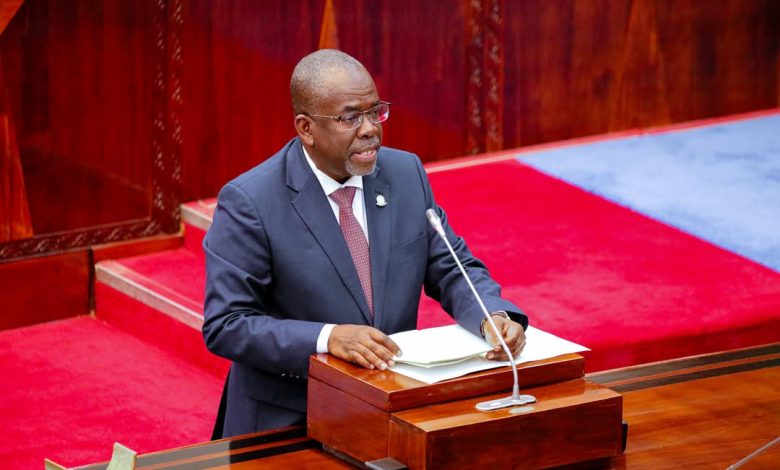
DODOMA: THE government plans to increase spending by 9.75 per cent in the coming fiscal year to boost growth and safeguard hard-won macroeconomic gains achieved over the last decade.
Expenditure for the 2026/27 year is projected at 61.9tri/-, up from 56.4tri/-, Finance Minister Ambassador Khamis Mussa Omar told lawmakers in Parliament yesterday as he unveiled budget guidelines for the forthcoming fiscal year.
The budget is part of a broader 204 trillion-shilling medium-term plan through 2029 aimed at achieving the nation’s “Vision 2050” development goals.
He said the budget guidelines are designed to provide a predictable, credible and results-oriented framework for government planning and expenditure.
The guidelines have also taken into account the CCM Election Manifesto of 2025 as well as regional and international commitments, with the objective of providing clear and credible fiscal policy direction.
He noted that the guidelines, prepared in line with the Budget Act, give the National Assembly a central role in shaping national priorities to ensure they reflect citizens’ expectations and pressing development needs.
The minister stressed Tanzania’s improving economic fundamentals, with GDP growth projected at 5.9 per cent in 2025, rising to 6.3 per cent in 2026 and averaging 6.9 per cent over the medium term.
Inflation has remained within the target range, the shilling has strengthened against major currencies, exports and tourism earnings have increased, and private sector credit has expanded significantly.
“Honourable Chairperson, inflation averaged 3.4 per cent during the period July to November 2025, compared to 3.1 per cent during the same period in 2024,” he said.
The increase was mainly due to reduced domestic supply of food commodities following increased exports of grains to neighbouring countries.
Nevertheless, inflation remains within the national target range of 3.0–5.0 per cent, the East African Community (EAC) ceiling of 8.0 per cent, and the Southern African Development Community (SADC) target range of 3.0–7.0 per cent.
Inflation is expected to remain within target over the medium term. Despite global geopolitical tensions and post-election uncertainties, the government remains confident in the economy’s resilience, supported by prudent fiscal and monetary policies.
He said the external sector continued to improve despite global challenges. During July to November 2025, the deficit in the balance of trade in goods, services and income transfers declined to 433.1 million US dollars, compared to 632.0 million US dollars in the corresponding period of 2024.
ALSO READ: Ministries to divulge budget implementation plans
This improvement was driven by increased exports of goods and services, particularly tourism and non-traditional exports, alongside a slower pace of imports. Growth of credit to the private sector reached 18.1 per cent between January and November 2025, compared to 15.3 per cent in the same period of 2024, reflecting accommodative monetary policy.
Non-performing loans declined to 3.1 per cent in November 2025 from 3.6 per cent in 2024, indicating continued improvement in the quality of banking sector assets.
Amb Omar said that as of November 2025, government debt stood at 109.01tri/-, compared to 100.35tri/- in the same period of 2024, an increase of 8.6 per cent, largely due to disbursements of previously contracted loans to finance development projects.
A debt sustainability analysis conducted in October 2025 confirmed that public debt remains sustainable in the short, medium and long term.
He noted that in FY 2025/26, the government expects to collect and spend 56,490.3bn/-, with revenue collection reaching 98.2 per cent of the target between July and November 2025. Budget execution also remained strong, with deficit financing largely aligned with planned borrowing.
The minister said preliminary analysis indicates potential risks arising from changes in development partners’ policies, including the postponement of EU budget support and suspension of Swedish education programme funding.
In response, the government will intensify domestic revenue mobilisation, rationalise expenditure and prioritise essential obligations such as salaries, public debt service and social services.
Amb Omar said over the medium term, total government revenue and expenditure are projected at 204,087.7bn/- , with an annual average of 68,029.2bn/-.
The FY 2026/27 budget is estimated at 61,934.2bn/-, financed through improved revenue mobilisation and prudent borrowing in line with the Medium-Term Debt Management Strategy.
He said the government will prioritise flagship infrastructure projects, job creation especially for youth food security, industrialisation and expanded access to social services such as health, education and water.
Spending will also focus on salaries, debt servicing and clearing arrears, while borrowing will remain prudent and aligned with the medium-term debt management strategy.
Acknowledging potential risks from reduced development partner support, the minister emphasised that the government will intensify domestic revenue mobilisation, strengthen expenditure discipline and deepen private sector participation to sustain growth and development momentum.
He said approval of the guidelines will enable timely preparation of sector budgets, improved management of public resources, enhanced domestic revenue mobilisation, strengthened good governance and accountability, and greater stakeholder participation, including the private sector.