

President wants Judiciary to uphold justice, integrity

DODOMA: PRESIDENT Samia Suluhu Hassan has stressed that judicial independence is a sacred trust that demands justice to be delivered with integrity, transparency and strict adherence to the Constitution and the laws of the land.
In a keynote speech read on her behalf by VicePresident Dr Emmanuel Nchimbi to mark Law Day in Tanzania in Dodoma yesterday, the Head of State reminded judges and magistrates to discharge their duties in accordance with the provisions of Articles 107A(2)(a)–(e) and 107B of the Constitution of the United Republic of Tanzania.
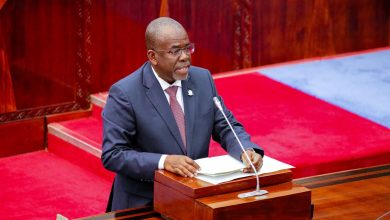
“However, judicial independence must never be used as a shield to conceal negligence, bias or injustice. Rather, it is a trust that requires justice to be administered with integrity, transparency and strict adherence to the Constitution and the laws of the land,” Dr Nchimbi said at the wellattended event that brought together key legal stakeholders.
Article 107B of the Constitution of the United Republic of Tanzania, 1977, states: “In exercising the powers of dispensing justice, all courts shall have freedom and shall be required only to observe the provisions of the Constitution.”
Reflecting on this year’s theme, “The Contribution of the Judiciary to National Welfare and Development,” the Vice-President said it carries an important message that the Judiciary is not merely an institution for dispensing justice, but also a key pillar of social welfare, economic development and the consolidation of peace in the country.
“In your address, Honourable Chief Justice, you explained that Article 8(1) (b) of the Constitution of the United Republic of Tanzania directs that the primary objective of the Government shall be to promote the welfare of the people,” he added.
Dr Nchimbi further noted that the Judiciary is not only the final arbiter of justice in the country, but also an important partner in the nation’s development journey.
Quoting Chief Justice George Masaju, the VicePresident said that between October and December 2025 alone, the Judiciary heard and decided cases worth 13tri/- out of 50tri/- in economic disputes handled during the period.
Dr Nchimbi insisted that when the Judiciary hears and determines criminal cases in a timely manner, it contributes to strengthening peace and social stability, thereby enabling economic and social activities to thrive.
ALSO READ: Tanzanian judiciary pledges to take decisive measures to quicken justice delivery
He commended the Judiciary of Tanzania for continuing to embrace Information and Communication Technology (ICT) in both the administration of justice and internal operations.
“I am pleased to learn that the Judiciary has begun developing a system that uses Artificial Intelligence to capture court proceedings and case records,” he said.
Speaking at the event, Chief Justice Masaju said that alongside the enactment and amendment of rules, the Judiciary has strengthened the right of suspects who are legally entitled to bail to obtain it properly through the courts.
He explained that the initiative begins at Primary Courts, where bail is now available to all suspects or accused persons.
According to him, Resident Magistrates’ Courts, District Courts and Primary Courts are responsible for ensuring that bail is granted in all bailable criminal cases unless there are compelling reasons to deny it.
“When a person applies for bail, the decision to grant or deny it must be made on the same day the application is submitted to the court. This helps reduce opportunities for corruption and ensures that the right to bail is realised promptly and appropriately,” Chief Justice Masaju added.
He elaborated that this measure enables citizens accused of criminal offences to continue with their economic and social activities and to attend court from their homes until cases against them are lawfully concluded through judgments or rulings, in accordance with Article 13(6) (b) of the Constitution.
On his part, Attorney General Hamza Johari said that the Judiciary is a catalyst for economic growth and investment, particularly in the legal enforcement of contracts.
In a speech read by Deputy Attorney General Samwel Maneno, he emphasised that the presence of a reliable Judiciary ensures that contracts are honoured, reduces risks for businesses, attracts both domestic and foreign investment and thereby promotes economic growth.
The Deputy AG also highlighted other areas, including the protection of property rights and efficient dispute resolution, noting that effective mechanisms allow cases to be concluded in a timely manner through specialised courts, enabling businesses and citizens to operate smoothly.
Earlier, President of the Tanganyika Law Society (TLS), Advocate Boniface Mwabukusi, called on the government to allocate special funds to enable the Bar to expand legal aid services, particularly to underprivileged groups.
He commended the cooperation between the Government and TLS in providing legal aid but noted that financial constraints continue to limit the Bar’s ability to reach many people across the country

this is one of the best article i read today, i enjoy reading how you structure this article, keep up the good work, my site is the best webdesign freelancer in berlin in Germany, https://webdesignfreelancerberlin.de/ you can check it out. Thank you