NGOs urge nomination of more women
ZANZIBAR: WOMEN’s rights and leadership organisations are urging political parties across the country to nominate more qualified women for competitive leadership positions in the upcoming October 2025 General Election.
In a joint declaration, several civil society groups pressed parties to move beyond the traditional practice of nominating women solely for special seats.
They emphasised the crucial need to provide women with genuine opportunities to contend for constituency based positions in Parliament, the Zanzibar House of Representatives and local government councils.
“For too long, women have been sidelined to special seats, which limits their visibility and influence in competitive politics,” the statement reads.
“This year, many women have boldly stepped forward and they deserve to be nominated and supported.” In the realm of political representation, Tanzanian women have indeed made substantial strides.
A historic moment unfolded with President Samia Suluhu Hassan’s ascent as the first female President and Head of State in March 2021.
Similarly, Hon Tulia Ackson assumed the role of Speaker of the National Assembly in February 2022, becoming the second woman to hold this pivotal position.
Notably, with women currently leading two out of the three branches of the United Republic of Tanzania—the Executive and Parliament—there is significant potential for their influence in state decision-making.
In terms of broader female representation, Tanzanian women hold 34.6 per cent of ministerial positions in the cabinet compared to Rwanda, with 50 per cent; Uganda, with 38.7 per cent; and Kenya, with 33.3 per cent.
Furthermore, women currently occupy 36.9 per cent of seats within the Tanzanian Parliament, offering a clear point of comparison with figures from Rwanda (61 per cent), Uganda (34 per cent) and Kenya (22 per cent).
ALSO READ: INEC officially allows prisoners, detainees to vote during the General Elections
However despite the progress made in enhancing women’s participation in politics over the past decades, the number of women contesting competitive seats remains significantly low compared to men.
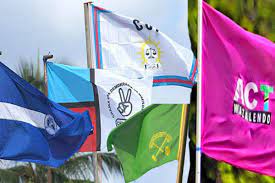
Internal party data reveals that the ruling Chama Cha Mapinduzi (CCM) in Zanzibar saw 406 women return nomination forms for Member of Parliament, House of Representatives and councillor roles, out of a total of 1,640 members.
This accounts for roughly 24.7 per cent of their applicants. Meanwhile, the opposition party ACT-Wazalendo reported that only 40 women picked up nomination forms, out of 435 members, representing a mere 9.2 per cent.
While both parties await final approval from their special and central committees—expected to convene later this month—advocates say the real test will be how many women make it to the final list of candidates and are given competitive constituencies.
“We commend the women who have shown the courage to contest,” the statement noted.
“But we emphasise that taking nomination forms is not enough — they must be given real chances to compete.”
In the 2020 General Election, only eight women were elected to Zanzibar’s House of Representatives (16 per cent) and four women secured parliamentary seats (8 per cent) through competitive races out of 50 constituencies.
The majority of women who hold political positions do so through special seats.
The joint statement, signed by Dr Mzuri Issa Ali, Director of TAMWA-Zanzibar, on behalf of JUWAUZA, ZAFELA, PEGAO and TAMWA-ZNZ, appealed to political party selection committees to prioritise women during candidate vetting as part of broader efforts to promote gender-balanced leadership.
“Women in leadership bring integrity, compassion and commitment to community and national interests. Research globally shows they are effective decisionmakers who prioritise family and societal welfare,” the statement added.
The organisations also invoked the UN Convention on the Elimination of All Forms of Discrimination Against Women (CEDAW), which urges state parties, including Tanzania, to take special measures to eliminate discrimination and enhance women’s participation in decision-making bodies.
The civil society groups, supported by the Embassy of Norway, further encouraged women who have declared their candidacy not to lose hope and pledged continued advocacy to ensure more women secure competitive nominations.