New health financing wave expands universal care access
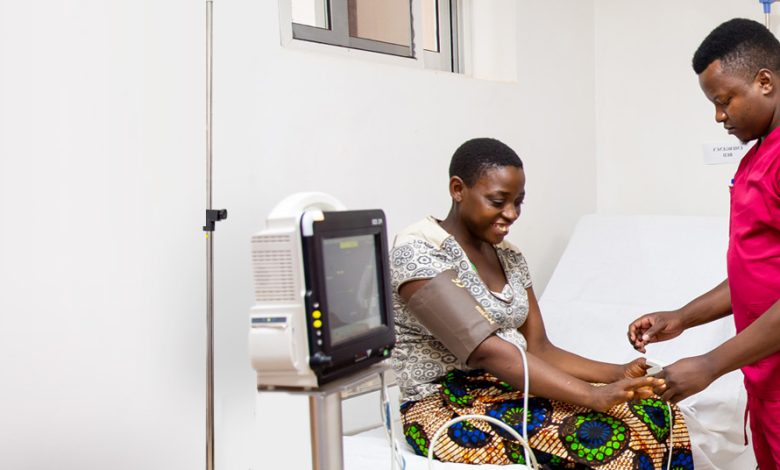
In Tanzania, the private health sector is the unsung hero of healthcare delivery. While often under-recognised, private facilities play a crucial role in expanding access to quality care, complementing government efforts, and bridging gaps in the country’s healthcare system.
The scale of private participation is substantial. According to the 2023 Health Facility Atlas, Tanzania has around 11,805 clinical health facilities, with 31 per cent privately owned. That’s nearly a third of the clinical landscape driven by private initiative, investment, and sheer determination—because when it comes to health, business isn’t just business; it’s lifesaving. The contribution of private facilities is not trivial.
Studies indicate that approximately 12 per cent of all deliveries in Tanzania occur at private health facilities. Private providers also participate actively in government-led immunisation campaigns, ensuring vaccines reach far and wide, and many operate under contractual service agreements formalising their partnership with public health authorities.
This demonstrates that the private sector isn’t just about profit—it’s about partnerships and impact. Beyond clinical facilities, Tanzania boasts more than 18,000 private non- clinical establishments, including standalone pharmacies, Accredited Drug Dispensing Outlets (ADDOs), laboratories, and rehabilitation centres. These facilities are particularly critical in rural, peri-urban, and underserved areas.
A multi-region household study found that ADDOs alone served as the first point of care in about 17 per cent of acute illness cases and provided nearly half 49 per cent of all prescribed medications for such conditions. In other words, if ADDOs were a superhero, they’d be the dependable sidekick everyone depends on. Yet, despite their importance, private health providers especially small and medium-sized enterprises (SMEs) face daunting financial challenges.
Traditional banks and microfinance institutions often perceive healthcare as high-risk. Common obstacles include the inability to meet collateral requirements, lack of formal financial records, administrative bottlenecks, long distances to banking facilities, and slow loan processing times.
In addition, delayed health insurance reimbursements, which can take up to six months, strain cash flows, threatening the continuity of services. Strengthening the financial capacity of private health providers is therefore critical. As Tanzania marches toward Universal Health Coverage (UHC) by 2030, tailored financing and business support for SMEs are not luxuries they are necessities.
Accessible credit ensures facilities can maintain quality, expand services, and remain reliable partners in national health goals. Fortunately, Tanzania is witnessing a digital financial revolution. With over 92.7 million active mobile lines—more than the population in some countries and 68.1 million mobile money accounts, the country has leapfrogged traditional banking barriers.
By mid-2023, 657,346 SMEs were registered on the government merchant payment system, illustrating the potential of digital solutions in supporting business operations, including healthcare financing. It is at this intersection of digital innovation and health financing that the Medical Credit Fund (MCF) operates. Its Afya Mkopo product provides flexible, affordable loans tailored to the realities of healthcare SMEs.
ALSO READ: Digital transformation: Mobile payments to economic empowerment
Afya Mkopo is unique: it’s the only loan product dedicated exclusively to health SMEs in Tanzania, and it leverages mobile money technology to make financing accessible, fast, and manageable. Consider the experience of Rosemary Martin, co-owner of Arusha Centre Diagnostic Laboratory.
“When our haematology machine broke down, we were worried about losing customers,” she recalls.
“Afya Mkopo gave us access to funds quickly. We replaced the machine, and all our clients returned. It was a lifeline for our business.” Loans range from 200,000/- to 100m/-, requiring neither collateral nor bank statements.
Using Vodacom’s M-Pesa merchant till (Lipa Namba) system, eligibility and repayment capacity are assessed digitally, based on transaction history. Once approved, funds are disbursed directly to the M-Pesa till, and repayments are automatically deducted as a fixed percentage from daily collections. This system minimizes stress and maximizes convenience.
Dr Deogratius Emmanuel, co-founder of MDM Urology Specialised Hospital in Dar es Salaam, highlights the impact: “I took the loan to bridge the financing gap due to delayed insurance payments. Being a specialised hospital, the medicines we prescribe are expensive, so delays affect cash flow. With Afya Mkopo, repayment happens daily and automatically, avoiding conflicts.” The turnaround time is remarkable: less than 72 hours for the first loan and under 24 hours for subsequent loans. Mr Marius Modest, an ADDO owner in Mwanza, has benefitted from three loans. “During my third loan application, I received the funds on the same day. Now my shelves are fully stocked, and clients can find almost everything they need,” he says.
The fully digital process encourages providers to embrace electronic payments, promoting financial inclusion and a cashless economy because who knew loans could be this convenient? Afya Mkopo is more than a loan; it is a tool for sustainability.
By empowering SMEs, it strengthens cash flow, enables expansion, and ensures reliable service delivery. It bridges financial gaps, supports equipment maintenance, and helps facilities navigate delayed insurance reimbursements. By extension, patients and communities receive uninterrupted, higher-quality care. As Tanzania modernizes its healthcare system, initiatives like Afya Mkopo are vital.
They exemplify how digital innovation, targeted financing, and public- private partnerships can transform the healthcare landscape. The Medical Credit Fund doesn’t merely lend money; it fosters resilience, supports growth, and positions SMEs as pivotal partners in advancing Tanzania’s healthcare goals. In essence, the private health sector, aided by innovative financial solutions like Afya Mkopo, is not just filling gaps it is a cornerstone of Tanzania’s journey toward universal health coverage.
These SMEs are proving that with the right support, private healthcare can be sustainable, scalable, and impactful. And in a country where 31 per cent of clinical facilities and tens of thousands of non- clinical outlets are privately run, supporting these enterprises isn’t optional it’s smart policy, good economics, and, above all, good healthcare. In the end, one can say with a wink: in Tanzania, the private sector is doing healthcare heavy lifting and with Afya Mkopo, they finally have the financial muscles to match.
The writer is the Business Advisor – Digital Loan at Medical Credit Fund (MCF) Pic: Health Caption: According to the 2023 Health Facility Atlas, Tanzania has around 11,805 clinical health facilities, with 31 per cent privately owned.